


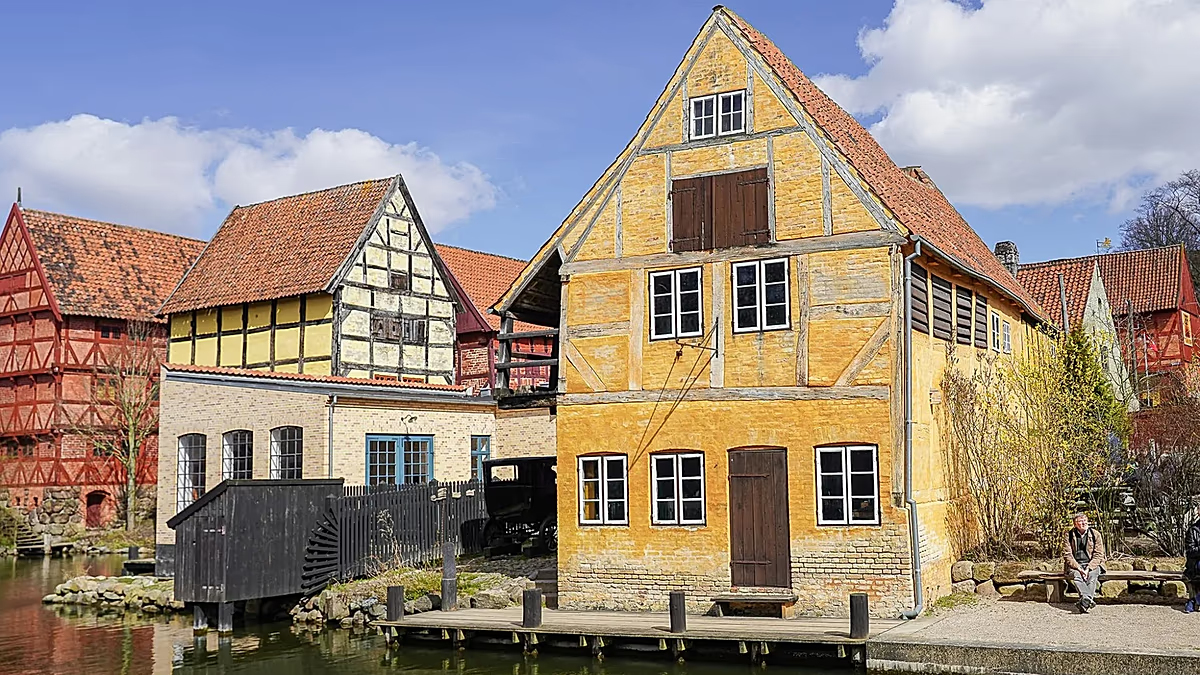
In a celebration of museums that are not merely repositories of artifacts but vibrant hubs of community and conscience, Denmark’s Den Gamle By (The Old Town) National Open-Air Museum has been crowned the European Museum of the Year. The prestigious award was presented in Bilbao, Spain, highlighting an institution that transcends traditional historical display to actively engage with the urgent questions of our time. As described by the award jury, Den Gamle By is a pioneering force, brilliantly weaving together historical and contemporary urban environments to provoke thought on migration, sustainability, and social justice. This accolade recognizes a museum that is as much about the present and future as it is about the past, setting a benchmark for what a modern cultural institution can achieve.
Located in Aarhus, Den Gamle By is a unique cultural tapestry created, in essence, by and for ordinary people. It invites visitors to wander through four centuries of urban Danish life, from 1600 to 2014, in an immersive, interactive journey. Here, one can pet horses in a historic stable, examine colorful advertisements from a bygone era, visit a typical nuclear family’s home, or step into a SAS airline ticketing office—all within the same evocative landscape. This is not a silent archive but a living, breathing narrative of urban evolution. The museum’s core mission is educational, aiming to enlighten its community on pressing topics like sustainability, equality, and empowerment, making history a tangible tool for understanding contemporary life.
A central pillar of Den Gamle By’s philosophy is its profound commitment to environmental stewardship, a key factor in its award victory. The jury specifically praised its green initiatives, which include cultivating heirloom plant varieties, offering courses on gardening, and hosting workshops on clothing and building repair. These practices embed sustainability into the museum’s very fabric, teaching visitors not just about historical consumption but about future conservation. This focus transforms the museum grounds into a classroom for practical ecology, demonstrating how historical wisdom can inform sustainable living. It is a place where the past’s relationship with nature is examined, and future-friendly habits are nurtured.
Perhaps the most vital element of Den Gamle By’s success is its dynamic, community-centered ethos. The museum is conceived as an ever-evolving space, a project in perpetual progress rather than a static collection. Volunteers, contributing their expert knowledge and personal experiences, are the heartbeat of the institution, ensuring the narratives explored are rich, diverse, and authentic. Through participatory projects, the museum is deeply embedded in civic life, creating a forum where everyone feels seen and heard. This collaborative model fosters a sense of shared ownership and belonging, making the museum a true commons—a place where history is co-authored by the community it serves.
While Den Gamle By took the top honor, the ceremony in Bilbao celebrated a wide array of European museums demonstrating exceptional courage and specialization. The Young V&A in London won the Council of Europe Museum Prize; the Museum of Madness in Slovenia received the Kenneth Hudson Award for Institutional Courage; and the Museum of the Rural Civilisation in Switzerland earned the Portimão Prize for Welcoming and Inclusion. Other winners included museums in Germany for community engagement and in Finland for environmental sustainability, alongside special commendations to institutions across Europe. As the award co-chairs noted, this cohort represents a broad spectrum united by a commitment to change—to questioning established narratives, engaging with difficult histories, and strengthening social relevance.
The recognition of Den Gamle By and its fellow award-winners signals a transformative moment in museology, where institutions are increasingly judged by their societal impact and connective power. As the 50th anniversary ceremony approaches in Bern in 2027, the legacy of this year’s winners will undoubtedly inspire a new generation of museums. These are places that dare to be more than quiet halls of objects; they are active, engaged, and essential participants in the dialogues that shape our communities and our world. Den Gamle By, in its beautiful blending of past landscapes with present-day questions, stands as a luminous example of this new, vital path.