




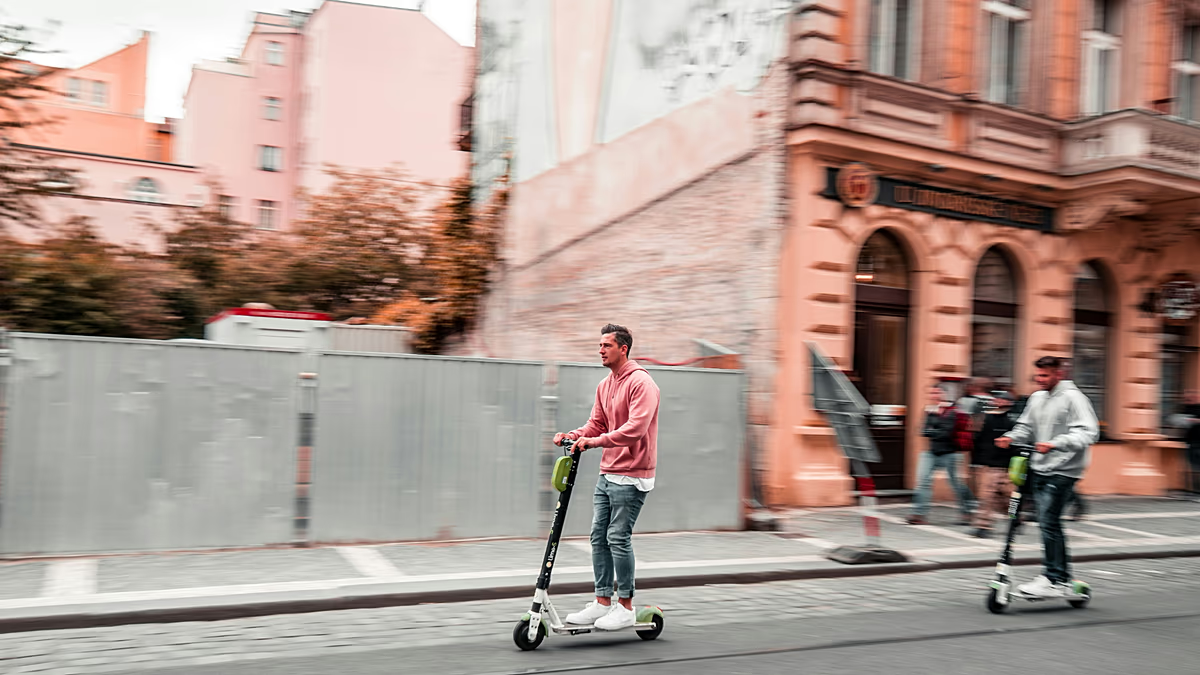
The once-celebrated vision of urban mobility—shared electric scooters zipping silently through city streets—is facing a decisive reckoning in Europe. The latest and perhaps one of the most significant blows comes from Brussels, the heart of the European Union, which has decided to pull the plug on rental e-scooter services entirely. Effective January 2027, the licences for the two remaining operators, Bolt and Dott, will expire, marking the end of an era for the Belgian capital. This decision places Brussels within a growing wave of European cities, including Paris, Madrid, and Prague, that have reversed their initial embrace of this micro-mobility solution. The rationale is a cumulative one, born not from a single issue but from a confluence of public safety hazards, social nuisances, and startling criminal connections that have collectively eroded public and political tolerance. The city’s move signals a pivotal shift from the uncontrolled experiment of free-floating scooters toward a more managed and traditional approach to shared transport, notably by reinvesting in and expanding its bicycle-sharing network.
The primary driver behind Brussels’ decisive action is an undeniable and alarming surge in road injuries. Regional figures reported by The Brussels Times reveal a stark statistic: in 2025 alone, 666 people were injured in e-scooter-related accidents, representing a 26% increase from the previous year. These are not minor scrapes. Safety experts consistently warn that the very design of e-scooters contributes to more severe outcomes in a crash. Their small wheels are prone to catching on pavement imperfections, leading to sudden ejections. Unlike cyclists, riders often have no protective frame around them and, despite helmet recommendations, frequently ride without one. This combination makes head injuries, facial trauma, and serious fractures disproportionately common. Each injury statistic represents a personal tragedy and a significant cost to public health systems, turning the scooters from a symbol of convenient freedom into one of preventable public danger.
Beyond the immediate trauma of accidents, the daily reality of cluttered sidewalks has created a profound accessibility crisis. The “free-floating” model, where riders can theoretically leave a scooter anywhere, has in practice led to rampant misuse. Pavements, bus stops, and even building entrances are routinely obstructed by carelessly discarded scooters. For parents with strollers, the elderly, and people with visual impairments or reduced mobility, these obstacles transform a simple walk into an arduous slalom course, effectively denying them the full use of public space. This tangible, daily nuisance has fueled widespread public resentment, framing the scooters not as a public good but as a privatized imposition that prioritizes rider convenience over communal rights and urban dignity. The clutter became a visual shorthand for corporate irresponsibility and weak regulation.
Perhaps most shocking to the public conscience are the revelations that extend beyond mere nuisance into the realm of serious crime. The Brussels government disclosed that the very anonymity and agility that made e-scooters attractive to commuters also made them ideal tools for criminal activity. Drug traffickers and organized crime groups have reportedly exploited them as fast, untraceable getaway vehicles following deals or conflicts. Even more grimly, authorities linked the scooters to 25 shootings in 2025 alone, underscoring how they facilitated violence in the urban landscape. This association with grave criminality provided a final, powerful argument for their removal, fundamentally altering their perception from a quirky tech innovation to a genuine threat to public order and safety.
In taking this step, Brussels is aligning itself with a clear European trend of retrenchment. Paris, often a bellwether for urban policy, banned rental e-scooters in 2023 following a public referendum. Cities like Madrid and Prague have followed suit, citing similar concerns over safety and clutter. This collective pushback suggests that the first wave of the e-scooter revolution, characterized by a regulatory “wild west,” has crested. The model of flooding cities with thousands of lightly regulated private vehicles has proven socially unsustainable. The industry’s promise of solving the “last mile” problem and reducing car dependence has been critically weighed against the real-world costs in human injury, urban disorder, and public safety, and found wanting by an increasing number of municipal governments.
However, Brussels’s story is not simply one of elimination, but of redirection. The city’s announcement explicitly couples the ban on shared e-scooters with a commitment to strengthen and expand its alternative shared mobility network. The focus will shift decisively towards bicycle-sharing systems, including plans to increase the availability of e-bikes. This indicates a more mature urban mobility strategy that favors vehicles with a proven safety record, a clearer regulatory framework, and a physical form less prone to dangerous clutter. The shared bicycle, with its dedicated docking stations or more responsible parking protocols, offers similar benefits of short-trip convenience without the same degree of externalized harm. In essence, Brussels is not giving up on sustainable micro-mobility; it is refining its approach, choosing the steadier, safer bicycle over the volatile scooter. The message to the industry is clear: the future of urban transport must be not only innovative but also orderly, safe, and truly inclusive for all citizens.