

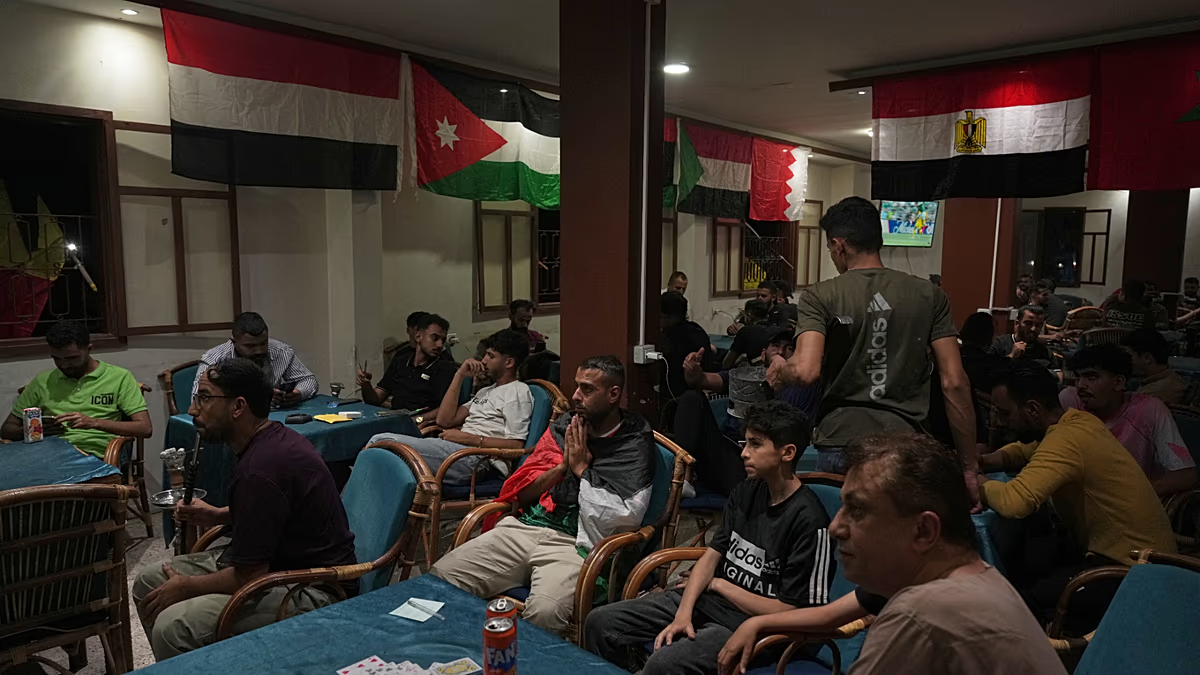
In the heart of the Gaza Strip, where the thunder of conflict so often defines daily life, a different, more hopeful sound has emerged: the collective gasp and cheer of a gathered crowd. In the town of Al-Zawayda, just a few kilometers from Deir al-Balah, a makeshift coffee tent became a sanctuary of light and noise. Dozens of people braved frequent power cuts, the screens flickering in and out, just to catch the opening World Cup match between Mexico and South Africa. Miles away in Khan Younis, in the cramped confines of temporary shelters where displaced families now live, the shared glow of a television screen cast long shadows into the evening, holding people together not just in space but in a shared, focused experience. This tournament, for these Palestinians, is far more than a sporting event; it is a vital, communal lifeline to normalcy and a rare, precious form of collective escape from a reality that allows for few.
For many, the simple act of gathering to watch a match is a ritual steeped in poignant memory. It brings back echoes of a time before the war, when watching the World Cup was a central, joyous social tradition. Families and friends would crowd into living rooms, neighborhoods would buzz with friendly arguments over favorite teams, and the rhythm of life would sync, however briefly, to the schedule of matches. As supporters describe it, these current viewings in tents and shelters are a conscious, defiant echo of that past. The act of sharing these moments, despite the vastly different and harsher setting, is an attempt to reclaim a fragment of lost connection and continuity. It is a statement that the basic human need for shared joy and communal storytelling endures, even when the architecture of everyday life has been shattered.
Local figures like Mohammed Salama, a youth football coach in Gaza City, are channeling this collective energy into something even more profound. For Salama, the tournament is a living, vibrant classroom. Before training sessions with his young players, he uses the 48 participating nations as a springboard for education—discussing different cultures, geographies, and histories, using the global spectacle to widen horizons constricted by blockade and conflict. This highlights a particularly bittersweet facet of Gaza’s engagement with this World Cup: the keenly felt but proud disappointment that the Palestinian national team itself narrowly missed qualification. Yet, this has not dimmed enthusiasm; instead, it underscores a broader identification with the spirit of global competition and aspiration. The young players can dream not only of one day representing their nation on such a stage but also of belonging, through their passion, to a world community that often feels distant.
However, this powerful distraction exists within a stark and unrelenting context. The excitement generated by a last-minute goal or a stunning save is always temporary, a brief respite that cannot eclipse the enduring hardships. The same communities huddled around televisions continue to face severe displacement, with families living in tents or damaged buildings, their futures uncertain. Shortages of essential supplies—from food and clean water to medicine and fuel—persist, casting a shadow over even the most electrifying match. The persistent backdrop of insecurity means that the sound of a celebratory fireworks display after a goal can be jarringly similar to more ominous noises. The tournament does not stop the conflict; it merely provides a fragile, human interlude within it.
This juxtaposition reveals the remarkable resilience of the human spirit. The choice to focus on a game played on the other side of the world, to invest emotional energy in the fate of teams from nations they may never visit, is an act of profound mental fortitude. It is a conscious decision to prioritize hope, narrative, and global connection over despair. In these communal viewings, people are not passively seeking to forget their troubles, but actively constructing moments of normalcy, agency, and shared identity. The football pitch, beamed in via satellite, becomes a symbolic space of fairness, rules, and clearly defined outcomes—a stark contrast to the complex and painful unpredictability of their own lives.
Ultimately, the story of Gaza watching the World Cup is a powerful testament to the universal language of sport and its role as a vessel for human dignity. It is a narrative about people insisting on their right to joy, to community, and to a cultural life that transcends their immediate circumstances. The flickering screens in tents and shelters are more than just televisions; they are beacons of a common humanity, signaling that even in the most challenging conditions, the desire to connect, to hope, and to be part of a larger, cheering world remains unbreakable. It is a quiet, collective statement that life, in all its complexity and yearning, continues.