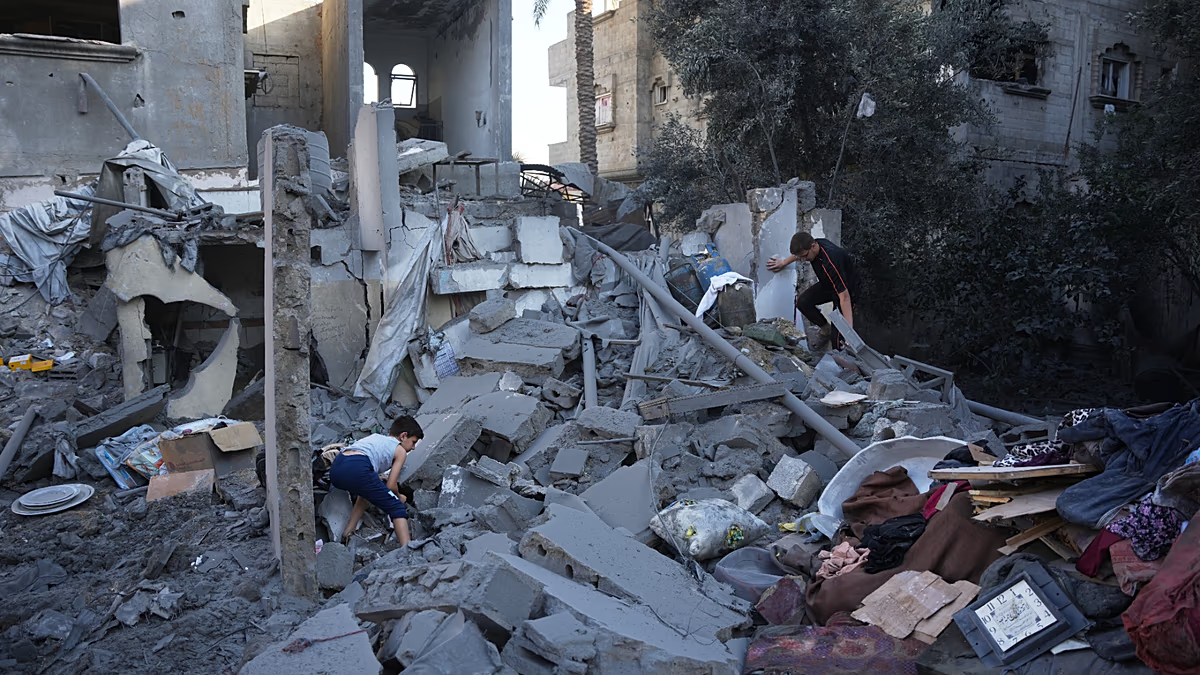


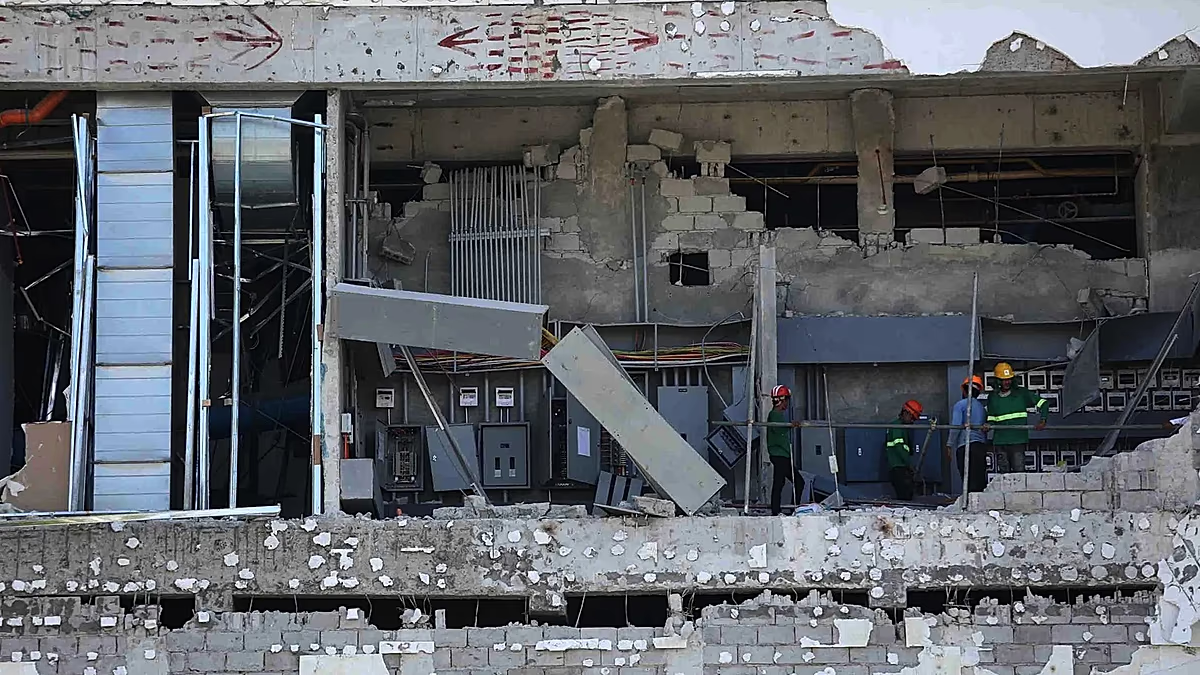
On Friday, Philippine officials delivered a powerful testament to the value of preparation, crediting years of relentless disaster-preparedness drills with preventing a far greater tragedy after a colossal 7.8 magnitude earthquake—one of the strongest in five decades—struck the archipelago. While the numbers are sobering—46 lives lost, 38 missing, over 45,000 displaced, and thousands of homes damaged—authorities emphasized that these figures, revised downward after careful verification, could have been catastrophically higher. The quake, which originated off Sarangani province, unleashed its fury on a Monday morning, shaking the very foundations of communities, yet the long-standing culture of readiness provided a crucial buffer against the chaos.
The human impact of the quake, however, remains profound and deeply emotional. Beyond the statistics, officials describe a population still reeling, with thousands too traumatized by powerful aftershocks to return to their damaged homes. The quake’s timing, at 7:37 a.m. on the first day of school after a long summer break, created scenes of surreal chaos that were later shared across social media. Videos captured the terrifying moments when flag-raising ceremonies and classrooms were violently interrupted, with small buildings collapsing as the ground swayed. Yet, amidst this terror, a remarkable narrative of training and composure emerged.
Nowhere was this more vividly illustrated than in the schools. One viral video from Mahayahay Elementary School in the coastal town of Malita showed dozens of grade-schoolers seated on a swaying, tree-ringed yard, screaming and crying in fear as a nearby tin roof shed collapsed with a loud thud. The instinct to panic and dash away was palpable, yet teachers, adhering to their training, calmly admonished the students to stay seated, cover their heads, and remain calm. This disciplined response, the school later stated, was a direct result of regular drills, and it ensured that not a single injury was reported there. The scene became a poignant symbol: pure childhood terror being gently but firmly channeled into life-saving order by prepared educators.
This widespread institutional preparedness did not happen by accident. As Teresito Bacolcol, director of the Philippine Institute of Volcanology and Seismology, explained, years of public education and drills enabled people to anticipate and brace for such an extreme event. He noted the fortuitous timing—minutes before everyone moved indoors for work and classes—but underscored that the reduced casualty toll was fundamentally due to a populace that knew how to react. “It’s good that our efforts to educate people… somehow paid off,” he told the Associated Press. Similarly, Ednar Dayanghirang, a regional civil defense director, detailed how mandatory training for school principals and the creation of teacher-led disaster-response teams were instrumental in preventing deadly stampedes and managing the crisis effectively.
Yet, alongside this success story, officials sounded a note of serious concern regarding the structural integrity of the built environment. Bacolcol pointedly expressed worry over buildings that collapsed but should have withstood the quake had the national building code been strictly followed. This highlights a critical gap between behavioral preparedness and physical infrastructure resilience. The Philippines, sitting on the volatile Pacific “Ring of Fire,” is no stranger to seismic threats, making the enforcement of construction standards not just a regulatory issue but a profound moral imperative. The quake exposed a vulnerable flank in the nation’s defenses, reminding everyone that drills save lives in the moment, but robust engineering is what ultimately provides sanctuary.
In the final analysis, the response to this powerful earthquake presents a dual lesson for the Philippines and for disaster-prone nations everywhere. The first is a heartening validation of the unglamorous, ongoing work of public education and drill conduction—a proof that these exercises ingrain instincts that can override panic, as seen in the schools of Malita. The second is an urgent call to action to bridge the remaining vulnerability by rigorously ensuring that buildings and infrastructure are as resilient as the people who occupy them. The earthquake took much, but it also revealed a nation that has learned to bow with the shaking earth, rather than break—a resilience born of practice, now tested by one of the most formidable forces of nature.