


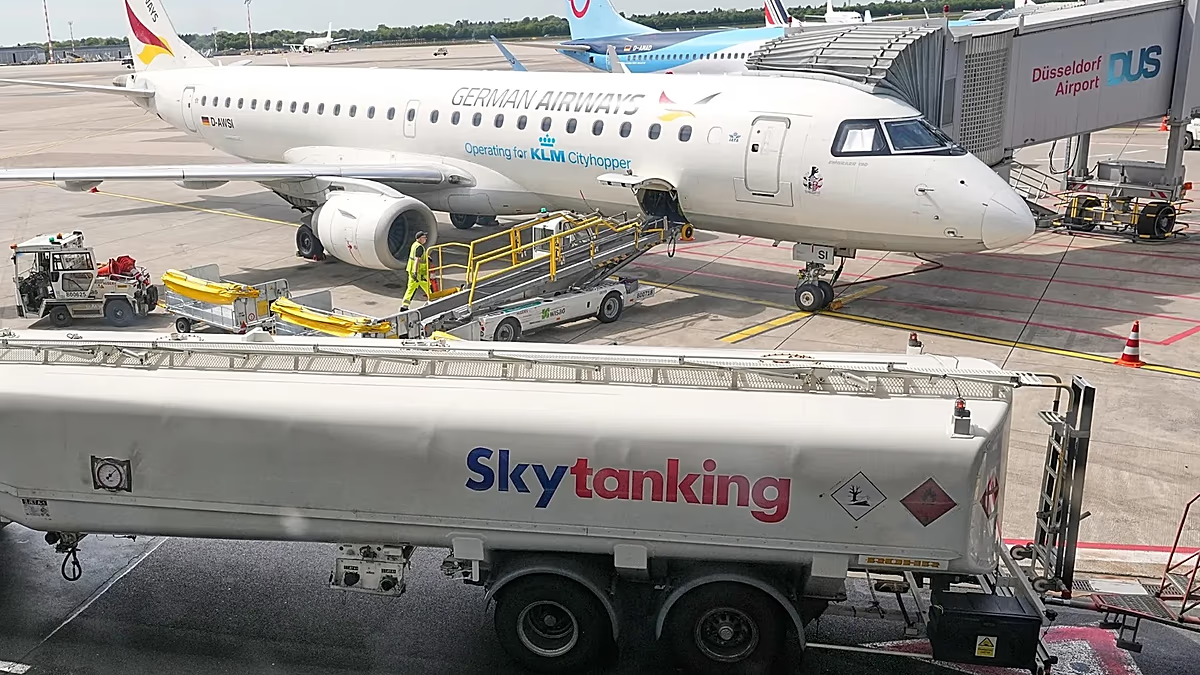
As the summer travel season approaches, European energy ministers are confronting a mounting crisis that threatens the very lifeline of aviation. According to a confidential briefing prepared for a meeting of EU energy ministers on June 26, while crude oil and natural gas markets have so far weathered the storm, jet fuel supplies are now the most vulnerable point in Europe’s energy chain. The cause is a protracted and unresolved disruption to shipping through the Strait of Hormuz, a critical maritime chokepoint for global oil exports, now entering its third month. In response, officials are actively considering an unprecedented step: the coordinated release of strategic fuel reserves, specifically including jet fuel stocks, to prevent commercial shortages from crippling air travel later this year. The document starkly warns that drawing on these emergency stockpiles is a “real and near-term risk,” highlighting the acute pressure as demand heads into its seasonal peak.
The closure of the Strait of Hormuz has sent profound shockwaves through energy markets, severing a significant share of Middle Eastern exports. While the International Energy Agency (IEA) acted in March to coordinate a massive global release of 400 million barrels of oil to stabilize markets, Europe’s contribution notably prioritized refined products like jet fuel, signaling early recognition of the unique strain on aviation supplies. Although crude oil prices have retreated from initial spikes, the refined product market—and jet fuel in particular—has borne the brunt of the disruption. The Council briefing notes that jet fuel prices in some regional markets roughly doubled at the height of the crisis, far outpacing the increase in crude oil itself. This price shock reflects the tight physical supply for a product that is difficult to store and substitute, placing airlines and airports under immediate financial and operational stress.
In response to this pressure, European refineries have pivoted sharply. According to energy analyst George Shaw of Kpler, there has been a concerted “sharp movement” towards increased jet fuel production across the EU’s refining heartlands in Germany, Italy, Spain, and the Netherlands. Furthermore, Europe is ramping up imports from alternative suppliers, notably the United States and Nigeria, to compensate for the lost Middle Eastern volumes. However, these buffers have their limits. Shaw warns that as consumption climbs into the peak months of August and September, “supply will certainly be stressed.” This sentiment was alarmingly echoed in April by ACI Europe, the airports association, which told the European Commission a “systemic” jet fuel shortage would become a reality for the EU if the Strait was not reopened within weeks, underscoring the precarious timeline.
The airline industry itself is sending mixed signals, reflecting a tense balance between current resilience and future anxiety. Carriers like Air Canada and Lufthansa have publicly stated they do not foresee widespread flight cancellations this summer due to fuel shortages. The International Air Transport Association (IATA) also downplayed immediate supply challenges. Yet, IATA simultaneously acknowledged “broader, systemic vulnerabilities” and is actively lobbying for regulatory changes to enhance flexibility. Specifically, the industry is urging a temporary suspension of EU “anti-tankering” rules, which prohibit airlines from carrying extra fuel to hedge against price disparities or supply gaps at their destination. IATA argues that allowing suppliers and airlines to strategically concentrate fuel stocks where most critically needed would be a more efficient safeguard than processing thousands of individual exemption requests, reducing administrative burdens during a crisis.
Despite these efforts to adapt, EU ministers acknowledge that the risk of physical shortages is growing. Inventories and alternative routes have provided a crucial cushion, aided by high pre-crisis stock levels and weaker demand in some industrial sectors. However, these safeguards are not infinite. The prospect of a prolonged disruption has ignited a broader debate in Brussels about long-term energy security and crisis management. The European Commission is now preparing formal recommendations for the coordinated release of strategic reserves (including jet fuel) and for demand-management measures, while cautioning member states against unilateral actions that could fragment the single market and exacerbate regional inequities. The goal is a unified strategy to ensure equitable distribution of available fuel across all EU nations as pressure mounts.
Looking ahead, the path to recovery appears slow and uncertain, meaning strain could persist throughout the entire summer travel period. Energy analysts estimate that even under an optimistic scenario where the Strait of Hormuz reopens soon, refining operations in the Gulf States would require months to normalize. Subsequent product shipments to Europe would then face an additional 30 to21840 days in transit. Consequently, the supply chain cannot be switched back on overnight. This looming timeline means that whether through emergency reserve releases, maximized refinery output, or managed airline operations, Europe’s aviation sector is in for a tense and volatile summer. The decisions made by energy ministers in the coming weeks will be critical in determining whether the skies remain open or face unprecedented disruption.