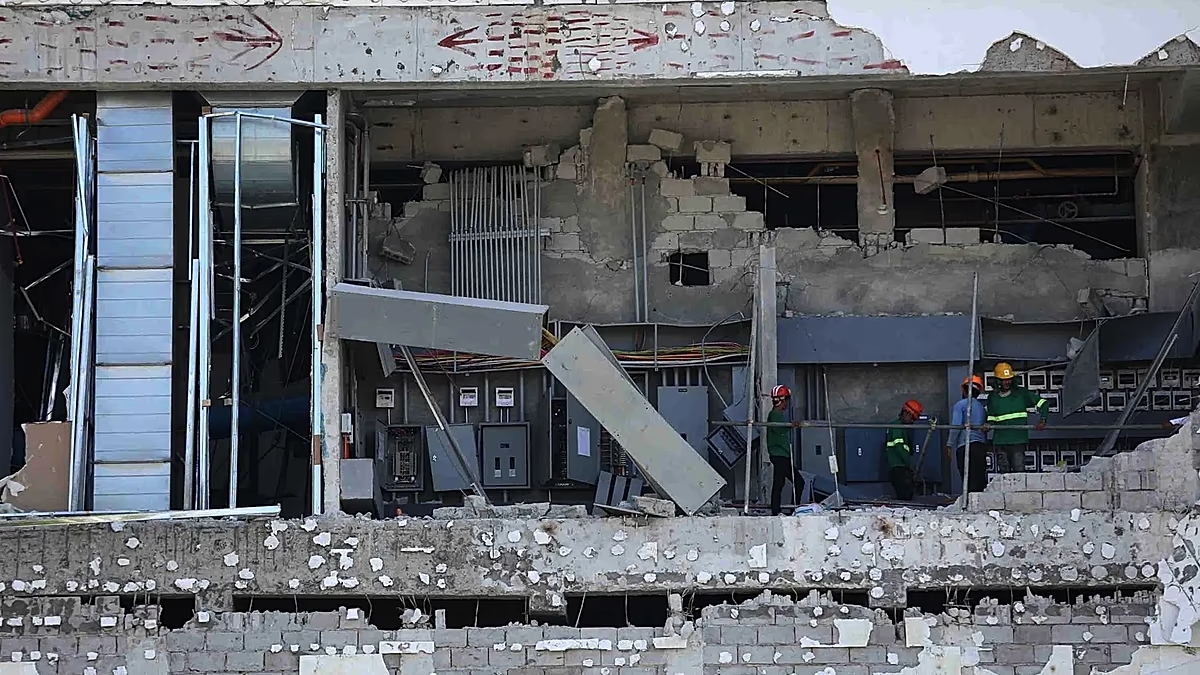




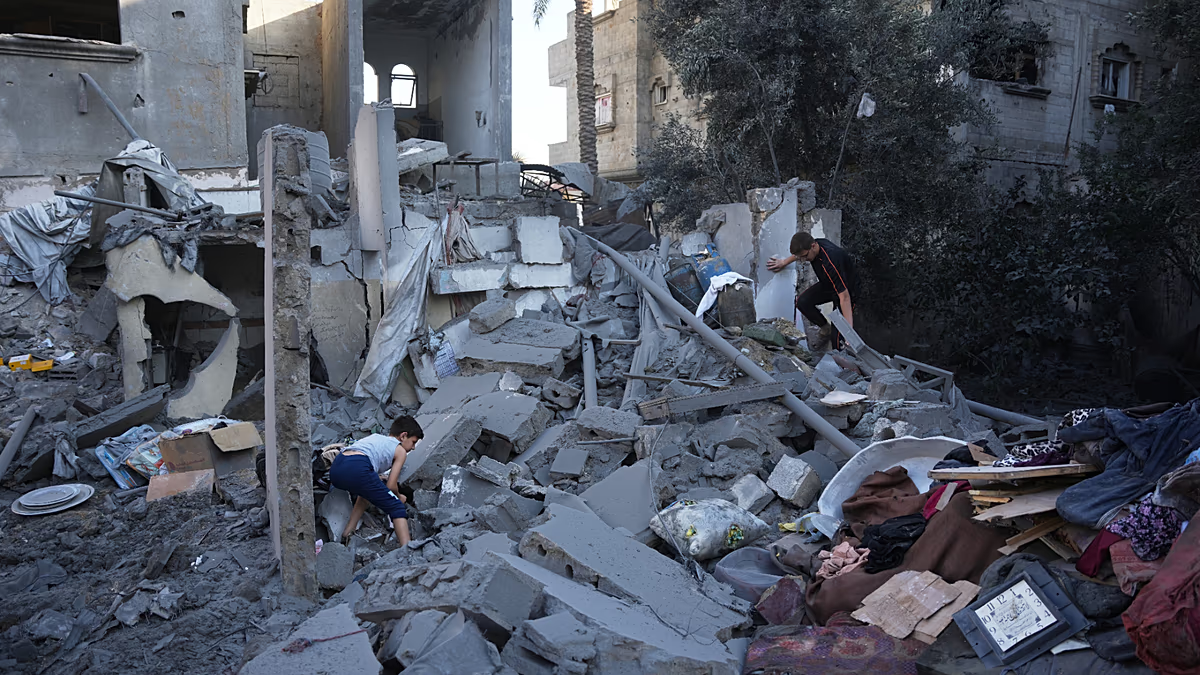
The relentless cycle of destruction and displacement in Gaza has inflicted yet another layer of suffering on its beleaguered residents, demonstrating the profound human toll that persists even amid tentative pauses in fighting. In the aftermath of recent strikes, families in the Maghazi camp and Deir al-Balah returned to scenes of utter devastation, where entire housing blocks were reduced to mountains of shattered concrete and twisted rebar. While Israeli forces had issued evacuation orders, the scale of the damage rendered such warnings almost meaningless, as the attacks affected vast residential areas, obliterating not just individual homes but the foundational infrastructure of entire neighborhoods. For these communities, the strikes represented more than a military action; they were a catastrophic erasure of sanctuary, destroying the last fragile symbols of normalcy and security that families clung to after months of conflict. The large impact craters that now scar the landscape serve as grim monuments to the overwhelming force employed, underscoring a reality where safety is perpetually provisional and the very concept of home is heartbreakingly temporary.
In Maghazi, the personal tragedies unfolded in the loss of ten to fifteen homes, each one a universe of memory and struggle now deemed uninhabitable. The residents affected were not newcomers to loss; many were families who had already been displaced from other parts of Gaza, fleeing earlier waves of violence with only what they could carry. Having sought refuge in these homes, they believed they had reached a precarious haven, only to have that illusion violently shattered. The belongings they lost—clothing, documents, furniture, children’s toys—were not mere possessions but carefully curated remnants of a life before the war, tangible threads connecting them to their past and identity. To lose these items was to experience displacement anew, a second or third erosion of their personhood that compounds the trauma. As they sifted through the wreckage, the act of recovering a photograph from under the dust or a usable piece of furniture became a quiet, desperate ritual of reclamation, a fight to salvage some semblance of continuity in a world that seems systematically determined to break it.
Meanwhile, in Deir al-Balah, the scene was one of collective exhaustion and determined resilience. Residents gathered around the enormous craters, not as spectators, but as survivors assessing the latest blow to their community. Others worked methodically, clearing debris with bare hands and simple tools, searching for anything usable beneath the concrete rubble: a cooking pot, an unbroken chair, a bundle of clothing. This labor was performed under the heavy shadow of immediate uncertainty, as many faced the prospect of another night without adequate shelter, exposed to the elements. The search was pragmatic, born of sheer necessity, but it was also deeply symbolic. Each item pulled from the ruins represented a small victory against entropy and despair, a refusal to be completely consumed by the destruction. Yet, this grim perseverance highlights the impossible choices facing civilians: to remain amid danger to protect what little they have, or to flee and risk losing everything, possibly forever.
These events unfolded against the backdrop of a fragile and repeatedly violated ceasefire, adding a layer of psychological torment to the physical devastation. Each new strike deepens the erosion of trust in diplomatic processes and shatters any emerging sense of security, keeping the entire population in a state of suspended anxiety. For the thousands of displaced Palestinians scattered across Gaza, news of such attacks is a chilling reminder that no location is truly safe, and that their temporary shelters in schools, tents, or overcrowded relatives’ homes could be threatened at any moment. This perpetual uncertainty paralyzes community planning and personal recovery, as the energy required for rebuilding lives is constantly diverted to mere survival and the anticipation of the next crisis. The ceasefire, rather than being a bridge to stability, feels like a fleeting intermission in an ongoing tragedy, where violations punish civilians most acutely and fuel a cycle of resentment and hopelessness.
The cumulative damage across Gaza is now so extensive that it defines the territory’s very landscape. Large swathes remain in ruins from months of conflict, with critical infrastructure for electricity, water, and healthcare crippled. The latest strikes, therefore, are not isolated incidents but fresh wounds on a body already failing from systemic trauma. They exacerbate a humanitarian crisis where reconstruction seems a distant mirage, continually pushed further away by recurring violence. The challenges are monolithic: clearing millions of tons of rubble, rebuilding homes and schools, restoring essential services, and—most dauntingly—addressing the profound collective psychological injury borne by a population, half of whom are children. Without a sustained and binding peace, any rebuilding effort is fundamentally temporary, akin to constructing a house on shifting sands, with families knowing it could all be demolished again in an instant.
Ultimately, the human story here transcends the immediate metrics of destroyed homes and casualty figures. It is the story of a people caught in a relentless struggle for dignity and basic sanctuary. The families in Maghazi and Deir al-Balah, picking through the ruins of their lives, embody the silent, grinding resilience of civilians enduring a conflict with no clear end. Their immediate need is for safety, shelter, and the means to survive. Their deeper need is for a lasting political solution that acknowledges their right to a stable and secure existence, free from the constant threat of sudden annihilation. As the international community witnesses these repeated violations and the compounding suffering, the imperative grows not just for emergency aid, but for sustained, courageous diplomacy that can finally break the cycle and offer the people of Gaza a genuine horizon of hope. Their daily reality—a blend of profound loss, steadfast endurance, and shattered peace—demands nothing less.