


Paragraph 1: A Sudden Dawn of Optimism
Monday, June 15th, 2026, marked a profound and euphoric shift in the global mood, as financial markets around the world celebrated what had seemed unthinkable just days before: a framework agreement for peace. The announcement from the Trump administration and the Islamic Republic of Iran, aimed at definitively ending the protracted war in the Middle East, acted like a lightning bolt of optimism. It pierced through a long-standing cloud of geopolitical uncertainty that had weighed heavily on the global economy. This wasn’t merely a diplomatic development; it was the sudden removal of a massive, lingering risk that had threatened to destabilize supply chains, fuel inflation, and derail growth. The immediate and visceral reaction on trading floors was one of unbridled relief, as investors rushed to reposition for a world suddenly appearing safer and more predictable.
Paragraph], Spain’s Market Soars
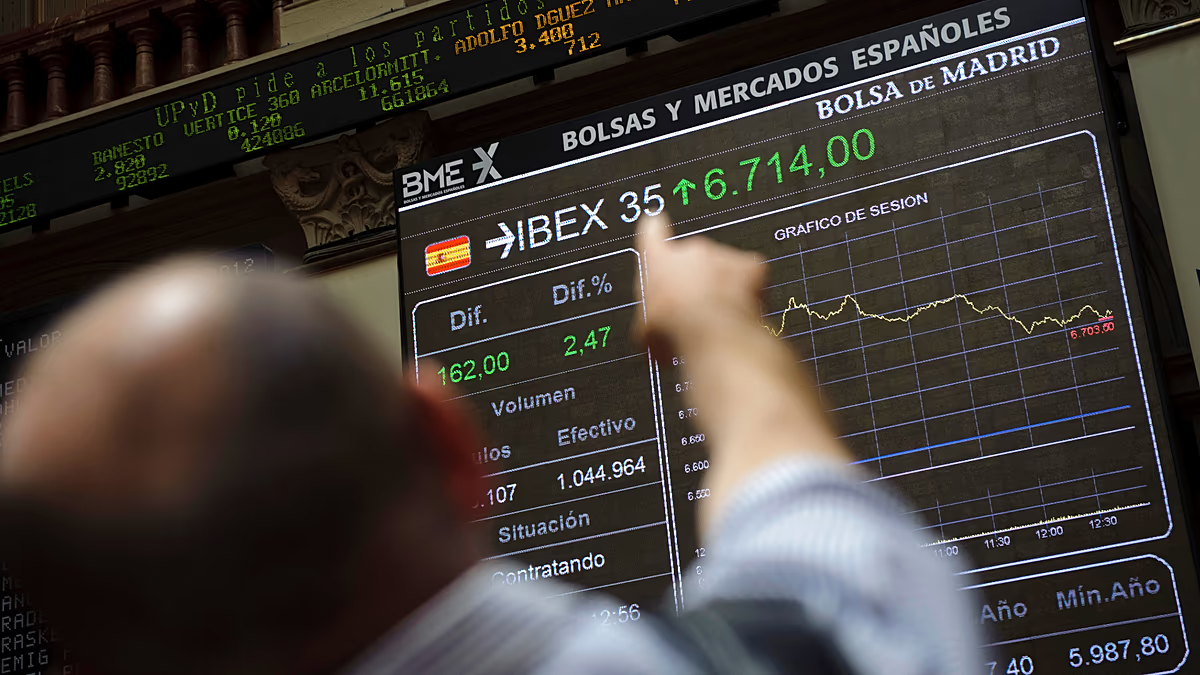
This wave of optimism found one of its most powerful expressions on the Spanish stock exchange. The Ibex 35, Spain’s benchmark index, didn’t just rise—it shattered records. Smashing through all psychological and technical resistance, it breached the monumental 19,000-point barrier for the first time in history, soaring to a peak of 19,122 points. This surge represented a staggering near-10% gain since the beginning of the year, effectively compressing months of cautious growth into a single, explosive session. The Spanish market emerged as a headline protagonist of the day, its performance symbolizing the broad-based relief sweeping across European economies particularly vulnerable to energy costs and regional instability. The rally was a clear signal that investors viewed Spain, and its mix of tourism, banking, and industrial firms, as a prime beneficiary of the new, peaceful landscape.
Paragraph 3: The Heart of the Deal: Reopening a Vital Artery
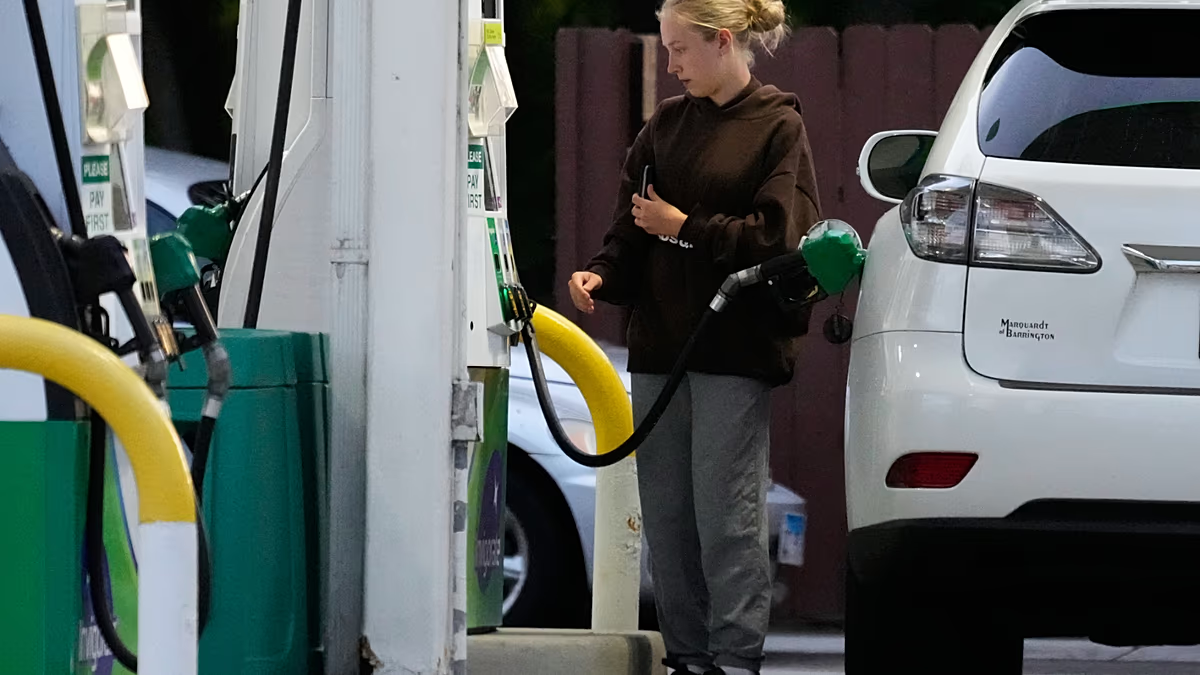
The core of the market’s euphoria lay in a very specific and practical component of the agreement: the immediate reopening of the Strait of Hormuz. This narrow sea passage is far more than a geographic feature; it is the central nervous system of global energy and trade. With roughly one-fifth of the world’s oil consumption and immense volumes of container freight passing through it, its previous blockage had been a catastrophic chokehold on the global economy. The closure had strangled supply chains, sent crude oil prices to unsustainable heights, and reignited fears of a debilitating inflationary spiral. The announcement of its reopening meant that the physical arteries of commerce were being unclogged. The effect was instantaneous in commodity markets, with the price of Brent crude oil plunging over 4% in pre-market trading—a direct and powerful translation of geopolitical peace into economic relief for consumers and businesses worldwide.
Paragraph 4: Winners Across the Spanish Board
Within the Ibex 35’s record-breaking climb, distinct sectors led the charge, each benefiting from the peace accord in tailored ways. The tourism and airline sector, represented by companies like IAG (owner of Iberia and Vueling), Meliá Hotels, and booking giant Amadeus, saw vertiginous gains. The dual boon of plunging jet fuel costs and the return of traveler confidence for the crucial summer season propelled their stocks. Simultaneously, the banking sector, with giants like Banco Santander, BBVA, and Caixabank posting strong gains, acted as the index’s engine. Banks thrive on economic stability and growth; the fading threat of a recession triggered by an oil crisis unlocked tremendous value. Furthermore, industrial and consumer companies, from fashion retailer Inditex to telecom leader Telefónica and energy firm Iberdrola, breathed a sigh of relief. Lower energy and logistics costs promised to ease pressure on their profit margins, granting them much-needed financial breathing room.
Paragraph 5: A Continental Sigh of Relief
The jubilation was distinctly continental in scale. The dramatic rally in Madrid was mirrored across every major European trading floor. Germany’s DAX, France’s CAC 40, and the pan-European Euro Stoxx 50 all opened with powerful, synchronized gains. Europe, as a major energy importer and a trading bloc deeply integrated into global supply chains, had been disproportionately exposed to the risks of a prolonged Middle Eastern conflict. The agreement wasn’t just good news; it was a preventive measure against an expected economic slowdown in the second half of the year. The collective market surge represented a continent-wide sigh of relief, a shared recognition that a major impediment to stable, long-term growth had been diplomatically dismantled.
Paragraph 6: Cautious Realism Amidst the Celebration
Yet, amidst the celebratory headlines and green trading screens, a note of cautious realism persisted. Analysts and seasoned observers were quick to point out that the initial market explosion, while justified, also carried the fervor of a sudden pressure release. The agreement, though monumental, remains a framework—a blueprint for peace that will require complex, long-term implementation and verification. Furthermore, the immediate plunge in oil prices, while sharp, still left Brent crude trading at levels above those seen before the conflict began, hinting at a new, perhaps permanently elevated, baseline. The markets were celebrating the decisive end of a devastating war and the removal of an acute crisis, not the arrival of a perfect world. The task ahead would be to convert this fragile diplomatic achievement into lasting stability, ensuring that the day’s euphoria lays the foundation for sustained prosperity, not just a fleeting market spike.