




When we picture a comfortable retirement, a steady pension cheque often comes to mind. However, across Europe, the true picture of financial security for those over 65 is painted not just by income, but by a vast and startling landscape of private wealth. This wealth—encompassing property, savings, and investments—varies so dramatically that older households in some nations hold more than thirty times the net wealth of those in others. This chasm fundamentally shapes living standards, healthcare options, and legacies for future generations, revealing how housing markets, pension systems, and family structures intertwine to create profoundly different later-life experiences.
According to the European Central Bank’s data, the median net wealth for a euro area household aged 65-74 is €185,300. Yet this average conceals extreme disparities. Luxembourg stands as a colossal outlier at over €1.2 million, with Malta a distant second at €310,000. Setting aside these small nations, Belgium and Ireland lead, with median wealth nearing €300,000. They are followed by Europe’s largest economies: France and Germany cluster around €232,000, Spain at €200,800, and Italy notably lower at €168,000. At the other end of the spectrum, many Eastern European nations report figures under €100,000, with Latvia at the bottom (€36,300). This geographical divide is stark, but the story deepens with age. Typically, wealth declines for those 75 and over, dropping sharply by over 40% in Germany and Austria, but only 14% in France, suggesting different spending patterns or support mechanisms for the very old.
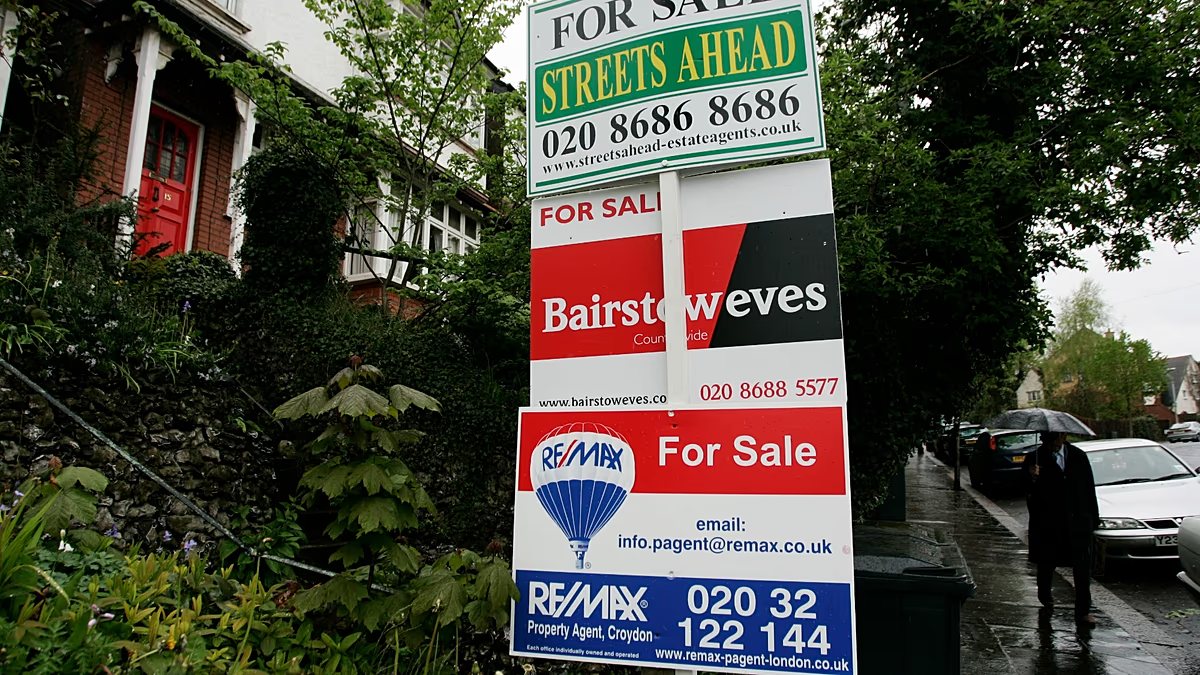
What drives these immense gaps? Experts point to a complex cocktail of factors far beyond mere personal frugality. Professor Fabian Pfeffer notes that wealth reflects “the long-term interaction of housing markets, welfare states, pension systems, credit institutions, family transfers and historical pathways into asset ownership.” A primary driver is homeownership. Countries where older generations widely bought homes and rode waves of rising property values—like Belgium, France, and Spain—naturally show higher median wealth. Conversely, in nations with strong rental traditions like Germany and Austria, less wealth appears on private balance sheets, even if older renters are economically secure through other means. This crucial distinction reminds us that these figures measure private assets, not overall well-being.
This leads to the pivotal role of the welfare state, particularly pensions. The surveyed net wealth data explicitly excludes the future value of public and occupational pension entitlements. As Professor Pfeffer explains, “A generous public pension system can reduce the need to accumulate large private assets for retirement.” Thus, moderately lower private wealth in a country like the Netherlands—despite its renowned pension system—or in Germany may signal a stronger social safety net, not poorer retirees. The balance between relying on state pensions versus private accumulation is a fundamental political and economic choice each society has made over decades, with consequences now visible in the wealth portfolios of its elderly.
However, an increasingly critical factor threading through these systems is family wealth. As housing and asset markets have become fiercely competitive, financial assistance from parents and grandparents is now a key determinant in who can buy a home or invest young. Toby Whelton highlights that this raises deep concerns about equality of opportunity, as “economic outcomes become increasingly influenced by family background rather than individual effort.” This intergenerational transfer can amplify initial national disparities, creating cycles of advantage or disadvantage within countries. The wealth of Europe’s over-65s therefore doesn’t just define their own retirement; it actively seeds the financial future of their descendants.
In conclusion, the tapestry of wealth in Europe’s retirement is woven from many threads: historic homeownership rates, the generosity of public pensions, the stability of housing markets, and the power of family legacies. To view a Latvian retiree’s €36,300 median wealth alongside a Luxembourgish retiree’s €1.2 million is to see more than just a number; it is to witness the cumulative outcome of decades of divergent social, economic, and housing policies. Ultimately, these figures challenge us to look beyond the balance sheet. True security in old age is a mosaic of private wealth, reliable public support, and affordable living costs—a combination Europe’s nations have assembled in strikingly different ways.