

Iran Masterfully Outmanoeuvred Trump in High-Stakes Negotiations, Bolton Claims
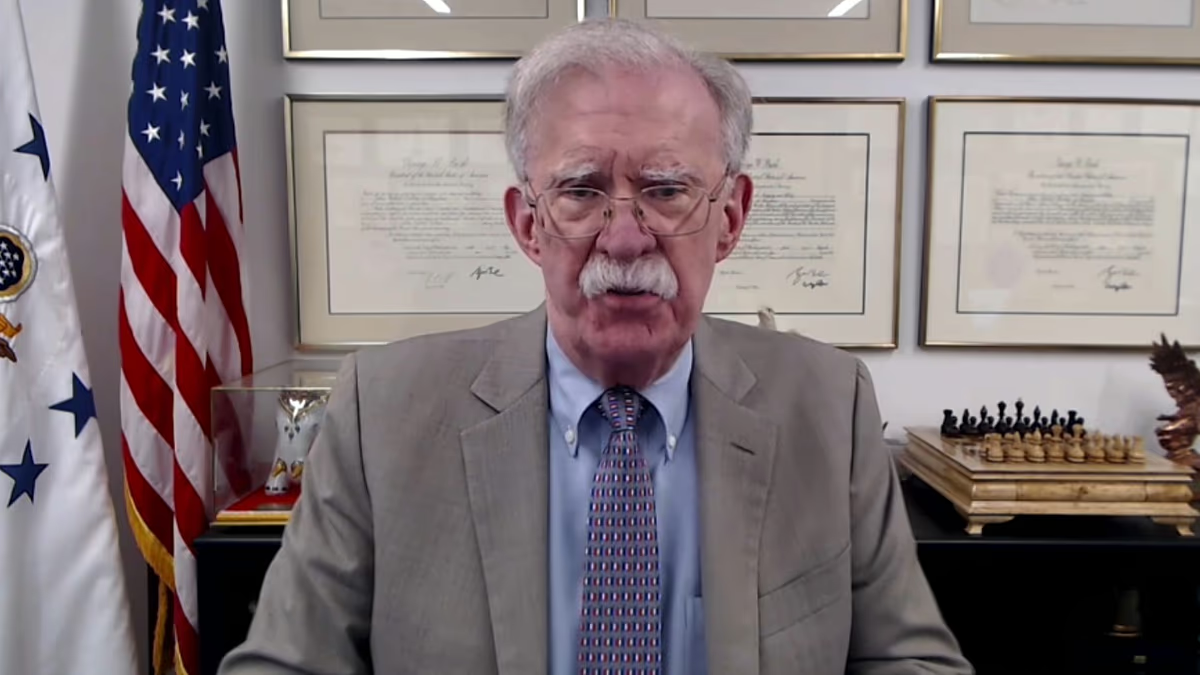
In a striking and candid assessment of one of the most pivotal diplomatic episodes of the recent past, former US National Security Advisor John Bolton has revealed a narrative of Iranian strategic dominance during negotiations with the Trump administration. Speaking to Euronews, Bolton painted a picture not of mutual compromise, but of a carefully orchestrated Iranian victory, achieved by expertly reading and exploiting the political pressures bearing down on then-President Donald Trump. According to Bolton, Iran did not merely negotiate with the United States; it performed a complex and calculated diplomatic symphony, with President Trump as an unwitting instrument. This revelation offers a provocative behind-the-scenes look at how perceptions of desperation can fundamentally invert the traditional power dynamics between superpowers and their adversaries on the global stage.
Bolton’s core allegation is stark: Iran played President Trump “like a violin.” This musical metaphor suggests a relationship not of equals, but of a skilled musician commanding an instrument. The implication is that Iranian negotiators, led by figures within the Islamic Revolutionary Guard Corps and the diplomatic corps, perceived a critical vulnerability in their American counterpart. Trump, Bolton asserts, was driven by an intense, politically-motivated desire to conclude a deal that would definitively end the long-running conflict, presenting it as a major foreign policy triumph ahead of the electoral cycle. This perceived desperation became the opening Iran needed to seize the initiative, guiding the negotiations toward an outcome that primarily served its own strategic interests while allowing the US to claim a superficial victory.
The former security advisor suggests that this Iranian advantage stemmed from a sophisticated understanding of American domestic politics. Tehran’s strategists apparently calculated that for Trump, the symbolic act of ending a war—of being the president who “brought the troops home”—outweighed the granular, long-term details of the agreement. Sensing this, Iranian officials adeptly structured talks to offer the grand prize of conflict resolution while embedding terms that secured significant concessions. These reportedly included substantial sanctions relief with limited verification mechanisms, a continued allowance for certain uranium enrichment activities, and a de facto recognition of Iran’s expanded regional influence. In essence, Iran granted the political imagery Trump craved in exchange for substantive gains that bolstered the regime’s economic resilience and geopolitical standing.
This outcome, as framed by Bolton, stands in direct contradiction to the tough, “America First” persona Trump publicly championed. It presents a paradox where the administration most vocal about pressuring Iran ultimately conceded a position of strength at the bargaining table. Bolton, a longtime hawk and architect of maximum pressure campaigns, implies that the drive for a legacy-defining deal created a blind spot. The negotiators’ focus shifted from enforcing uncompromising demands to securing any deal that could be packaged as a success. In this environment, Iranian patience and tactical acumen triumphed over American impatience, allowing Tehran to walk away with far better terms than any objective observer at the outset might have predicted.
The consequences of this dynamic, according to analysts, have been profound and lasting. The agreement forged under these conditions reshaped the strategic landscape of the Middle East. It granted Iran a crucial economic lifeline and enhanced its role as a regional power broker, affecting conflicts from Yemen to Syria. Furthermore, it created a deeply contentious legacy within the United States, with critics from both political sides arguing the deal was structurally flawed—either too weak from the outset or a product of disastrously skewed negotiations. Bolton’s account fuels this criticism, suggesting the flaws were not incidental but a direct result of being outplayed at the diplomatic game.
Ultimately, John Bolton’s remarks serve as more than just a post-mortem of a specific negotiation. They offer a timeless lesson in statecraft and the perils of transactional diplomacy driven by domestic political timetables. The episode underscores that in high-stakes international talks, perceived weakness can be more damaging than actual weakness, and the party most eager for an agreement often pays the highest price. The image of Iran orchestrating the talks and leading the American president to a pre-ordained conclusion stands as a sobering case study in how leverage, perception, and patience can decisively trump raw power in the complex and subtle theatre of global diplomacy.