

Of course. Here is a humanized and expanded summary of the provided information, structured into six paragraphs and reaching the approximate requested length.
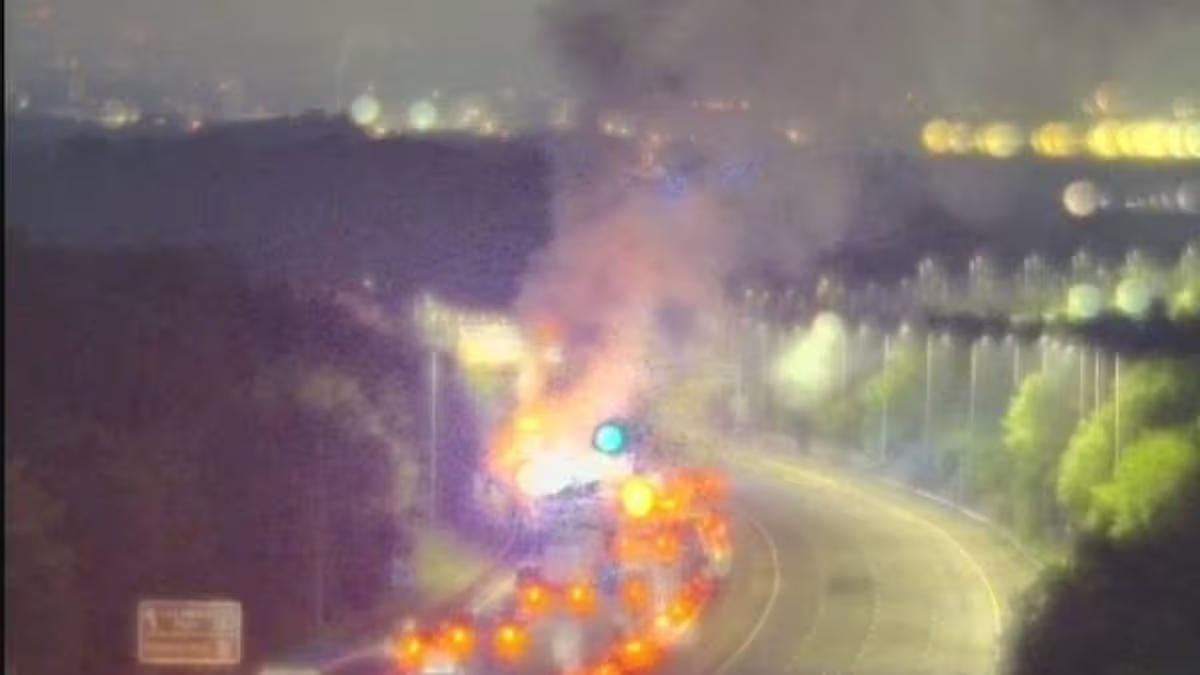
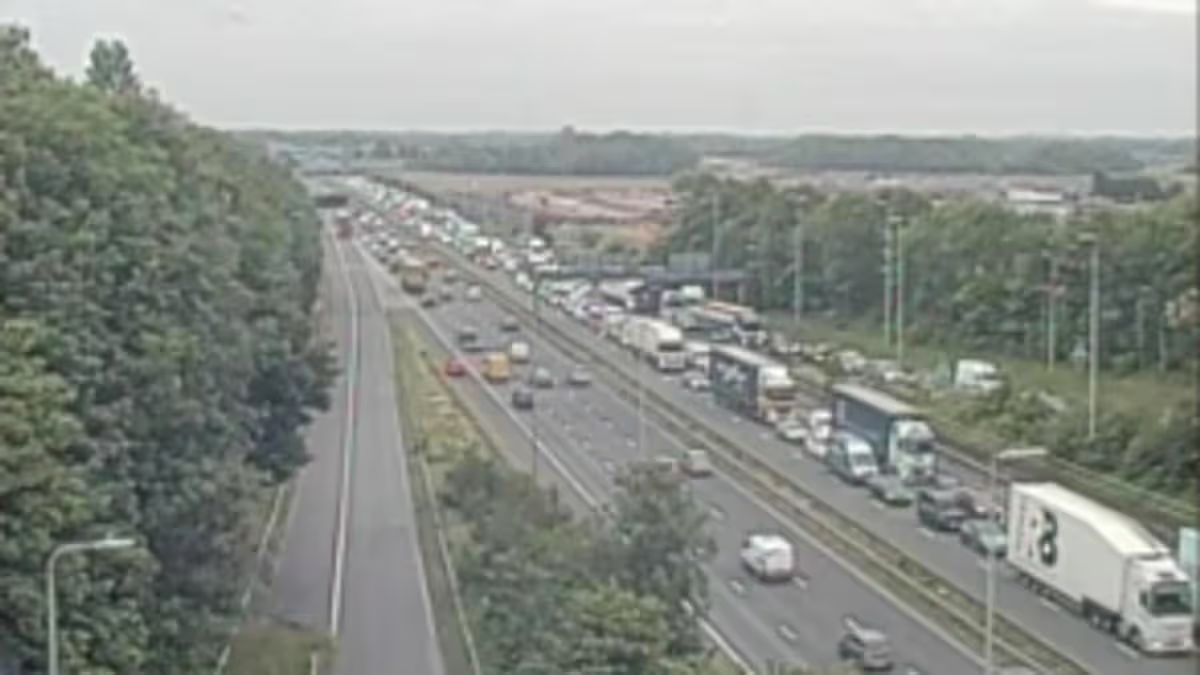
Drivers heading west on the M62 this afternoon are finding themselves in the grip of a significant and unexpected disruption. What should be a major artery for traffic across the North of England has been abruptly sealed off, turning routine journeys into exercises in frustration. The closure stretches between two key junctions: Junction 8 at Burtonwood and Junction 7 at Rainhill. For those familiar with the route, this is a critical link, and its sudden unavailability has sent ripple effects through the local and regional road network. The cause, as confirmed by National Highways, the agency responsible for England’s motorways, is as serious as it is sobering: a single-vehicle collision severe enough to necessitate a full closure of the westbound carriageway.
The human impact of such an incident is immediate and multifaceted. First and foremost, concern rests with those directly involved in the collision. While details are scarce at this early stage, the very fact that emergency services are on the scene and have taken the drastic step of closing a major motorway indicates the gravity of the situation. Flashing blue lights of police cars, ambulances, and possibly fire engines now occupy the tarmac where cars and lorries would normally be speeding past. These dedicated professionals are working meticulously, not just to manage the aftermath of the incident, but to ensure the scene is made safe for everyone—the individuals involved, the responders themselves, and eventually, for traffic to resume. Their work is a stark reminder that behind every traffic bulletin, there is a real human story, often a distressing one.
For the wider traveling public, the practical consequences are now unfolding in real-time. The official advisory warns of building delays, with an estimated ten-minute hold-up for those already approaching the closure point. However, anyone who has ever been caught in such a backlog knows these initial estimates are often a best-case scenario. The reported congestion, already snaking back for approximately one mile, is likely to grow exponentially with each passing minute as more vehicles join the queue, unaware of the blockage ahead. This isn’t just a line of stationary cars; it’s a chain reaction of missed appointments, anxious parents late for school pick-up, delayed freight deliveries, and rearranged plans. The frustration is palpable, a collective sigh that hangs over the idling engines.
In our hyper-connected age, information is both a salve and a source of anxiety. The alert from National Highways, disseminated via social media with the hashtags #M62 and references to the affected junctions, is a crucial public service. It allows drivers en route to make alternative plans, perhaps taking the next exit to navigate via labyrinthine A-roads. For those yet to set out, it provides a chance to delay their journey, work from home a little longer, or seek an entirely different route. However, this essential flow of information comes with a new layer of complexity: digital consent. The note that “content cannot be displayed without consent” hints at the modern reality of how we receive our news. It may refer to traffic camera feeds or detailed updates within certain apps, underscoring that even in moments of public disruption, the gateways to real-time data are often governed by privacy policies and user agreements.
Looking beyond the immediate gridlock, this incident on the M62 serves as a microcosm of our shared vulnerability on complex transport systems. A single event, lasting perhaps just a few seconds, can paralyze a infrastructure designed for thousands of vehicles per hour. It highlights the delicate balance between speed and safety, and the immense logistical challenge faced by authorities in responding swiftly and effectively. The cleanup, investigation, and eventual reopening will be a careful process, prioritizing thoroughness over speed to ensure no further risk remains. For the stranded motorists, the episode transforms into a test of patience, a sudden and unwelcome pause in the day’s momentum, offering only the view of the brake lights ahead and the hope that those involved on the scene are receiving the care they need.
Ultimately, while the quantified details—a mile of congestion, ten-minute delays, junctions 8 to 7—define the scope of the problem, the true story is human. It is the skill and dedication of the emergency responders working under pressure. It is the concern of a community for the well-being of unknown fellow travelers. It is the resigned adaptability of countless drivers recalculating their days. As recovery vehicles eventually clear the carriageway and the traffic begins its slow, rolling return to normalcy, the disruption will fade from the headlines. But for those affected directly and indirectly, the memory of the delay will linger, a brief, unwelcome chapter in their day, underscored by a shared hope for a full recovery on the part of the collision victims and a renewed, if fleeting, awareness of the fragility of our daily routines.