



On Tuesday, a significant and frightening natural event unfolded in Indonesia, reminding the world of the immense geological forces constantly at work beneath our feet. A powerful earthquake, measuring a substantial 6.7 in magnitude, struck the region, sending violent tremors through the land. This initial temblor was not an isolated incident; it was followed by a series of strong and unnerving aftershocks, compounding the fear and disruption for the local population. The quake’s epicenter was pinpointed roughly 46 kilometers east-southeast of Palu, the bustling capital of Central Sulawesi province, and occurred at a relatively shallow depth of about 10 kilometers, a factor that often amplifies the shaking felt on the surface.
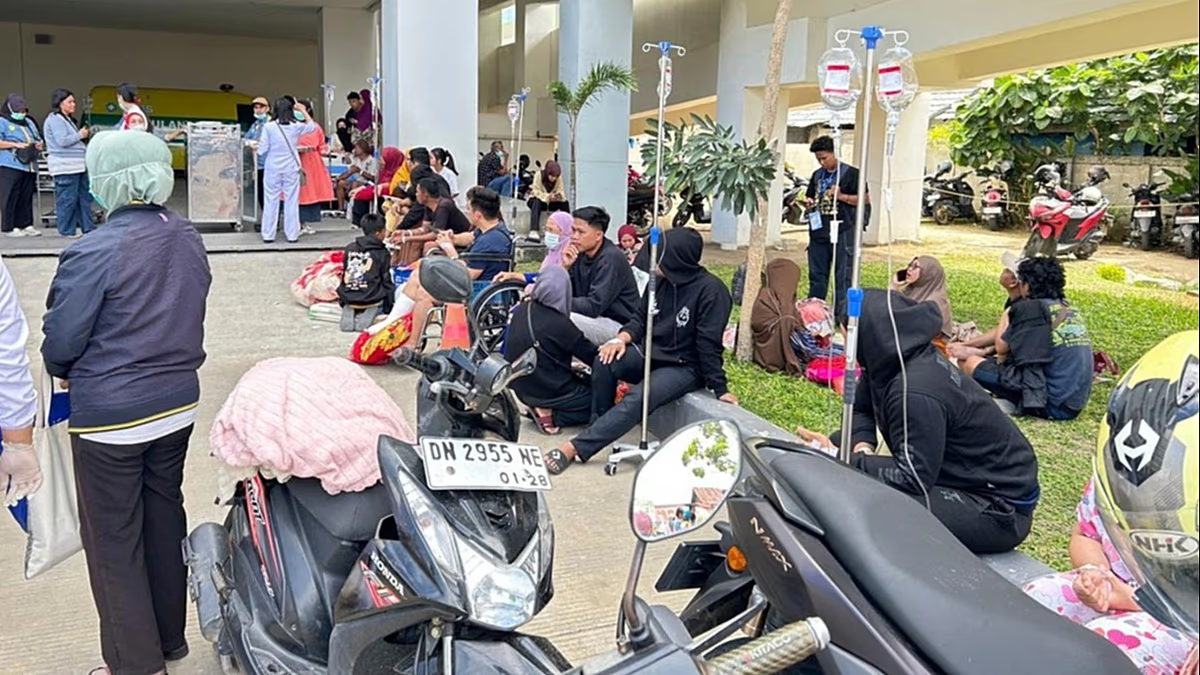
The city of Palu, home to approximately 400,000 people, bore the brunt of the quake’s fury. Residents experienced intense, prolonged shaking that lasted for over a minute—an eternity for anyone caught in such a terrifying situation. In the immediate aftermath, scenes of precaution and emergency response unfolded across the city. Hospitals, prioritizing patient safety above all, undertook swift evacuations. Medical staff guided patients outside, with some individuals still connected to vital IV drips, creating poignant images of resilience and care amidst the chaos. While widespread catastrophic damage was not immediately reported, the event resulted in scattered destruction, disrupting normal life and instilling a deep sense of vulnerability.
The seismic activity did not cease with the main shock. The earth continued to groan and shift, producing several significant aftershocks that kept the community on edge. The most powerful of these subsequent tremors registered at magnitudes of 5.2, 5.0, and 4.9, each a stark reminder that the danger had not yet passed. These follow-up quakes can often be as psychologically damaging as the initial event, preventing people from returning to their homes and businesses, and hampering recovery efforts. For the people of Palu, each new tremor reignited the fear of the initial quake, creating an atmosphere of sustained anxiety.
This event is a tragic but familiar story for Indonesia, a vast archipelago nation situated along the volatile Pacific Ring of Fire. The country is crisscrossed by numerous major seismic faults and is dotted with active volcanoes, making it one of the most geologically active regions on the planet. Earthquakes and volcanic eruptions are, sadly, a common part of life. The memory of past disasters is never far from mind. For instance, in January 2021, a magnitude 6.2 earthquake struck near Mamuju, also on Sulawesi island, claiming at least 100 lives and forcing thousands to abandon their homes to sleep outdoors for days, terrified of collapsing structures from aftershocks. This historical context adds a layer of collective trauma to the current emergency.
As Tuesday’s event continues to develop, emergency services and local authorities are assessing the full scope of the impact. The primary goals are ensuring public safety, treating the injured, and evaluating the stability of buildings and infrastructure. The situation remains fluid, with journalists and aid organizations working to gather more detailed information as it emerges from the affected zone. The true scale of the damage—to homes, roads, and livelihoods—will become clearer in the coming hours and days, guiding the recovery and aid response.
Ultimately, this earthquake serves as a sobering testament to the raw power of nature and the resilience of the communities that live in its shadow. For the people of Central Sulawesi, the path forward involves navigating the immediate physical dangers, coping with the psychological aftershocks, and beginning the slow process of rebuilding. The world watches and stands in solidarity, hoping for their safety and recovery as the story continues to unfold. The courage of the hospital workers, the patience of the displaced, and the solidarity of neighbors once again highlight the human spirit’s capacity to endure in the face of profound challenge.