


The Allure and Peril of the Ascent: Remembering the ‘Spider-Man of Yemen’
In a world increasingly experienced through curated screens, the raw, unfiltered spectacle of human daring holds a unique power. It was this very power that propelled a young Yemeni man named Al-Qaqa Ibn Antar from the rugged landscapes of his homeland to the flickering attention spans of a global audience. Known to hundreds of thousands online as the “Spider-Man of Yemen,” Antar built a digital following by documenting his ascents of Yemen’s formidable cliffs and mountains, often with nothing but his own grit and agility. His videos were a stark contrast to the polished productions of mainstream media; they were visceral, pulse-quickening glimpses of a man seemingly in silent conversation with stone, his hands and feet finding purchase where most would see only sheer face. In a nation often associated in the global consciousness with conflict, his adventures projected a different narrative—one of breathtaking natural beauty and audacious human spirit. This online persona, however, was tragically severed from the man himself in June 2026, when a climb without safety equipment ended in a fatal fall, leaving behind a complex legacy of inspiration, caution, and profound loss.
The final chapter of Antar’s story unfolded at the Hardah Dam volcanic crater in Yemen’s southern Dhale province. The site itself is a geological monument to primal forces—a dormant volcano whose heart now holds a deep, placid lake, encircled by steep, rocky walls. For an adventurer like Antar, it represented the ultimate canvas. On that day, he embarked on scaling those sheer rock faces, a solitary figure against ancient stone. Authorities later confirmed what his videos had often showcased: he was climbing without ropes, harnesses, or any protective gear. In a moment that passed without witness but for the unforgiving laws of physics, he lost his grip. The fall into the crater’s depths was not just a physical plunge but a descent into a chillingly complex recovery mission, marking a stark transition from the realm of daring spectacle to one of sobering emergency response.
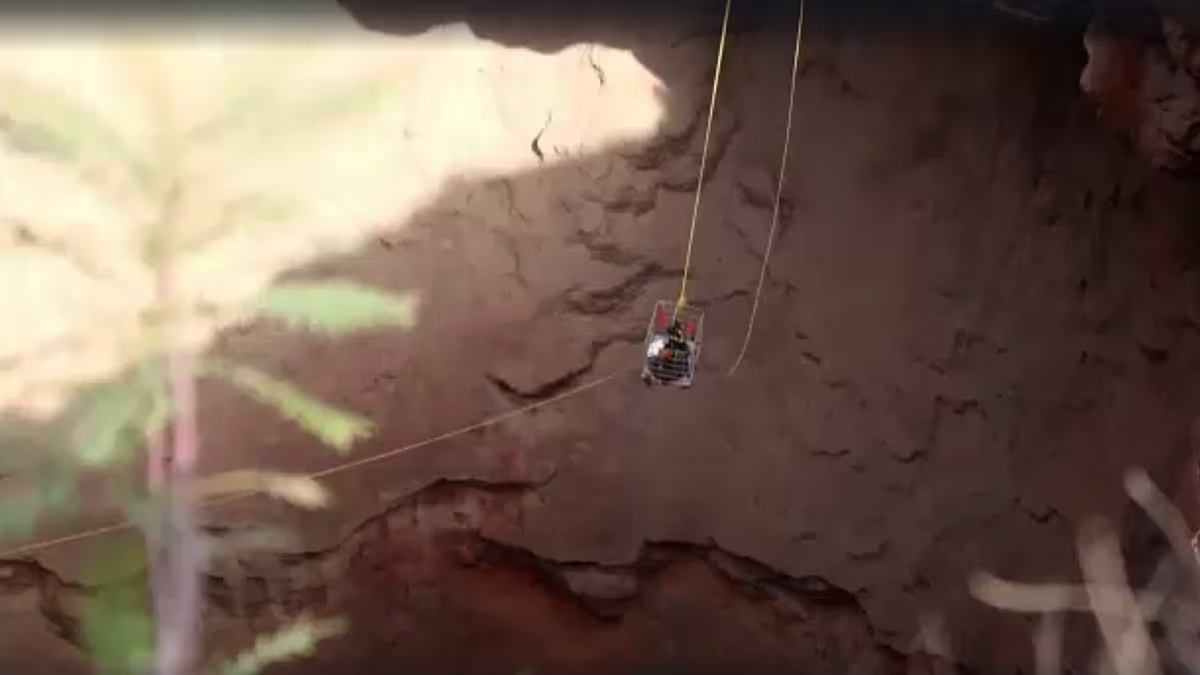
The response to the accident mobilized Yemen’s Civil Defense Authority into a operation that underscored the very dangers Antar had famously disregarded. The crater was not a simple pit; it was a water-filled chasm, requiring a hybrid rescue mission. Teams of divers and water rescue specialists were deployed to the remote site, facing the grim task of locating a body some 30 meters below the surface of the dark lake. Official video released afterward offered a haunting glimpse of the operation: rescuers, securely tethered by ropes, were lowered into the gaping maw of the earth in a metal rescue cage, a stark image of mandated safety procedures employed in the aftermath of their absence. For approximately four hours, these teams worked in the shadow of the same walls Antar had sought to conquer, ultimately recovering his body in a solemn and technically challenging effort that stood in silent testament to the risks he had spent his public life navigating.
To understand Antar’s choices is to grapple with the multifaceted culture of modern adventure and viral fame. His adopted moniker, “Spider-Man,” was more than a catchy nickname; it encapsulated the superhuman, almost fictional quality audiences attributed to his feats. In an online ecosystem that rewards extremes, the absence of visible safety gear amplified the perception of his skill and bravery, transforming climbs into high-stakes performances. Each successful video solidified his legend, drawing waves of admiration and concern from followers captivated by the sheer audacity. Yet this digital persona likely created an immense pressure to continually push boundaries, to seek out ever more dramatic vistas and perilous ascents to sustain the audience’s awe. The line between celebrated adventurer and daredevil, always thin, becomes perilously blurred under the glare of the social media spotlight, where the currency is spectacle and the stakes are, ultimately, real and mortal.
In the wake of the tragedy, the Yemeni Civil Defense Authority issued a necessary, if heartbreaking, statement. It was a direct plea from the professionals who witness the consequences firsthand, urging all climbers and adventure enthusiasts to “follow safety procedures and use proper protective equipment to avoid similar tragedies.” This official admonition forms the critical counterpoint to Antar’s legacy. It highlights the enduring, unglamorous truth that equipment like ropes and harnesses are not a concession to fear, but a bridge between human ambition and a return home. They represent the collective wisdom of the climbing community, hard-won through past losses. Antar’s story, therefore, becomes a poignant case study in this tension: the intoxicating pursuit of absolute freedom and unadulterated challenge, versus the disciplined protocols that allow passion to be a lifelong pursuit rather than a final, fatal act.
Al-Qaqa Ibn Antar’s death is more than the report of an accident; it is a deeply human story etched with contradiction. He was a young man who showcased the stunning topography of Yemen, offering a lens of wonder rather than war. He inspired with a display of breathtaking physical mastery and a seemingly fearless embrace of challenge. Yet, his passing serves as an enduring and solemn reminder of the non-negotiable laws of nature. His legacy is thus dual-edged—a vibrant memory of a man who danced upon the edges of the world, and a permanent cautionary tale about the price of dancing there alone. He reached for the heights, and in doing so, he leaves behind a complicated narrative that will resonate with anyone who has ever been drawn to the sublime edge of a cliff, physically or metaphorically. It is a story that asks us to admire the spirit of the ascent, while never forgetting the essential, grounding value of the safety line.