

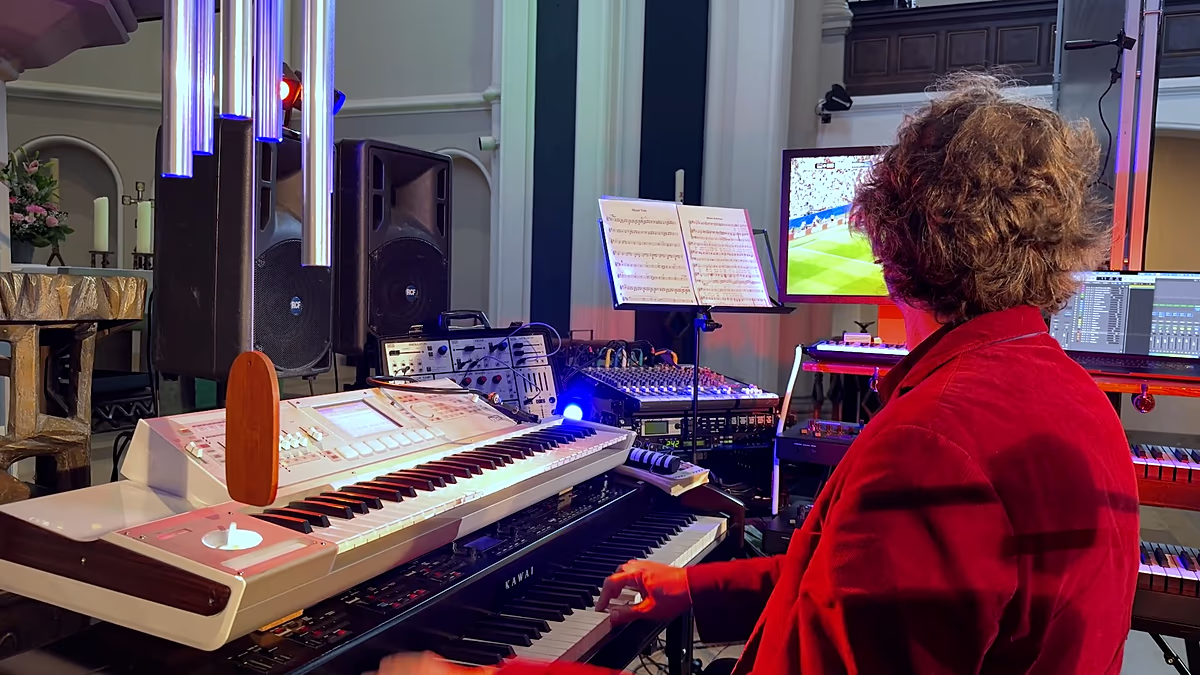
On a summer evening in Berlin, as millions around the globe tuned into the familiar cadence of television pundits for a World Cup match, a unique congregation was gathering in the Schöneberg district. Their destination was not a pub or a public viewing square, but the serene and hallowed space of the Church of the Twelve Apostles. Inside, the traditional commentary was replaced by an entirely different sonic landscape. Here, the beautiful game was not just watched, but felt and interpreted through music, as organist and composer Martin Bothmer sat poised at the church’s grand organ and his custom-built CineTonium keyboard, ready to provide a live, improvised score to the unfolding drama on the pitch.
This was a “Football Concert,” an ambitious artistic endeavor that sought to dissolve the boundaries between elite sport and live performance art. The concept transformed the stadium narrative into a cinematic one, where the rhythm of the match dictated the rhythm of the music. A patient buildup of possession might be underscored by a tense, minimalist motif, while a sudden, fast-breaking counter-attack would erupt into a frenetic, percussive passage. A contentious foul would be met with a dissonant clash of chords, and the ultimate moment of ecstasy—a goal—would trigger a triumphant, roof-raising crescendo from the powerful pipe organ. The match itself became the conductor, with Bothmer as the virtuosic interpreter, translating every tackle, save, and pass into an evolving, emotional soundtrack.
On this particular night, the narrative source material was emphatic. The German national team delivered a stunning 7-1 victory, providing Bothmer with a wealth of dramatic peaks to score. The relentless scoring meant the performance was characterized by recurring waves of jubilant, energetic passages, each goal a new movement in a symphony of national sporting pride. The sheer scale of the win allowed for a musical journey that ranged from the anticipatory quiet of the opening to the sustained, celebratory finale. Bothmer, who is widely recognized in Germany for his masterful live accompaniments to silent films, applied the same principles of responsive storytelling to the beautiful game, proving that sport can possess the same visceral, narrative power as classic cinema.
The setting itself was central to the experience’s profound resonance. The Church of the Twelve Apostles, with its soaring architecture and resonant acoustics, lent a sense of epic grandeur and communal focus to the event. This was no casual viewing; it was a shared, almost reverential engagement with the spectacle. The large screen, upon which the match played, stood in contrast to the stained glass and ecclesiastical furnishings, creating a fascinating dialogue between the sacred and the secular, the timeless and the immediately current. The donation-based entry fee reinforced a spirit of inclusive community, welcoming all who wished to participate in this novel experiment.
This event has rapidly become one of Berlin’s most distinctive cultural attractions during the tournament, a testament to the city’s enduring love for innovative artistic fusion. It represents a conscious move away from passive consumption of sport towards an active, collective, and multi-sensory experience. By combining the universal passion for football with the immersive power of live music within a resonant public space, Bothmer has created a format that celebrates public participation as much as performance. Attendees are not merely fans, but an audience and a part of the happening, their collective gasps and cheers blending with the improvised score.
In essence, the Football Concert re-enchants the viewing of sport, asking us to listen to the game as intently as we watch it. It highlights the inherent drama, rhythm, and narrative flow that can make a football match feel like a living opera. Scheduled to continue for all of Germany’s World Cup matches, this series promises to chart the team’s journey through a corresponding musical journey, composed in real-time. In doing so, it offers a poignant reminder that at the intersection of art, community, and sport, there exists a powerful space for human connection and shared emotion, all amplified under the vaulted ceiling of a quiet Berlin church.