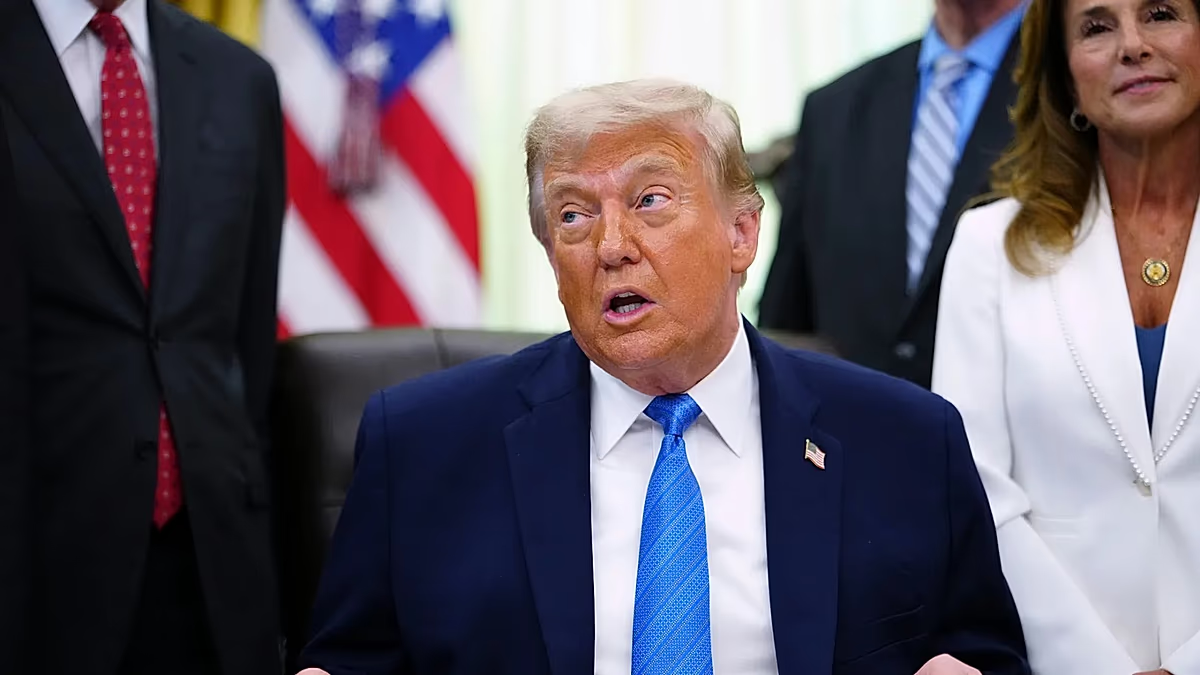


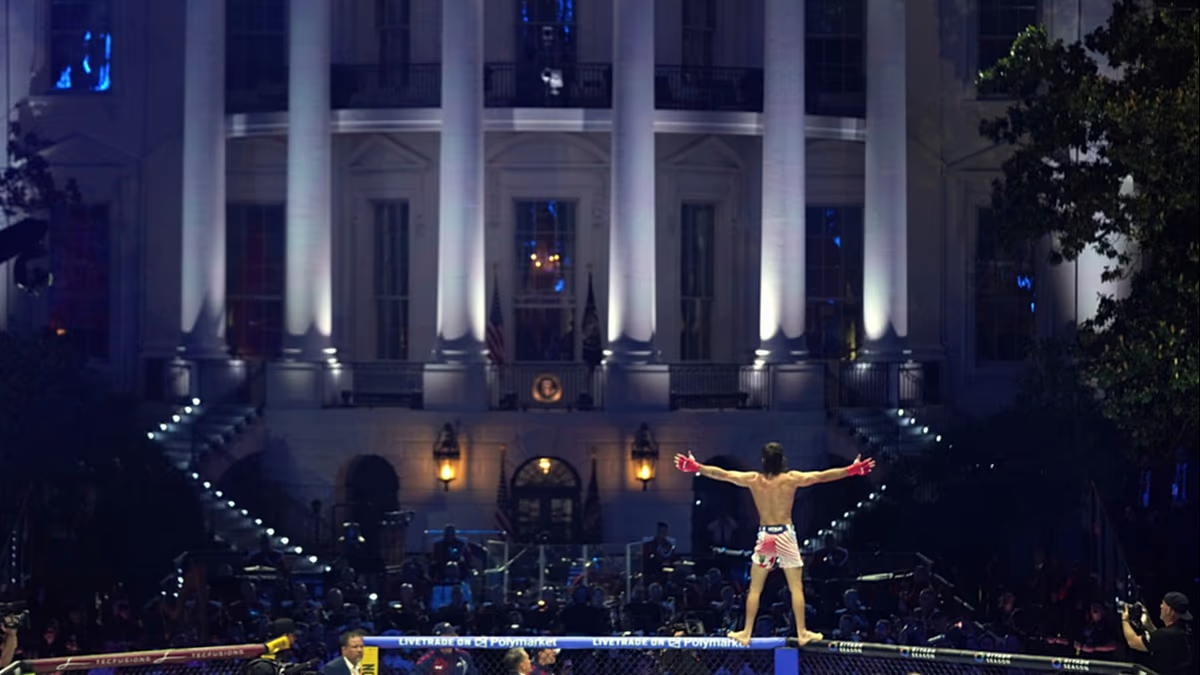
On a sweltering Sunday that marked his 80th birthday, President Donald Trump presided over an event that would have been unimaginable in any previous administration: a full-scale Ultimate Fighting Championship (UFC) spectacle on the hallowed South Lawn of the White House. The surreal scene, dubbed by UFC CEO Dana White as a “one of one event,” was framed by Trump as a celebration of American strength and a highlight of the ongoing 250th-anniversary festivities for the nation’s founding. Yet, the evening was underscored by the jarring juxtaposition of violent combat sport against the neoclassical backdrop of the People’s House, a symbol of presidential dignity and democratic tradition. The event’s very scheduling exerted Trump’s personal priority, even causing the gathering of world leaders at the G7 summit to be pushed back to accommodate his birthday celebration, signaling a profound shift in the optics of presidential conduct.
The production was a massive logistical and theatrical undertaking. More than 4,000 invited guests gathered under “The Claw,” a futuristic metal arch outfitted with dazzling lights and screens, while thousands more watched from the nearby Ellipse. The evening was preceded by a hype session at the Lincoln Memorial, where fighters postured beneath the statue of the revered president, setting a tone of dissonant spectacle. Trump, clad in a full suit and tie despite the humidity, watched the action with a stern expression from his vantage point. The pageantry reached a peak as fighter jets roared overhead during the national anthem and again near midnight, merging martial symbolism with sports entertainment in a potent, staged display of power.
Throughout the night, the line between political rally and sporting event blurred completely. Victors repeatedly thanked Trump alongside God, and several made a point of paying homage to the president directly. After his win, heavyweight Josh Hokit placed a chain around Trump’s neck and used his microphone time to shout a baseless, partisan conspiracy theory. Another winner, Bo Nickal, knelt beside Trump to chat and later called him a “special person,” his remarks followed by the Trump-campaign staple “YMCA.” The interactions transformed the presidential box into a throne, with fighters offering fealty and the crowd’s cheers affirming a cult of personality that extended far beyond typical political fandom.
The weekend, however, was not without its discordant notes, even for the celebrating president. Just a mile away from the birthday bash, crews were physically removing Trump’s name from the Kennedy Center, following a judicial ruling that the honor had been improperly granted. Furthermore, before the fights began, outspoken UFC Middleweight champion Sean Strickland was escorted from the Ellipse by law enforcement, a reminder of the simmering cultural and political tensions that persist outside the curated arena. These incidents served as quiet counterpoints to the evening’s fanfare, hinting at the controversies and legal challenges that continue to shadow Trump’s public life.
The sheer scale and nature of the celebration threw into sharp relief the stylistic chasm between Trump and his immediate predecessor. When President Joe Biden turned 80 in 2022, he marked the occasion with a private family brunch at the White House—a subdued, traditional observance that now feels like a relic from a different political era. Trump’s UFC event, by contrast, was a public, pulsating, and deeply personal assertion of his brand, one that deliberately conflated his identity with a certain vision of American spectacle. The White House itself endorsed this view, with spokesperson Allison Schuster declaring the night “one of the most entertaining nights in American history” and a fitting tribute to the nation’s semi-quincentennial.
In the end, the evening was less a birthday party and more a state-of-the-union for Trump’s political ethos. It was a vivid tableau of combat, loyalty, celebrity, and national symbolism, all orchestrated for and revolving around the central figure in the arena’s most privileged seat. It demonstrated a continued mastery over the media landscape and a willingness to redefine presidential norms by transplanting the energy of a campaign rally into the very heart of executive power. As the final bell sounded and the crowds dispersed, what remained was the image of a president who has relentlessly transformed the office into a stage, where the loudest, most unconventional, and most divisive spectacle wins the day.