

Paragraph 1
A quiet but significant shift is unfolding across urban France as the FIFA World Cup kicks off, marked not by universal celebration but by a patchwork of cautious municipal policies. Following recent episodes of urban violence linked to major football victories, several cities are implementing restrictive measures, with the latest being the town of Moulins (population 19,000), which has introduced a night-time curfew for unaccompanied minors under 16 for the tournament’s duration. This move echoes actions taken by larger cities like Toulouse and Clermont-Ferrand, revealing a broader trend of local authorities prioritizing public order over spontaneous, large-scale public viewing. The central question emerging from this cautious approach is which city will be next to follow suit, as each municipality weighs its unique social climate against the potential for unrest during this globally charged sporting event.
Paragraph 2
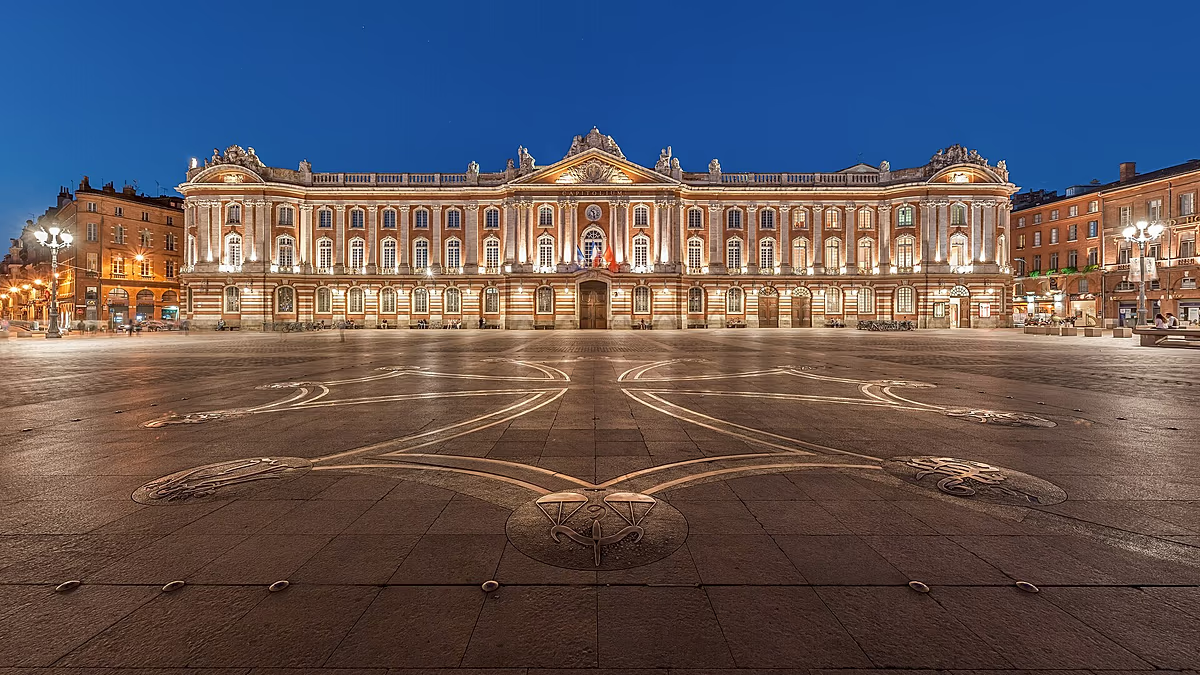
In Toulouse, known as the Pink City, the practical effects of this cautious strategy will be felt starting Saturday evening, timed with the high-stakes match between Brazil and Morocco. The city’s centre-right mayor, Jean-Luc Moudenc, framed the curfew—which runs from 10 PM to 5 AM in an expanded downtown zone—as a necessary step to “guarantee the safety of Toulouse residents and of minors,” developed in consultation with police authorities. Notably, the policy includes exceptions for minors accompanied by parents or in cases of emergency, attempting to balance security with practicality. Perhaps as a conciliatory gesture, the announcement was paired with a promise to establish a fan zone for up to 18,000 supporters should France advance to the later stages, a direct concession to left-wing opposition demands. However, this “stick and carrot” approach has drawn sharp criticism from figures like LFI MP François Piquemal, who labels the curfew “madness” and argues it unfairly penalizes youth.
Paragraph 3
Taking an even firmer stance, the city of Clermont-Ferrand has adopted what may be the strictest regulations observed so far. Its right-wing mayor, Julien Bony, has outright rejected the fan-zone concept—“even if France reach the final”—and instituted a curfew from 11 PM to 7 AM, enforced with a €150 fine for violations. Going a step further, bars showing matches have been instructed to turn screens inward to discourage street gatherings. Officials justify this hardline position by pointing to serious incidents following the Champions League final in late May and subsequent riot calls on social media in early June. For residents seeking respite from the tournament’s intensity, Clermont-Ferrand appears positioned as an unlikely refuge, its streets deliberately kept clear of the crowded, boisterous atmospheres other cities might cultivate.
Paragraph 4
This municipal reticence toward large, official public viewings is widespread among France’s major cities, reflecting a lack of enthusiasm for state-sanctioned mass gatherings. Marseille, under Socialist leadership, has reportedly declined to organize a fan zone, while Paris remains undecided on final arrangements, though city officials have expressed a general desire to host one. In Lyon, the Green-led council has adopted a wait-and-see approach, calling fan zones a “possibility” contingent on France’s progression and currently encouraging residents to support local businesses like bars and restaurants instead. This cautious, decentralized model stands in stark contrast to the traditional image of unified national celebration, suggesting a post-pandemic and post-unrest wariness among city planners about managing dense crowds.
Paragraph 5
Nevertheless, not every locality is opting for restriction. Some municipalities are actively embracing the tournament’s communal spirit. Strasbourg, for instance, plans to broadcast France’s matches on a giant screen and on bar terraces. More notably, in Vénissieux, the LFI mayor Idir Boumertit has enthusiastically promised constituents “a great popular summer,” organizing decentralized screenings across the city complete with bars and barbecues. His approach intentionally highlights the global nature of the event, scheduling matches featuring teams from diverse continents, though he acknowledges the practical challenge of late-night kickoffs due to time-zone differences. These initiatives represent a conscious political choice to foster inclusive, neighborhood-based celebration, framing the World Cup as an opportunity for community building rather than a security risk.
Paragraph 6
As the current tournament unfolds under this fragmented landscape of celebration and caution, the long-term implications for public life and major events in France come into view. The varied responses—from curfews and bans to barbecues and giant screens—illustrate deep-seated local political divergences on how to balance security, civil liberties, and communal joy. This decentralized decision-making grants cities the autonomy to respond to their unique histories with crowd-related violence but also risks creating a confusing national patchwork of regulations. With the next World Cup in 2026 set to be hosted across North America, French cities have this moment to reflect and recalibrate. The enduring question will be whether the cautious models of Toulouse and Clermont-Ferrand or the welcoming approach of Vénissieux becomes the blueprint for future global events, shaping how communities worldwide choose to gather in an increasingly uncertain public sphere.