


Paragraph 1: A Tense Pause on the Brink of Peace
As of Sunday, June 14th, 2026, the world holds its breath, waiting to see if a devastating and protracted war between the United States and Iran can finally be brought to a close. Despite a flurry of optimistic signals from other key players over the weekend, Iranian state media delivered a crucial dose of caution, reporting that Tehran itself has not yet made a final decision on the proposed peace deal. This announcement creates a tense pause at what many had hoped was the finish line, underscoring the immense gravity of the choice before Iran’s leadership and the fragile nature of the entire diplomatic endeavor. The conflict, which has destabilized global energy markets and threatened regional security for years, now hangs in the balance of this single, unresolved decision from the Iranian capital.
Paragraph 2: A Surge of Optimism from Mediators
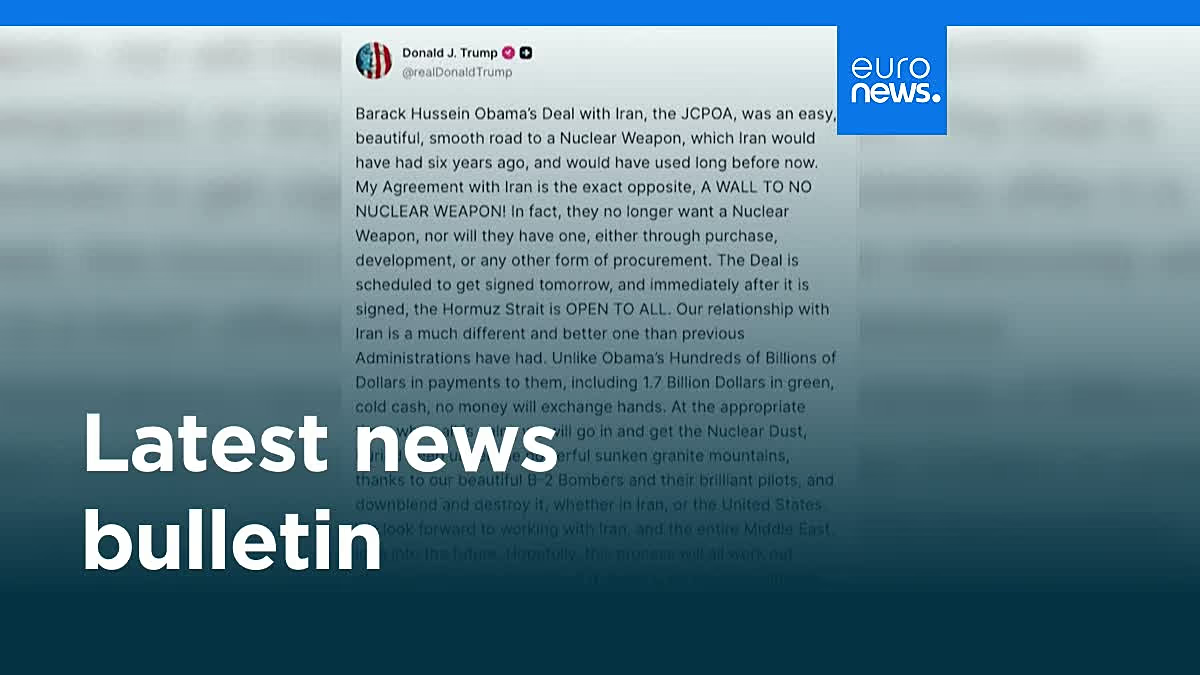
The Iranian hesitation followed a day of notable optimism from the two primary architects of the peace talks. US President Donald Trump, leveraging his favored platform Truth Social, made a bold declaration on Saturday that a deal could be signed within 24 hours, directly linking it to the reopening of the strategic Strait of Hormuz. Simultaneously, Pakistan’s Prime Minister Shehbaz Sharif, whose nation has played a pivotal and delicate role as mediator, echoed this timeline. He stated that an agreement was closer “than ever before” and that Pakistan was preparing for an “electronic signing” imminently, to be followed by detailed technical discussions. These coordinated statements suggested that negotiators had, in principle, bridged their most significant gaps, setting the stage for a historic announcement.
Paragraph 3: The Core Demands: Navigation and Non-Proliferation
At the heart of the proposed agreement lie two interconnected pillars, both critical to US and international demands. The first is the full and guaranteed reopening of the Strait of Hormuz, the narrow maritime passageway through which a substantial portion of the world’s seaborne oil and liquefied natural gas flows. Its closure or threatened closure by Iran has been a major flashpoint in the conflict, crippling global energy logistics. The second, and even more consequential pillar, is a verifiable end to Iran’s nuclear weapons program. President Trump framed this not as a mere limitation but as an absolute “wall to no nuclear weapon,” presenting the deal as the definitive solution to one of the world’s most enduring security dilemmas. These two elements form the non-negotiable core of the peace proposal from the US perspective.
Paragraph 4: Diplomacy in Motion Amidst Uncertainty
Even as Iran publicly demurred on a final answer, the machinery of diplomacy continued to turn. A delegation from Qatar, another nation with lines of communication to all sides, arrived in Tehran on Sunday, a clear sign that last-minute discussions were actively underway. According to Iran’s Tasnim news agency, the Qatari officials were there to “examine the latest developments,” suggesting a role in clarifying terms or relaying messages. This ongoing activity indicates that while Iran is not yet ready to say “yes,” it is also not walking away from the table. The presence of external diplomats at this critical juncture highlights the international community’s deep investment in a peaceful resolution and the complex, multi-party effort required to navigate these final hurdles.
Paragraph 5: The Stakes and the Shadow of the “Ultimate Alternative”
The stakes of this moment could not be higher. A successful deal would not only halt active warfare but would potentially reshape the security architecture of the Middle East, secure global energy supplies, and resolve a decades-long nuclear crisis. However, President Trump’s statement also carried a stark, unmistakable warning that underscored the alternative path. After expressing hope that the process would conclude “quickly, easily, and smoothly,” he added, “If it doesn’t, we have the ultimate alternative, hopefully never to be used again.” This thinly veiled allusion to military escalation serves as a powerful reminder of the pressure on Iran to agree and the catastrophic potential for renewed and intensified conflict should these negotiations ultimately fail.
Paragraph 6: A World in Waiting
Thus, we find ourselves at a historical inflection point defined by contradiction: simultaneous hope and hesitation, public optimism and private deliberation. The coordinated confidence from Washington and Islamabad clashes with the deliberate, unresolved posture from Tehran. While the logistical plans for a digital signing ceremony are reportedly being drawn up, the essential political commitment from one of the principal belligerents remains pending. The world now watches Tehran, awaiting a decision that will either unlock the Strait of Hormuz and a new chapter of non-proliferation, or condemn the region to an uncertain and dangerous future. The next 24 hours, as promised by mediators, will reveal whether diplomacy has achieved a monumental breakthrough or if the grim specter of the “ultimate alternative” moves closer to reality.