



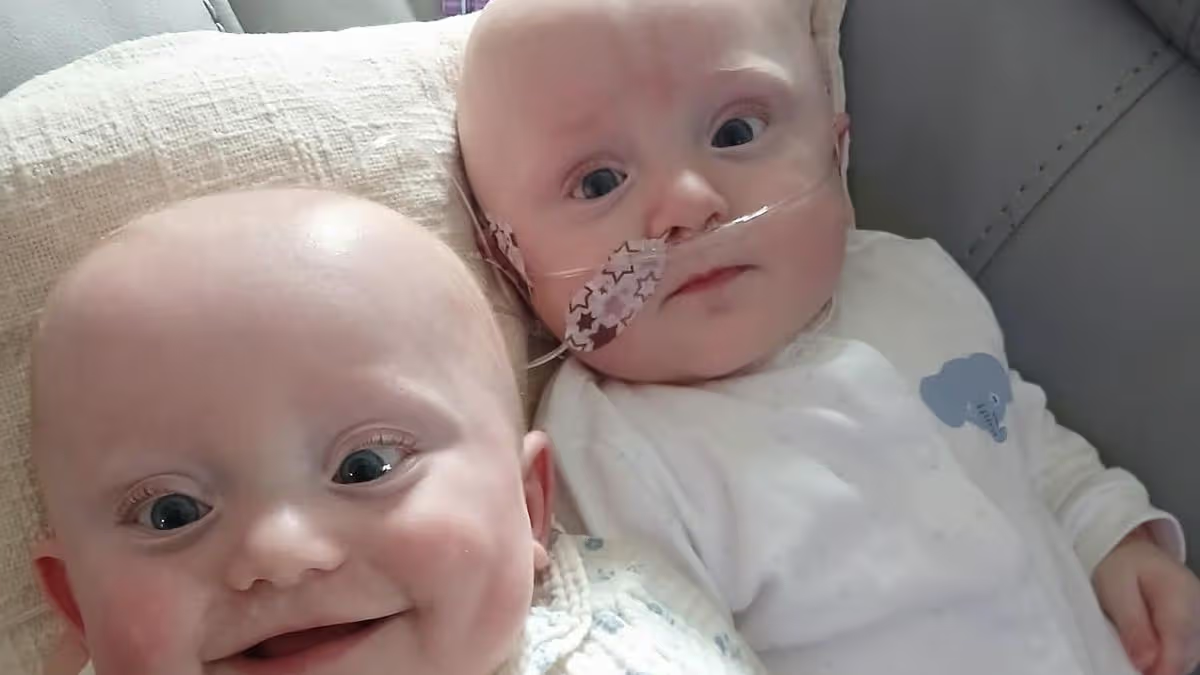
The phrase “miracle” is often used lightly, but for Amy Sharkey and Jack Ginn, it is the only word that fits the story of their twins, Orla and Frankie. Born at just 23 weeks of pregnancy—a staggering 17 weeks before their due date—their arrival was a breathtaking plunge into a world of uncertainty. Orla, arriving first on September 7, 2025, weighed a mere 1lb 1oz, while her brother Frankie followed four days later at 1lb 5oz. To grasp their fragility, one need only look at their father’s hand: each baby fit within his palm, with Orla’s entire hand no larger than his fingernail. The parents were starkly informed that survival odds at such an early gestation are typically below ten percent, launching them on an emotional odyssey that would test every fiber of their being, defined by relentless hope and unimaginable strength.
The pregnancy had progressed without alarm until Amy’s 20-week scan, making the sudden turn of events all the more devastating. By mid-August 2025, Amy was already dilated, leading to a desperate intervention: a cervical stitch to keep her womb closed. This procedure bought a few precious, critical days. However, an infection soon necessitated the stitch’s removal, and Orla was born shortly after, her weight comparable to a small bag of sugar. Frankie, threatened by the spreading infection from his sister’s placenta, was induced and delivered just four days later. In minutes, the couple became parents to two micro-preemies, their new family immediately separated as the twins were rushed to the neonatal intensive care unit, their lives sustained by a symphony of beeping monitors and advanced medical technology.
The battle for survival was fraught with severe complications from the start. At just ten days old, Orla developed a grave bowel infection called Necrotising Enterocolitis (NEC), which caused three separate perforations in her intestines. She endured three major abdominal surgeries, the first when she was barely older than a week. The situation grew so dire that Jack and Amy were asked on multiple agonizing occasions if they wished to transition to palliative care—a question that hung over them like a shadow. Yet, Orla, described by her parents as a “feisty little boss lady,” defied expectations. She lived for over 100 days with a stoma before undergoing a final, successful surgery to reconnect her bowel in February 2026, though she will live without a colon. Her fighting spirit became the family’s beacon.
Frankie’s journey, while different, was equally arduous. He developed chronic lung disease and pulmonary hypertension, conditions that will require long-term management. Like many extremely premature babies, both twins faced the risk of blindness from Retinopathy of Prematurity (ROP), necessitating laser eye surgery for Frankie. Through 161 days in the hospital, Frankie—a “sweet little mummy’s boy”—fought his own silent battles. His discharge in February 2026 was a milestone of bittersweet joy, as Orla remained hospitalized. The family then lived in a charity house within the hospital grounds, their world contracted to the rhythms of the neonatal unit, waiting for the day they could all go home together.
That long-awaited day finally arrived on April 20, 2026, when Orla was discharged after 225 days in the hospital. The homecoming, however, marked not an end, but the beginning of a new chapter of complex care. Both children are still fed via tubes, and Frankie requires 24-hour oxygen support. Amy and Jack now navigate a life of feeding schedules, medical equipment, and therapy appointments, with the understanding that some challenges, particularly for Orla, may be lifelong. Yet, the parents speak not of burden, but of profound gratitude. The twins’ vibrant personalities now shine through: Orla with her determined feistiness, and Frankie with his chatty, cuddly nature—proof of the vibrant lives flourishing against all odds.
Reflecting on their harrowing eight-month journey, Amy and Jack reserve their deepest thanks for the dedicated staff of the Simpsons Special Care Babies Unit and the Ronald McDonald House charity, which provided a haven within the hospital walls. This support system was their lifeline during months where they “lived and breathed the hospital,” often going weeks without fresh air. Today, as they watch their twins grow and develop, they are filled with a sense of awe. The babies who once fit in the palm of a hand have proven themselves to be resilient giants. Their story is a powerful testament to the advances of modern medicine, the indispensable compassion of healthcare workers, and, above all, the fierce, tenacious will to live—and love—that defines the human spirit.