

Nestled on the serene French shore of Lake Geneva, the alpine town of Évian-les-Bains, renowned for its calming mineral waters, is set to become the epicenter of a far less tranquil global conversation. From Monday, the leaders of the world’s seven largest advanced economies will gather for the 52nd G7 summit, a meeting that arrives at arguably one of the most precarious junctures in recent memory. The picturesque setting stands in stark contrast to the formidable agenda, which must navigate a world of escalating tensions, economic uncertainty, and profound geopolitical shifts. This year’s gathering is not merely a routine diplomatic engagement; it is a critical test of whether these allied nations can still find common ground and coordinated action amidst a landscape of deepening fractures and strong personal dynamics.
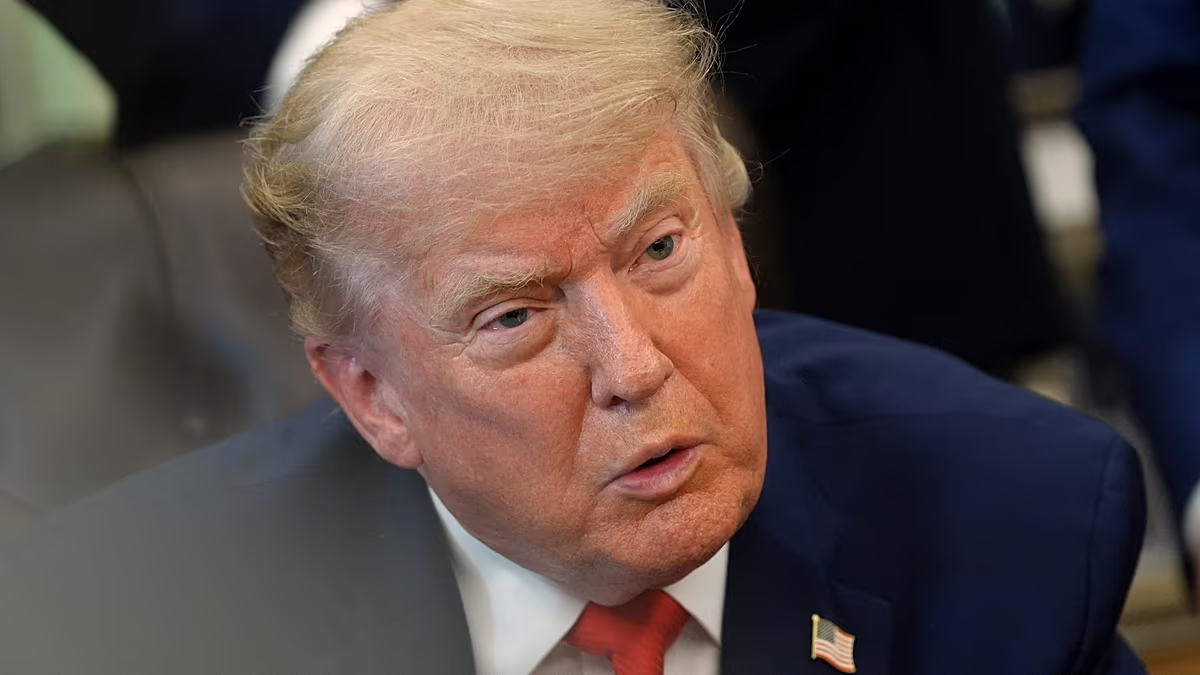
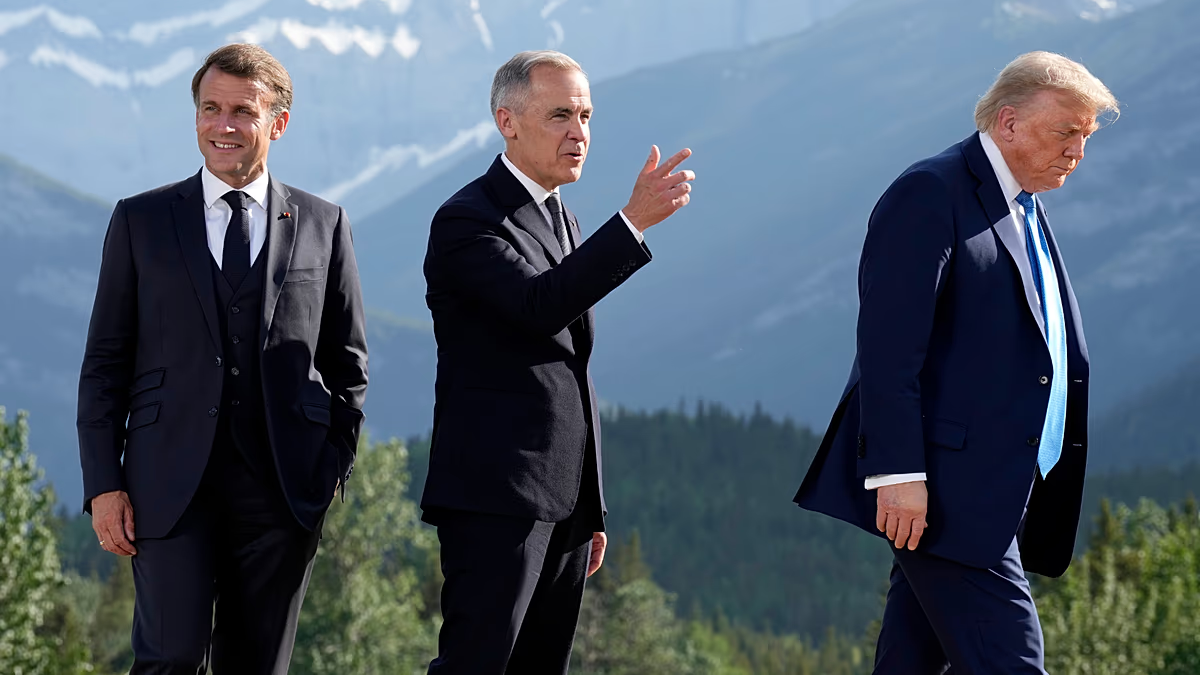
At the heart of this summit lies the complex and now-transactional relationship between host French President Emmanuel Macron and American President Donald Trump. Their once-warm “bromance,” famously initiated with a white-knuckle handshake, has cooled into a more pragmatic and strained dialogue. The schedule itself underscores this delicate dance: Trump’s delayed arrival, following a mixed-martial arts event at the White House, pushed the entire summit back a day, yet he is still granted a private reception with Macron. The leaders will navigate a litany of European grievances, from U.S. tariffs and ambiguous commitments to NATO, to the severe economic fallout from conflicts in the Middle East. As one European official noted, the personal affection may be gone, replaced by a “grudging mutual respect,” but the pressure to secure American cooperation on urgent global issues has never been greater.
Foremost among these urgent issues is the potential for a landmark peace agreement between the United States and Iran, a deal that seems tantalizingly close yet remains uncertain. The closure of the Strait of Hormuz by Iran earlier in the year sent shockwaves through the global economy, dramatically hiking energy prices by blocking a quarter of the world’s seaborne oil trade. Even if a diplomatic breakthrough is achieved, the daunting practical task of clearing the waterway of mines remains. A multinational plan led by the UK and France is ready for deployment, but it requires Trump’s explicit endorsement—a goal that will be a central, and perhaps contentious, pillar of the summit discussions. The president’s recent downplaying of the mine threat, contrary to his own administration’s assessments, illustrates the unpredictable nature of the negotiations.
Beyond the Middle East, other fault lines will dominate the agenda, revealing shifts in global priorities and alliances. The presence of Ukrainian President Volodymyr Zelenskyy at a working session on European security will be a somber affair, as his lack of a scheduled bilateral meeting with Trump signals Kyiv’s diminished standing in Washington. Meanwhile, the guest list expands to include leaders from Egypt, the UAE, and Qatar for discussions on Middle Eastern stability, highlighting the region’s persistent centrality. In a stark reflection of a new age, the summit will also host an unprecedented gathering of artificial intelligence pioneers, including the CEOs of OpenAI, Google DeepMind, and Anthropic. Their dedicated working lunch on the safe deployment of AI represents the G7’s most concrete institutional step to date on governing a technology that is rapidly reshaping human society.
The underlying theme of this fragmented world was powerfully articulated by Canadian Prime Minister Mark Carney on the eve of the summit. Speaking in Dublin, he described a world not in quiet transition but in “global rupture,” where the post-Cold War rules-based order is breaking down. This sentiment hangs over every discussion in Évian, from trade and security to technology and energy. The leaders are not simply managing discrete crises; they are attempting to steward a disordered international system through a period of profound redefinition. The outcomes will hinge on their ability to reconcile national interests with collective action, and personal diplomacy with strategic necessity.
As the leaders depart the tranquil shores of Lake Geneva, the world will measure the success of this summit not by the elegance of its concluding communiqué, but by tangible actions in the weeks that follow. Will a U.S.-Iran deal be finalized and the Strait of Hormuz safely reopened? Will commitments on Ukraine and European security translate into sustained support? Can a framework for governing AI begin to take shape? The answers will determine whether the G7 can still function as a steering committee for the free world, or if it has become merely a diplomatic tableau, reflecting the very divisions it aims to heal. In Évian-les-Bains, the waters may be calm, but the diplomatic waters have never been more turbulent.