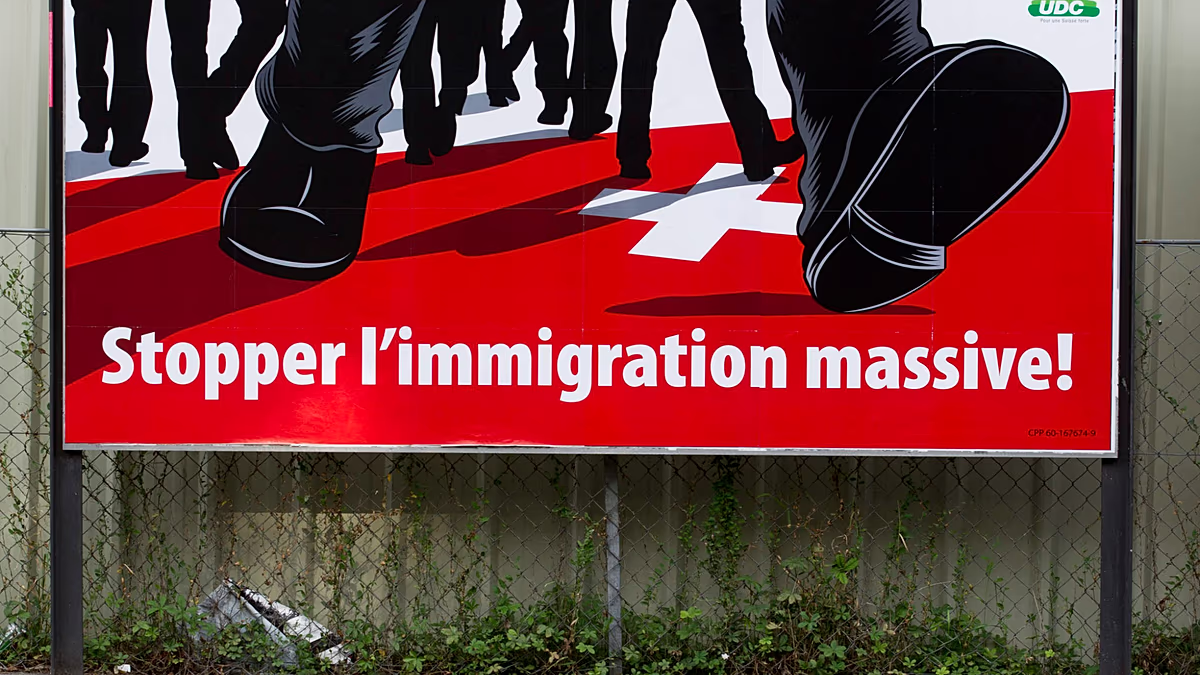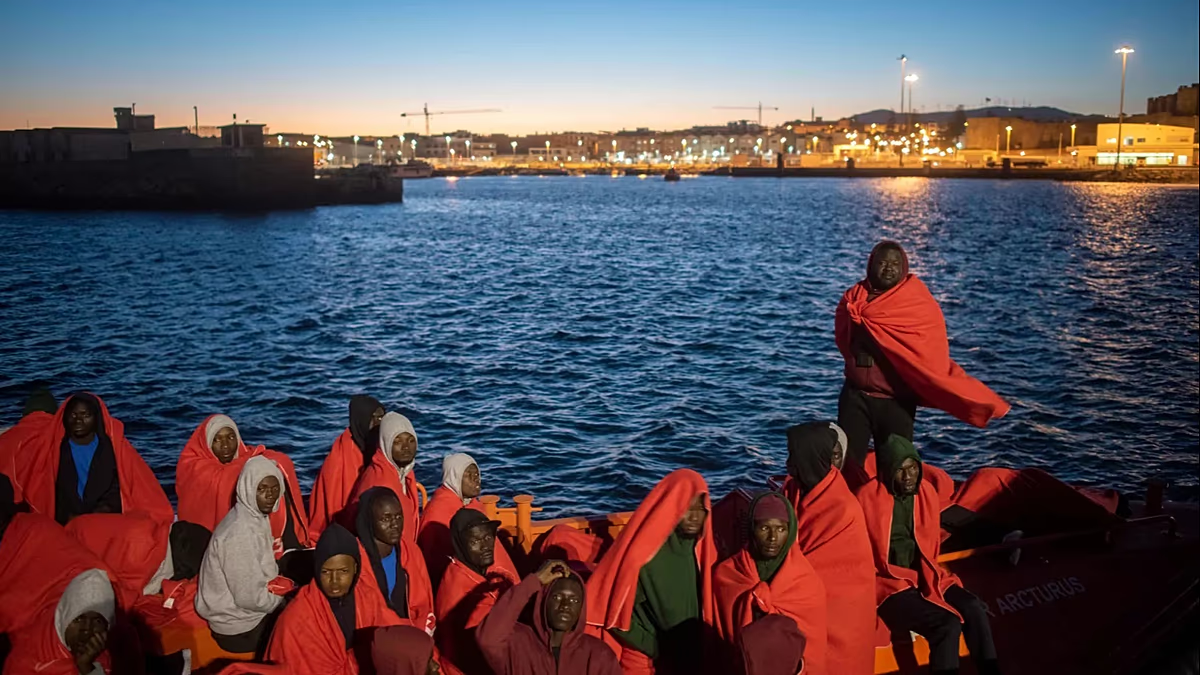




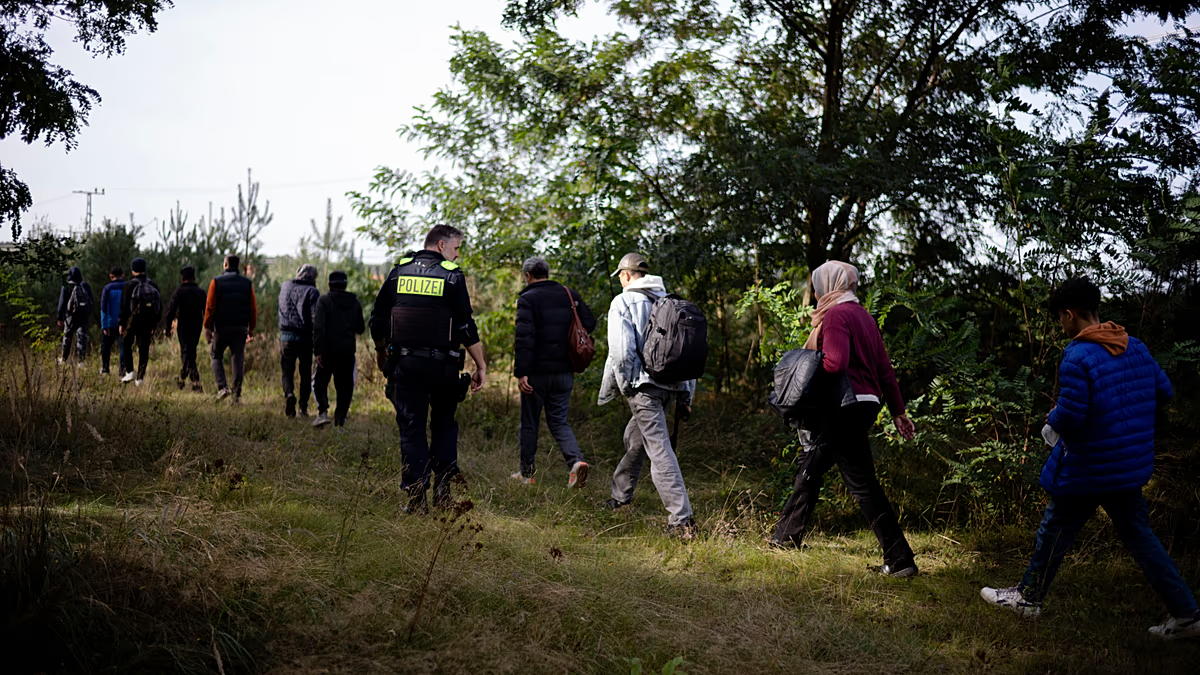
For nearly a decade, the European Union has grappled with the profound and politically divisive challenge of managing migration. The issue was thrown into sharp relief in 2015, a year that became a watershed moment. Following comments by then-German Chancellor Angela Merkel, which were widely perceived as an open invitation, hundreds of thousands of people sought refuge within the EU’s borders. This crisis laid bare the fundamental weaknesses in the bloc’s collective approach, pitting frontline states like Greece, Italy, Spain, and Cyprus—bearing the brunt of arrivals due to their extensive, difficult-to-police sea borders—against interior nations reluctant to share the burden. The deep-seated tensions and lack of a unified system have fueled political instability and sown discord among member states, revealing a Union struggling to align its humanitarian values with practical governance and border control.
In response to this protracted crisis, after years of contentious debate and negotiation, the EU has finally forged a landmark agreement: the New Pact on Migration and Asylum. This ambitious framework seeks to overhaul the bloc’s entire approach by establishing, for the first time, a single set of common rules governing border procedures, asylum applications, and reception conditions across all 27 member states. One of its most significant provisions is the abandonment of the longstanding Dublin Regulation, often called the “first country” rule, which placed sole responsibility for processing an asylum seeker on the nation of first entry. This rule had placed an unsustainable and unequal burden on border countries, leading to overcrowded camps and systemic bottlenecks. The Pact aims to replace this outdated model with a principle of mandatory solidarity, compelling all member states to contribute to a common solution.
The cornerstone of this new system is a “compulsory solidarity” mechanism designed to ensure responsibility is shared more equitably. Under this scheme, member states are categorized based on their circumstances. Countries like Cyprus, Greece, and Spain, as primary beneficiaries, will see a portion of the migrants arriving on their shores relocated to other nations, while also receiving increased financial support. A second group, including nations like Poland, Croatia, and Austria, are classified as “under pressure” due to their own migration challenges. The remaining states are designated as “assisting countries,” required to help either by accepting relocations or by providing financial contributions—paying a sum equivalent to approximately 20,000 euros per relocated person they decline to accept. This financial option was a crucial compromise to secure agreement from more reluctant governments.
The Pact introduces a dynamic, yearly adjustment process. The European Commission will annually calculate a “relocation pool” based on factors like population, GDP, and the current asylum situation; for 2026, this figure is set at 21,000 individuals. Crucially, the Commission can grant temporary exemptions to countries facing exceptional emergencies. Poland, for instance, has been granted a provisional exemption for 2026 due to the dual pressures of hosting millions of Ukrainian refugees and managing a hybrid migration crisis on its border with Belarus. However, this reprieve is not permanent. The Commission will review the situation mid-year and again in December, with Poland’s obligation to participate in the solidarity mechanism hinging on these ongoing assessments. Meanwhile, countries like Hungary and Slovakia have already declared their outright refusal to accept any relocated migrants, signaling that political resistance remains potent.
It is important to clarify a common point of confusion: the Migration Pact itself does not mandate the creation of migrant return centres outside the EU. This contentious proposal is found in a separate piece of legislation, the regulation on a common system for returning migrants. This regulation seeks to make deportations of those denied asylum more effective by extending potential detention periods and exploring agreements with third countries to host processing centres. Italy’s government, under Prime Minister Giorgia Meloni, has been a pioneer in this approach, striking a deal with Albania, though it has faced significant legal challenges from both Italian courts and the European Court of Justice. The proposed regulation aims to provide a clearer legal foundation for such models, though the practical hurdle of persuading non-EU countries to participate, likely through substantial financial incentives, remains a formidable challenge.
In conclusion, the New Pact on Migration and Asylum represents the EU’s most concerted effort to date to build a coherent, collective response to a problem that has long tested its unity and principles. By mandating solidarity and moving beyond the flawed Dublin system, it seeks to balance responsibility more fairly across the Union. Yet, its success is far from guaranteed. The system’s complexity, the persistent defiance of some member states, and the logistical hurdles of implementation—from annual quotas to potential external processing deals—pose significant obstacles. For countries like Poland, the Pact offers a temporary shield due to extraordinary circumstances, but it also signifies an inevitable future reckoning with a shared European responsibility. The true test will be whether this hard-won pact can translate from a paper agreement into a functioning system that manages borders humanely, upholds the right to asylum, and, ultimately, mends the deep fractures that the migration debate has exposed within the European project.