


A Nation at a Crossroads: Switzerland’s Fateful Vote on Population and Prosperity
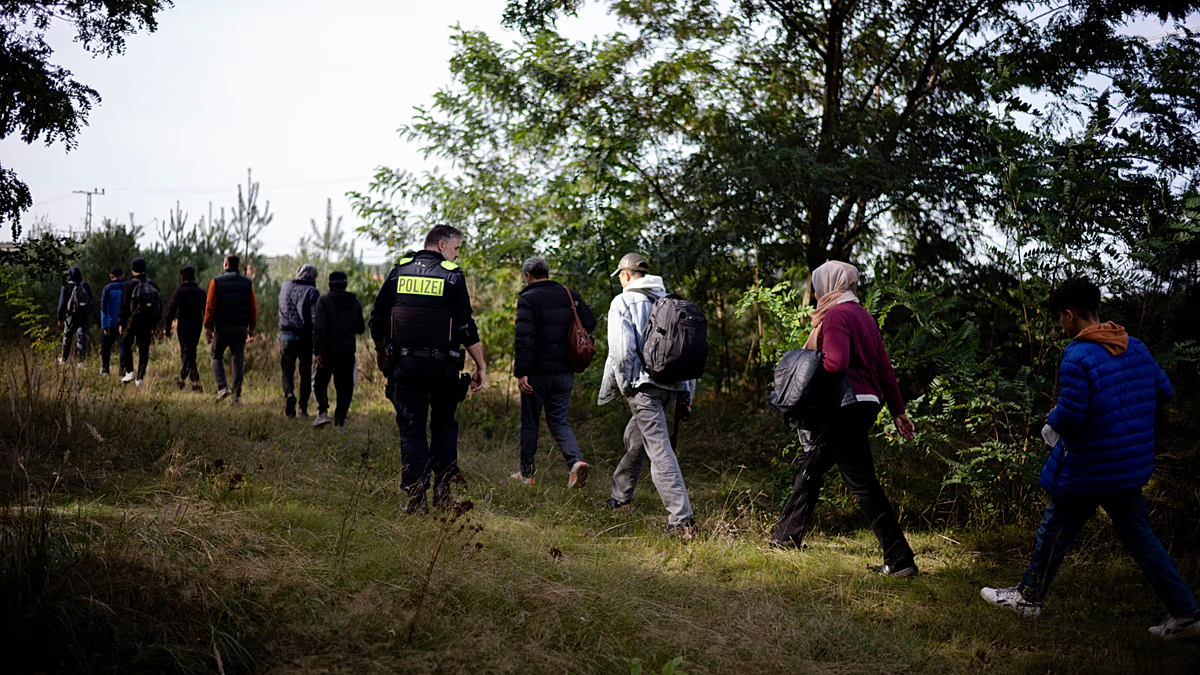
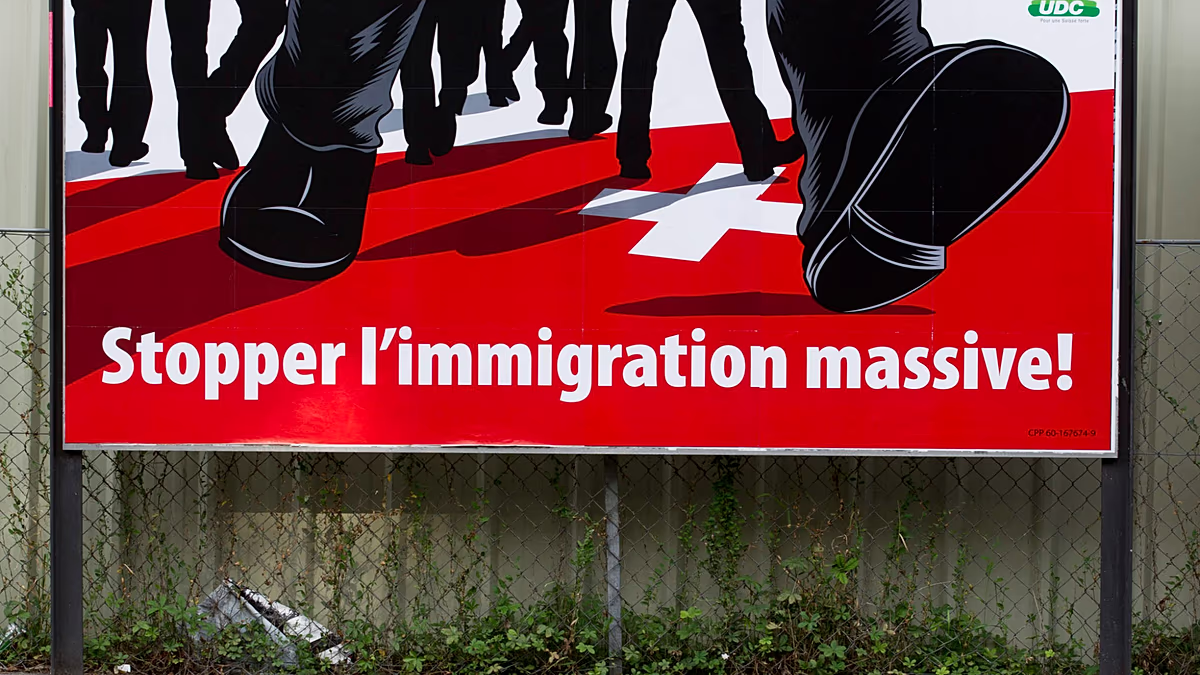
Switzerland stands on the brink of a profound societal choice. On June 9th, Swiss citizens will cast their votes on a contentious national initiative bluntly titled “No to a Switzerland with 10 million!” Spearheaded by the right-wing Swiss People’s Party (SVP), the country’s largest political faction, the proposal aims to constitutionally cap Switzerland’s population below ten million until the year 2050. Having gathered the requisite 100,000 signatures, the measure has forced a national reckoning on identity, sustainability, and economic survival. The SVP frames its mission as a “sustainability initiative,” contending that decades of robust immigration have pushed the nation’s infrastructure—from housing and schools to roads and natural landscapes—to a breaking point. With the population currently at approximately 9.1 million, of whom 27% are foreign nationals, the initiative’s proponents argue that decisive action is needed now to preserve the Swiss quality of life and environment for future generations.
The mechanics of the proposal are designed as an escalating series of brakes on population growth. Should the population surpass 9.5 million, the initiative would compel the Swiss parliament to impose strict new limits on asylum rights and family reunification for migrants. The ultimate trigger, however, lies at the ten-million mark: reaching that threshold would mandate the termination of Switzerland’s bilateral agreements on the free movement of persons with the European Union. This clause strikes at the very heart of Switzerland’s modern relationship with its continental neighbours. For the SVP, this is a necessary tool to reclaim national control. For opponents, it is an economic doomsday device, threatening to sever the country from its most vital trading partner and destabilize the delicate ecosystem of its prosperity.
The economic argument against the initiative is being voiced with urgent intensity by the Swiss government, major business associations, and a broad coalition of industry leaders. Their central warning is unambiguous: the initiative would cripple the Swiss economy, which is deeply and structurally dependent on foreign labour. From the construction sites building homes to the laboratories pioneering medical research, and crucially within the healthcare sector itself, skilled foreign workers are indispensable. Martin von Moos, head of the hotel industry association HotellerieSuisse, highlights this dependency, noting that over half of his sector’s employees are foreigners and that the initiative would exacerbate already “chronic labour shortages.” The proposal, they argue, misdiagnoses the nation’s challenges. Rudolf Minsch, chief economist of the economiesuisse business federation, dismisses it as an “illusion of a free lunch” that will not solve traffic or housing woes but will instead starve the economy of the talent it needs to thrive and innovate.
The peril extends far beyond domestic labour pools to the fundamental framework of Switzerland’s international trade. The EU is Switzerland’s paramount trading partner, absorbing over half of its total exports—a flow worth more than 147 billion Swiss francs last year. The 1999 Agreement on the Free Movement of Persons is the cornerstone of this relationship, a piece in a complex web of bilateral accords that ensure Swiss companies seamless access to the vast European single market. Terminating free movement, as the initiative requires upon hitting ten million residents, would place all these agreements in jeopardy. Business leaders like Pierre-Yves Bonvin, whose textile machinery firm Steiger exports its entire high-end production to the EU, view this as an existential threat. “For us, access to the European market is vital,” he states, capturing a sentiment echoed across export-oriented industries. The initiative risks isolating Switzerland, transforming it from a privileged partner into a sidelined outsider.
This economic debate is deeply personal for companies like Steiger, which illustrate the nuanced reality of Switzerland’s talent landscape. While the firm employs Swiss engineers for design and assembly, Bonvin reveals a critical gap: “We lack the expertise to test and calibrate them.” This specialized knowledge, he explains, is no longer taught within Switzerland, forcing the company to recruit these essential specialists from France and Germany. More than a third of Steiger’s Swiss workforce are foreign nationals, and without them, Bonvin stresses, “we could not continue to produce these machines in Switzerland.” This story is a microcosm of the national dilemma. The initiative frames population growth as a simple problem of excessive numbers, but industries counter that it is a complex issue of specific skills, demographic ageing, and global competitiveness. Capping population, they warn, means capping potential, forcing companies to move more operations abroad and draining the nation’s industrial base.
As polling indicates a razor-thin margin, the vote presents Switzerland with a defining choice about its future character. Proponents see a vote for the initiative as a vote to preserve a traditional, manageable Switzerland, prioritizing environmental and social cohesion. Opponents see it as a dangerous gamble with the nation’s prosperity, a self-imposed isolation that would undermine the very foundations of its economic success and cosmopolitan society. The decision transcends mere immigration policy; it is a referendum on whether Switzerland views openness and integration as a source of strength or a threat to its identity. The outcome will determine not just a demographic target, but the trajectory of the nation’s economy, its place in Europe, and the legacy it leaves for the next generation.