

Paragraph 1
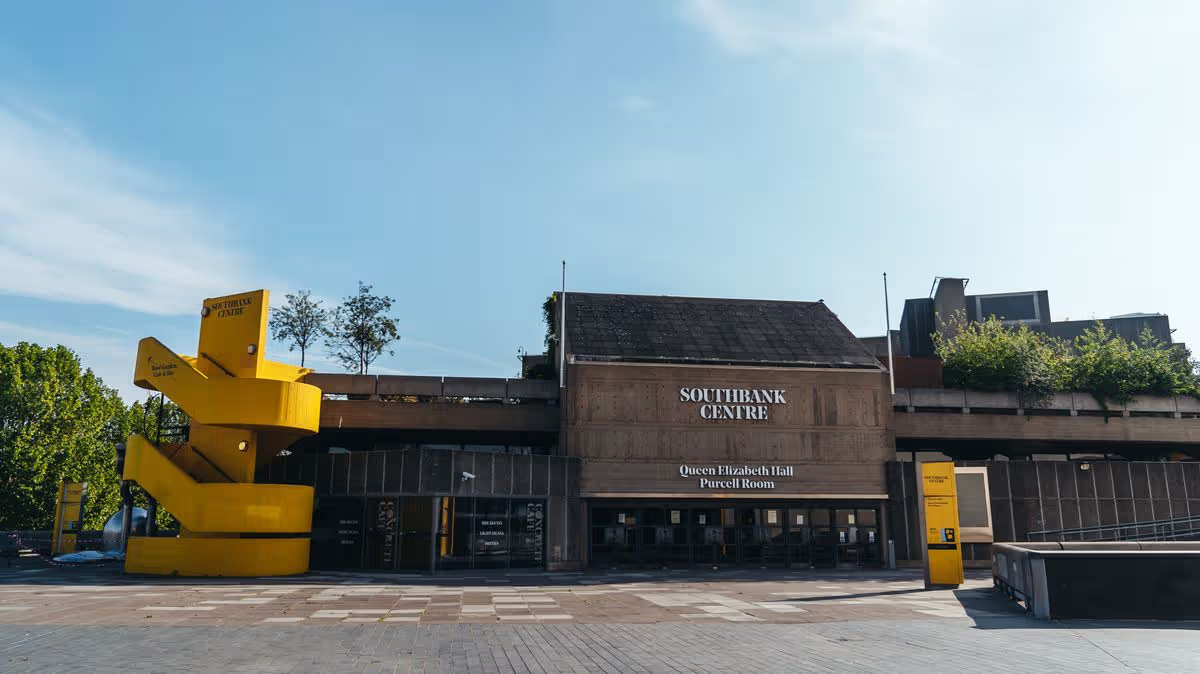
In a chilling reminder of the vulnerability we all share in public spaces, a man’s life was irrevocably altered in the heart of London last night. In the shadow of the city’s vibrant cultural landmarks, a brutal act of violence unfolded. A man, in what should have been the prime of his life—his 40s—was set upon by a gang of approximately four individuals near the Southbank Centre. The assault was not a fleeting clash but a sustained and savage attack, where he was knocked to the ground and subjected to a relentless beating. This was not a minor altercation; it was an event that has left him fighting for his life in a hospital bed, his condition described by authorities as critical. The incident, occurring around 12:15 AM on Sunday, June 14, transformed a normally bustling area into a scene of trauma and urgent police activity, casting a pall over the iconic riverside locale.
Paragraph 2
The setting of the attack adds a layer of profound disquiet to the event. The Southbank Centre, nestled along the Thames, is synonymous with art, community, and the peaceful flow of city life. It is a place where families stroll, friends gather, and tourists absorb the capital’s energy. That such a calculated and violent act could erupt in this very space, in the early hours of a Sunday morning, is deeply unsettling. It breaches the implicit social contract of safety in our shared urban environments. The victim was not in a secluded alleyway but in a central, prominent location, underscoring the terrifying randomness of the attack. This detail forces a collective reckoning: that violence can intrude upon the most familiar and open of places, turning a cultural hub into a personal battleground for an innocent individual.
Paragraph 3
As the victim battles for survival in hospital, the Metropolitan Police are engaged in their own critical fight—the pursuit of justice and the prevention of further harm. Officers have launched urgent inquiries, scouring the area for evidence, witness accounts, and any digital footprints that might lead to the perpetrators. A public appeal has been made, emphasizing that no arrests have yet been made and that the community’s assistance is vital. Every piece of information, however small it might seem, could be the key to identifying the group responsible. The police reference, 126/14JUN, and the dedicated hotlines—101 for direct reporting or the completely anonymous Crimestoppers service at 0800 555 111—stand as conduits for public conscience and civic duty. This appeal transforms the story from a mere report of crime into a call for collective responsibility.
Paragraph 4
Behind the clinical police terminology—”assaulted by a group,” “critical condition”—lies a human tragedy of immense scale. The victim is not a statistic; he is a person with a name, a history, a network of loved ones who are now living through a nightmare of uncertainty and fear. He is someone’s partner, perhaps a parent, a friend, a colleague. His life, with all its routines, aspirations, and simple daily joys, has been violently interrupted. The phrase “critical condition” speaks to a body broken, to medical teams working tirelessly to stabilize vital functions, and to a family clinging to hope in a hospital waiting room. This attack has stolen not just his safety but the safety and peace of mind of everyone connected to him, rippling out in waves of anguish.
Paragraph 5
The societal implications of such a gang assault are profound. It represents a form of violence that is particularly terrorizing due to its coordinated nature. The power dynamic of multiple attackers against a single individual speaks to a cowardly and predatory intent, far beyond a spontaneous conflict. It also raises urgent questions about the roots of such violence, the environments that foster it, and the measures needed to protect public safety. For Londoners and visitors alike, this incident, though isolated, inevitably seeds a moment of introspection about personal security in the city. It challenges the authorities to not only solve this case but to visibly reinforce the sense of security that is foundational to urban life.
Paragraph 6
In the end, this story is a stark narrative of two contrasting realities: the vibrant, open city we believe in, and the hidden brutality that can surface within it. The ongoing police investigation represents the formal response, but the human response is one of empathy for the victim and a shared determination to reclaim safety. As London moves forward from this shocking event, the hope is that public vigilance and cooperation will aid the swift apprehension of those responsible. More broadly, it is a hope that such acts of extreme violence remain rare anomalies, and that the spirit of community—symbolized by the very Southbank Centre where this tragedy occurred—will ultimately prove stronger than the forces of random cruelty. The victim’s recovery, and the city’s pursuit of justice, are now intertwined journeys.