



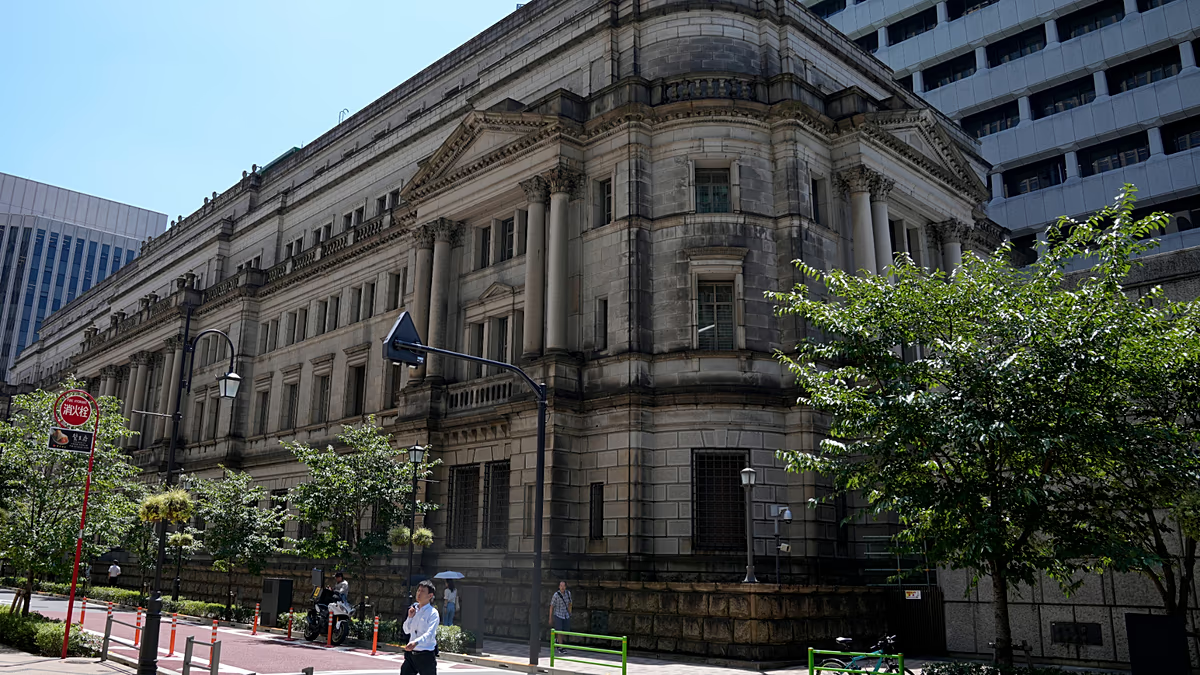
In a significant shift, the Bank of Japan has raised its key interest rate, signaling a cautious but determined move away from the ultra-loose monetary policy that has defined its approach for decades. On Tuesday, the central bank increased the uncollateralised overnight call rate by a quarter of a percentage point, bringing it from 0.75% to 1.00%. This new level marks a three-decade high for the benchmark rate, underscoring the profound nature of this departure from the past. For years, Japan has been an outlier in the global financial landscape, stubbornly maintaining near-zero or even negative interest rates in a prolonged battle against economic stagnation and deflationary pressures. This latest hike represents another deliberate step in a gradual, multi-year process of policy normalization, as the bank seeks to wean the world’s third-largest economy off its long-standing dependence on extraordinary stimulus.
This historic policy shift is not occurring in a vacuum; it is being driven by a complex cocktail of persistent domestic inflation and powerful external shocks. The Bank of Japan’s original adoption of ultralow rates was a desperate remedy for a chronic ailment: a deflationary mindset that discouraged spending and investment, trapping the economy in a cycle of low growth. The strategy aimed to encourage borrowing and spur consumption. However, the global landscape has shifted dramatically. In particular, the war in Iran has sent shockwaves through energy markets, causing oil prices to soar. As a nation that imports nearly all of its oil and gas, Japan has been uniquely vulnerable to this inflationary spike. This external pressure has finally provided the sustained price increases the bank long sought, creating the necessary conditions to finally begin lifting rates without immediately choking off fragile growth.
The decision also addresses another critical vulnerability: the severely weakened Japanese yen. Keeping interest rates anchored near zero while other major central banks, like the U.S. Federal Reserve, raised theirs created a stark divergence. This policy gap led investors to seek higher returns elsewhere, triggering a massive sell-off of the yen. The currency recently plummeted to about 160 yen per U.S. dollar, a multi-decade low that has inflicted severe pain on the Japanese public and businesses. A weaker yen makes imports like food and fuel dramatically more expensive, exacerbating the cost-of-living crisis for households. Conversely, it provides a windfall for big exporters. By raising its own rate, the Bank of Japan aims to narrow that gap with other economies, potentially attracting capital back to yen-denominated assets and helping to stabilize the national currency, which is crucial for economic stability.
The notable absence of BOJ Governor Kazuo Ueda from this pivotal meeting added a layer of drama to the proceedings. Governor Ueda, the architect of this careful normalization path, has been recently hospitalized, highlighting the intense pressure and scrutiny central bankers face during such transformative periods. In his stead, Deputy Governor Shinichi Uchida presided over the policy board meeting and was tasked with the critical role of explaining the bank’s rationale at the subsequent news conference. This seamless transition of authority amidst a major policy move demonstrated the institution’s resilience and the depth of its shared commitment to its chosen course. The financial markets were already in a state of keen anticipation, with Tokyo’s benchmark Nikkei 225 index briefly topping the historic 70,000-point mark early Tuesday before settling slightly lower, reflecting the mixed sentiments of optimism and caution.
Ultimately, this rate hike is a testament to Japan’s slow and painful emergence from its “lost decades” of economic torpor. The Bank of Japan is navigating a treacherous path, attempting to tame inflation and support the yen without derailing the still-tentative economic recovery. The end of the world’s last remaining negative interest rate regime earlier this year was the first symbolic step; this further increase is the practical follow-through. It acknowledges a new economic reality where the primary risk is no longer deflation but the corrosive effects of sustained inflation on purchasing power and social stability. The move is a careful recalibration, not a sudden brake, indicating that policymakers believe the domestic economy is finally robust enough to withstand slightly tighter financial conditions.
In conclusion, the Bank of Japan’s decision to raise interest rates to a 30-year peak is a landmark event with profound implications. It is a direct response to the stubborn inflationary pressures fueled by global conflict and a strategic move to defend a battered currency. While the shadow of Governor Ueda’s absence was felt, the institution carried forward its planned policy shift with resolve. As Deputy Governor Uchida likely articulated, this step is part of a patient, data-dependent journey toward normalcy. For Japanese citizens, it brings the hope of relief from a crippling weak yen but also the anxiety of higher borrowing costs. The world watches as Japan, once a cautionary tale of economic stagnation, cautiously charts a new course away from its radical monetary policy experiment, seeking a more sustainable and conventional economic future.