

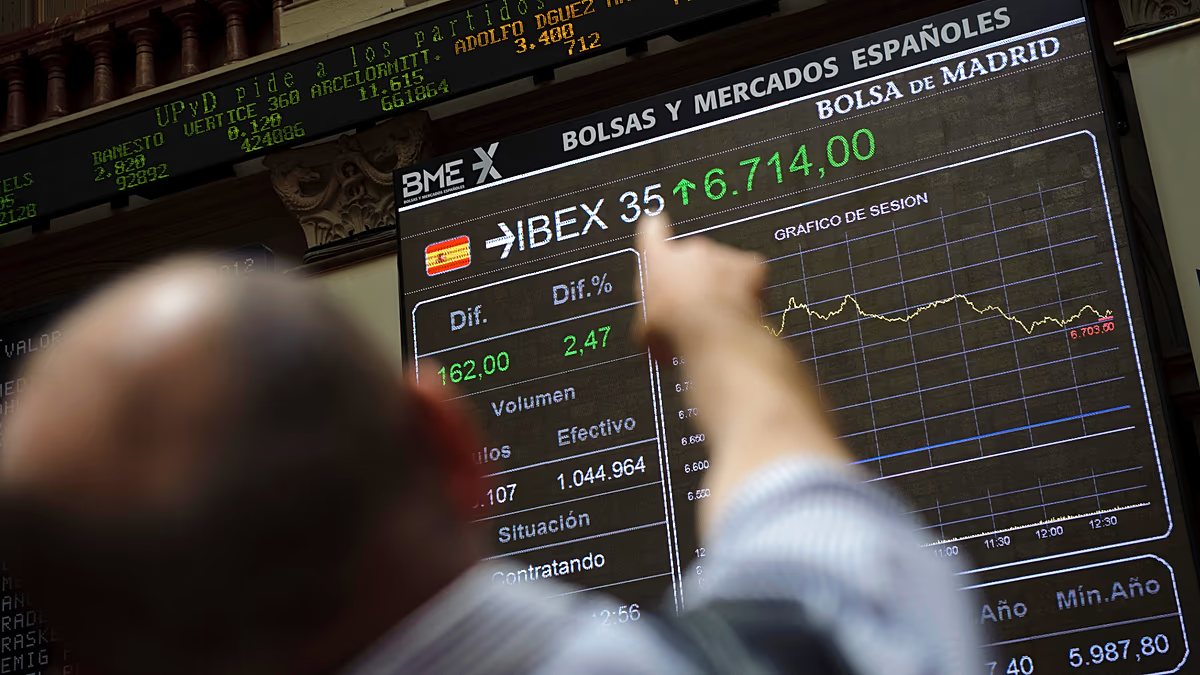
On a bright Monday morning, the world received news that seemed to rewrite the script for the global economy. The announcement of a landmark peace agreement between the Trump administration and the Republic of Iran, ending a protracted and perilous conflict in the Middle East, sent a wave of euphoria crashing through international financial markets. The sense of relief was palpable, transforming anxiety into optimism overnight. Nowhere was this dramatic shift more vividly captured than on the Spanish stock exchange. The Ibex 35, Spain’s benchmark index, didn’t just rise—it exploded through all previous resistance levels, shattering records as it soared past the symbolic 19,000-point barrier to touch an unprecedented high of 19,122 points. This remarkable surge marked the culmination of a stellar run, with the index having climbed roughly 10% since the beginning of the year, a rally turbocharged by the sudden removal of a monumental geopolitical cloud.
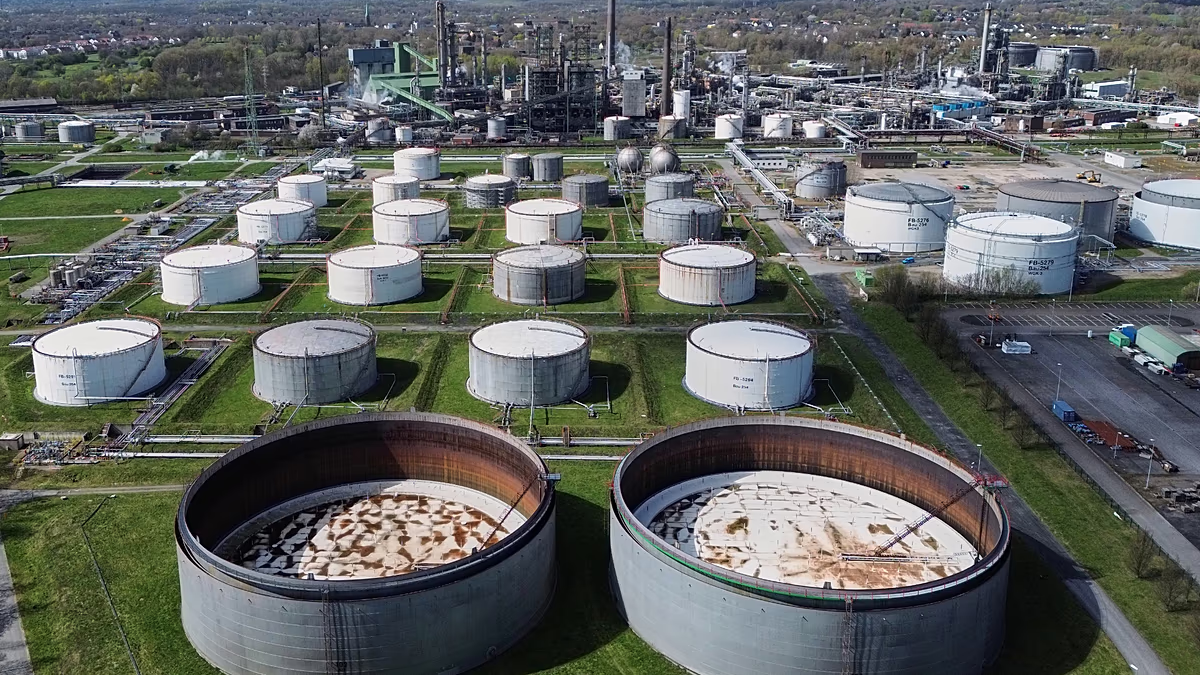
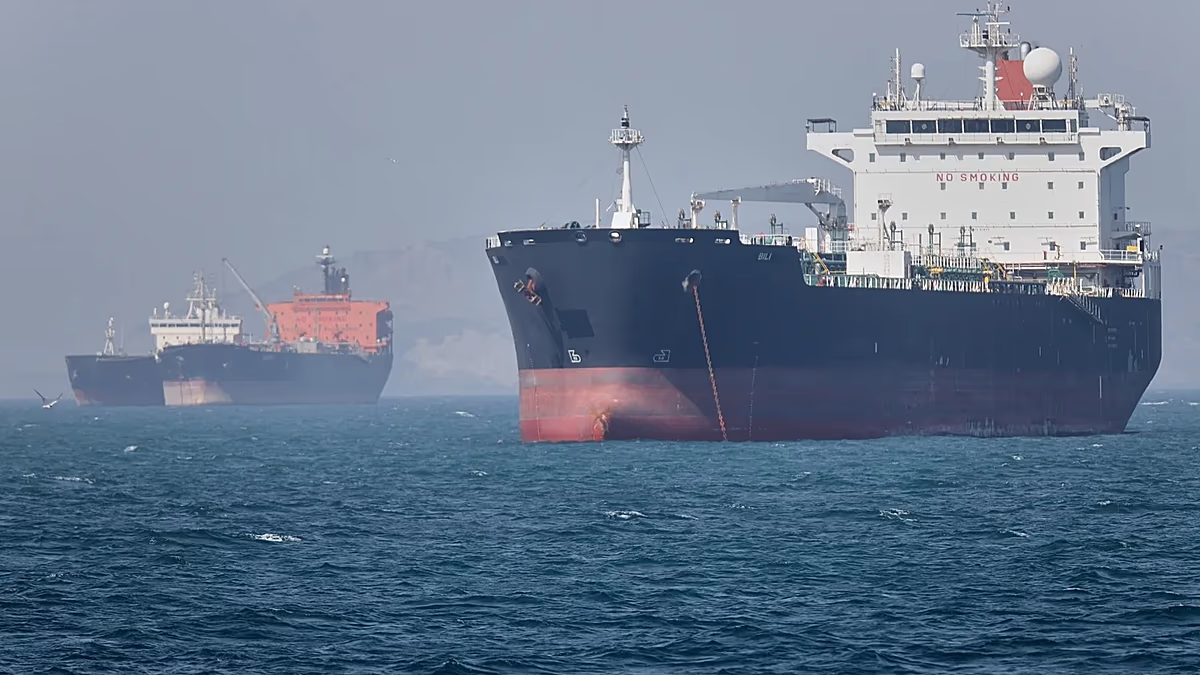
The core of the agreement’s immense economic impact lies in a simple, yet profound, act: the reopening of the Strait of Hormuz. This narrow maritime passageway, a logistical artery for global commerce, had been choked off during the conflict, creating a crisis of supply and cost. As the conduit for one-fifth of the world’s oil and vast quantities of consumer goods, its blockage had sent shockwaves across continents, strangling supply chains and catapulting crude oil prices to unsustainable heights. This scenario had stoked deep fears of a renewed inflationary spiral that could have crippled consumer spending and business investment worldwide. With the announcement that tankers and cargo ships could once again traverse this vital channel, the markets responded with immediate force. The price of Brent crude, which had climbed steeply during the months of hostilities, plummeted by over 4% in pre-market trading. While still elevated above pre-conflict levels, the precipitous drop signaled a fundamental change in outlook, easing the pressure on economies globally and offering a sigh of relief to consumers facing energy and goods prices.
This dramatic easing of tensions acted as a starting pistol for risk appetite, and the Ibex 35 became a prime arena for investors eager to capitalize on the new landscape. The gains were broad-based, but certain sectors emerged as clear frontrunners, their fortunes directly tied to the peace dividend. The banking sector, often seen as a bellwether for economic health, roared ahead. Giants like BBVA and Banco Santander posted gains exceeding 3%, powered by a wave of broad optimism and the receding threat of a recession that geopolitical instability had threatened to trigger. Simultaneously, companies tied to travel and mobility experienced a powerful rebound. The parent company of Iberia and Vueling, IAG, soared close to 5%, while hotel group Meliá and travel technology firm Amadeus also posted steep climbs. The dual benefit of falling jet fuel prices and the return of geopolitical stability painted a suddenly rosy picture for the crucial summer tourism season, unleashing pent-up demand.
The rally extended well beyond banks and travel, permeating the industrial backbone and consumer-facing giants of the Spanish economy. Companies burdened by high energy and logistics costs saw immediate relief. Retail behemoth Inditex, with its vast, global supply chain, climbed over 2%, as the prospect of smoother, cheaper shipping promised to protect its margins. Even utilities like Iberdrola and telecommunications leader Telefónica, while posting more modest gains, benefited from the overall climate of stability and reduced operational risk. The message was clear: the resolution was not a niche event but a broad tide lifting virtually all boats, as the crippling “risk premium” associated with the conflict evaporated.
This wave of financial optimism was decidedly continental, not confined to the Iberian Peninsula. The jubilant mood in Madrid was perfectly mirrored across Europe’s other major trading floors. In Frankfurt, the DAX index powered upward; in Paris, the CAC 40 opened with solid gains; and the pan-European Euro Stoxx 50 index joined the rally. European investors, who had been nervously watching a conflict perilously close to their doorstep, collectively cheered the removal of a threat that had loomed over the region’s fragile economic recovery. The agreement was perceived as pulling the region back from the brink, removing a barrier that could have slammed the brakes on global growth for the latter half of the year and beyond.
In summary, the peace announcement triggered more than a routine market adjustment; it catalyzed a fundamental repricing of global economic prospects. The immediate plunge in oil prices and the unlocking of a critical trade route addressed acute symptoms of inflation and supply chain fragility. On the Spanish stock market, this manifested as a historic, sector-wide celebration, led by banks and companies most sensitive to logistics and consumer confidence. As the rally echoed across Europe, it underscored a universal truth: in an interconnected world, geopolitical stability is not merely a political achievement but the very foundation for economic prosperity, investment, and growth. The events of that Monday proved that when the heavy cloak of war is lifted, the markets don’t just react—they breathe, they hope, and they soar.