

As global attention turns to the 2026 World Cup, the tournament’s opening is overshadowed not by the promise of sporting spectacle, but by a mounting ethical crisis engulfing FIFA President Gianni Infantino. The celebratory atmosphere is pierced by serious allegations that paint a picture of an organization prioritizing profit above all else. Infantino faces fierce criticism for his unusually open political alignment with the White House, raising questions about the impartiality of world football’s governing body. Simultaneously, a brewing visa scandal has prevented Africa’s top match official from participating, casting a shadow over FIFA’s commitment to global inclusion. Perhaps most symbolic of the commercial pressures now defining the sport is the revelation that mandatory player hydration breaks—intended as a vital health measure—are being repurposed as dedicated television advertisement slots. This triad of controversies suggests that for FIFA under Infantino, the beautiful game’s soul is increasingly for sale.
To understand the man at the center of this storm, one must look to his humble beginnings far from the corridors of power. Gianni Infantino was born in 1970 in the small Swiss town of Brig, the son of Italian immigrants. His childhood was marked by modesty; his mother managed a railway station newsstand while his father worked on the sleeping cars of trains. This unglamorous upbringing instilled in him a driven, pragmatic mindset. A multilingual lawyer by training, he leveraged his intellect and administrative skill to climb quietly through the ranks of UEFA. There, he became the trusted right-hand man to the charismatic French football legend, Michel Platini. For years, Infantino operated as the efficient bureaucrat behind the throne, mastering the intricate machinery of European football finance and governance without courting the public spotlight.
Infantino’s path to the pinnacle of world football was forged in chaos. The infamous 2015 “FIFAgate” scandal, which saw the FBI arrest top officials and allegations of corruption engulf the organization, provided his unlikely opportunity. With his mentor, Platini, sidelined by the crisis, the landscape was suddenly upended. It was in this vacuum that the hitherto behind-the-scenes operator launched a calculated, backroom campaign. Shedding his image as a mere deputy, Infantino maneuvered decisively to seize the presidency for himself. Colleagues from that period have since described him as an ambitious figure who ruthlessly plotted to claim his former boss’s crown, transforming from a loyal lieutenant into a determined rival almost overnight. His election was pitched as a clean break from a corrupt past, a narrative of renewal that he has carefully nurtured ever since.
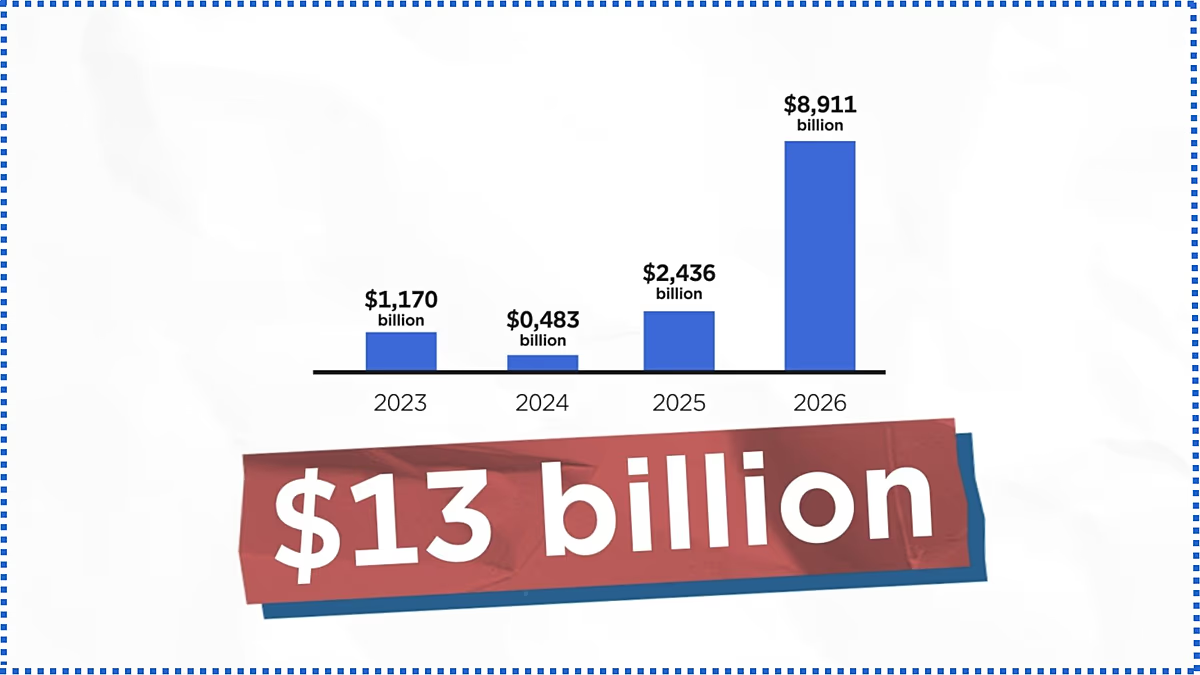
Upon securing power, Infantino moved swiftly to consolidate his control and reshape FIFA’s very purpose. He centralized decision-making authority, creating a structure where ultimate power rested firmly in his office. His overarching mission became unmistakable: to transform FIFA into a hyper-efficient revenue-generating entity. His most consequential decision—expanding the World Cup from 32 to 48 teams—was a masterstroke in this financial redesign. While marketed as a gesture of global inclusion, the move dramatically increased the number of lucrative matches, broadcasting contracts, and commercial partnerships. This strategy has been brutally effective, pushing FIFA’s four-year revenue cycle to a staggering record of 13 billion dollars. The organization is now wealthier than ever, but critics argue this fortune has come at the cost of sporting integrity and has overburdened players with an ever-more-congested calendar.
Today, Infantino’s legacy is a subject of intense and polarized debate, a division starkly visible as the 2026 tournament begins. To his supporters, he is the savior who steered FIFA out of its darkest hour, restoring stability and financial health after the devastating 2015 scandal. They see a master manager who rebuilt the federation’s credibility through transparency and record-breaking commercial success. To his detractors, however, he is the ultimate symbol of corporate greed, a leader who has sacrificed football’s spirit on the altar of profit. The controversies swirling around this World Cup—the politicized alliances, the excluded African referee, the commodification of even hydration breaks—serve as potent ammunition for this view. Infantino frequently concludes his social media missives with the hashtag #FootballUnitesTheWorld, but as the current scandals demonstrate, there is another, more potent uniting force now driving the modern game: money.
As the world watches the matches unfold, the ethical investigations into FIFA’s conduct continue to mount. The very commercial model that Infantino perfected is now generating the backlash that threatens his reign. The question is whether the relentless pursuit of profit has finally begun to alienate the sport’s core constituents: the fans, the players, and the smaller national associations. The 2026 World Cup, meant to be the crowning achievement of his expansionist policy, risks becoming a living exhibit of its excesses. While the goals will be celebrated and champions crowned, the tournament’s backdrop is a growing consensus that the balance has tipped too far. Football may unite the world, but as Gianni Infantino is learning, the world can also unite in scrutiny. The ultimate test for football’s most powerful businessman is whether his luck—and his relentless commercial drive—has finally reached its limit.