



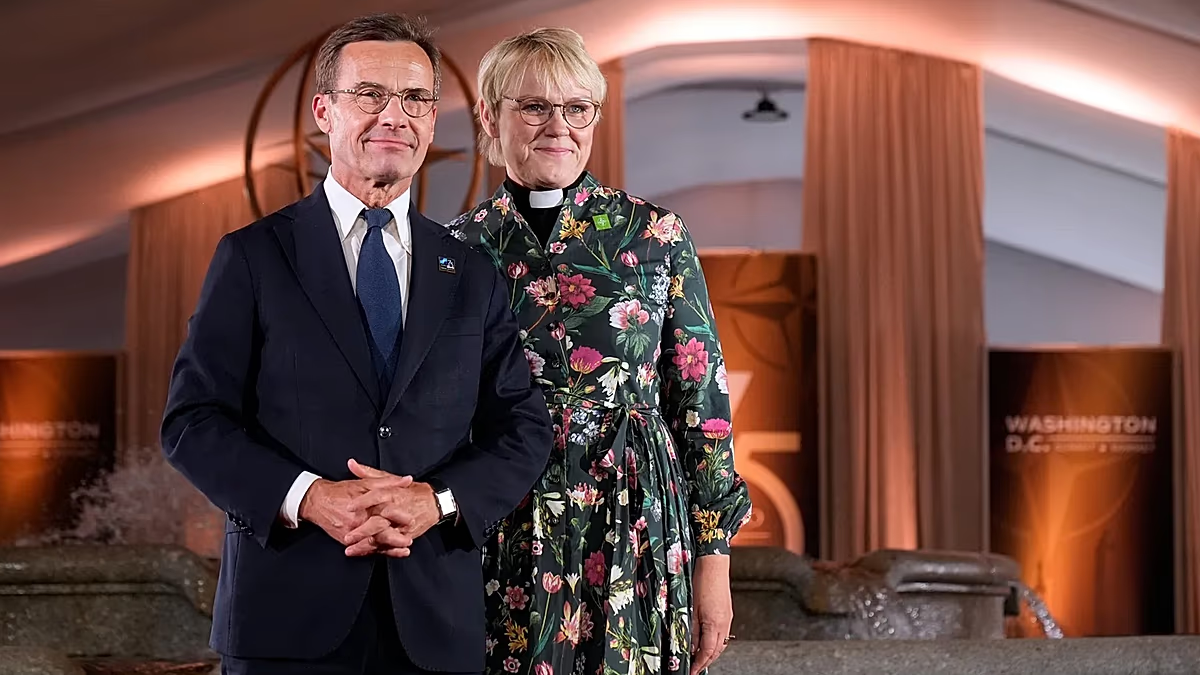
The Lutheran Church of Sweden has initiated a formal investigation into Birgitta Ed, a priest who is also the wife of Prime Minister Ulf Kristersson. This inquiry follows a series of media reports, primarily from the newspaper Aftonbladet, that raised significant ethical questions regarding her management of a spiritual foundation she oversees, known as the Fållöknastiftelsen. The church confirmed that complaints had been filed with Ed’s local diocese, prompting the chapter to examine her suitability to continue in her clerical role. While the church did not specify the exact nature of the allegations, the move underscores the seriousness with which it is treating the matter, placing Ed’s professional conduct under official ecclesiastical scrutiny.
The controversy centers on Aftonbladet’s reporting, which suggested that Ed’s foundation recruited volunteers to fundraise and renovate its manor house. In return, these volunteers were reportedly offered access to a “good network” of contacts and exclusive meetings held at the Prime Minister’s official residence, known as Sager House. Furthermore, the reports allege that Ed, who frequently appears in public alongside her husband wearing her clerical collar, leveraged her church connections to secure donations and free services, such as IT support, for the foundation. These activities have sparked a debate about the potential blurring of lines between her religious office, her private charitable work, and her proximity to political power.
In response, the Church of Sweden outlined the procedural path forward. It stated that such investigations typically last several months, during which no public comments will be made. Upon conclusion, the inquiry could result in no disciplinary action, or it could lead to one of three potential sanctions: a written reprimand, a probationary period for continued authorization to minister, or the most severe consequence—a declaration that the priest is no longer authorized to exercise ordained ministry. This process highlights the church’s autonomous disciplinary framework, which operates independently despite the high-profile nature of the individual involved.
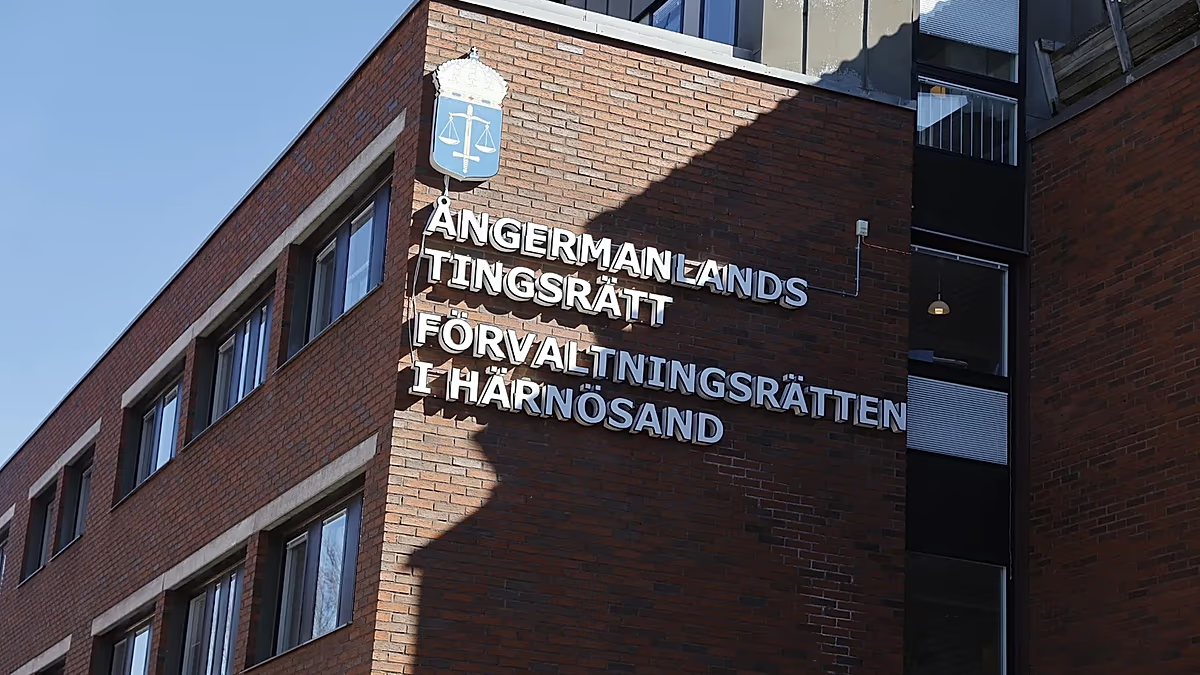
This development occurs within a uniquely Swedish context. The Church of Sweden, with approximately 5.4 million members in a nation of 10.6 million, formally separated from the state in the year 2000. This separation means the church is a self-governing Lutheran denomination, free to manage its internal affairs, including the investigation and discipline of its clergy, without political interference. The case tests the church’s institutional integrity and its commitment to upholding ethical standards for its priests, regardless of their personal or familial connections to secular authority.
Politically, the timing is delicate. Sweden is preparing for legislative elections in September, with current opinion polls suggesting a lead for the left-wing opposition over Prime Minister Kristersson’s right-wing minority government, which relies on the support of the far-right Sweden Democrats. While the church investigation is an independent ecclesiastical matter, the situation inevitably casts a shadow over the political landscape, introducing questions of propriety and judgment into the public discourse during a sensitive electoral period. The prime minister himself has not been accused of any wrongdoing, but the scrutiny of his spouse’s activities adds a layer of complexity to the upcoming campaign.
Ultimately, this episode transcends a simple personal controversy. It touches on broader themes of ethical boundaries, the separation of church and state, and the expectations placed on public figures and their families. The Church of Sweden’s investigation will determine whether Birgitta Ed’s actions violated the professional codes governing her vocation. Its findings, expected later this year, will not only decide her future as a priest but will also serve as a statement on how institutions navigate the complex interplay between personal initiative, professional duty, and the reflective glow of high office.