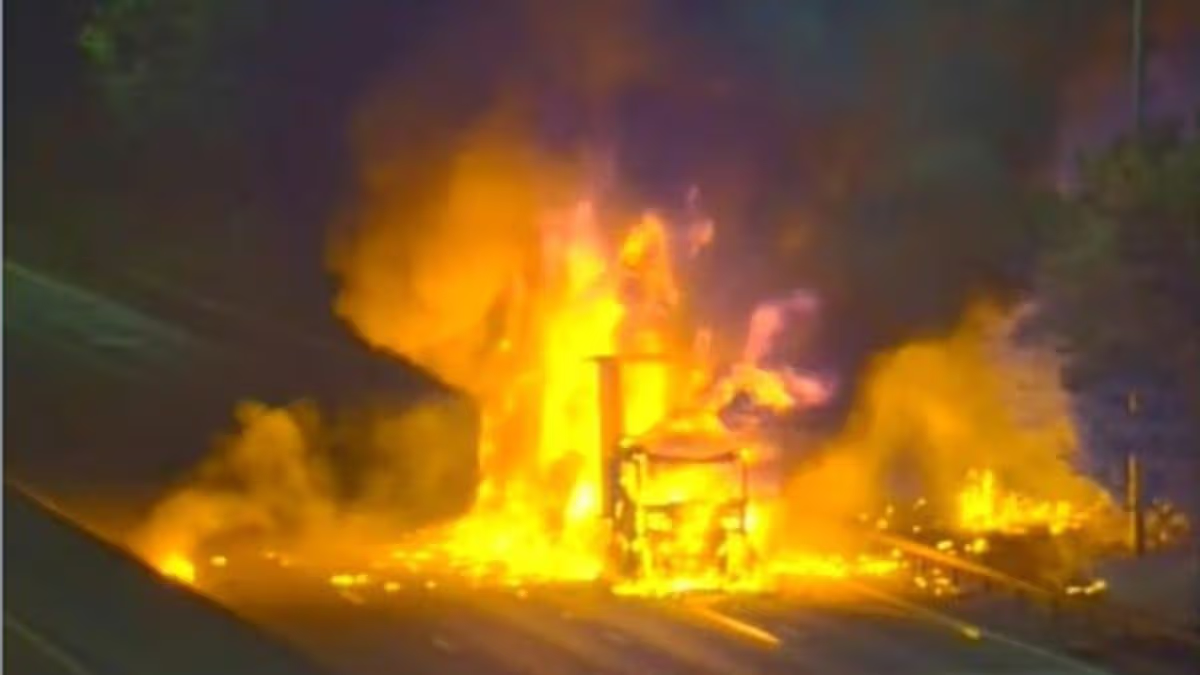
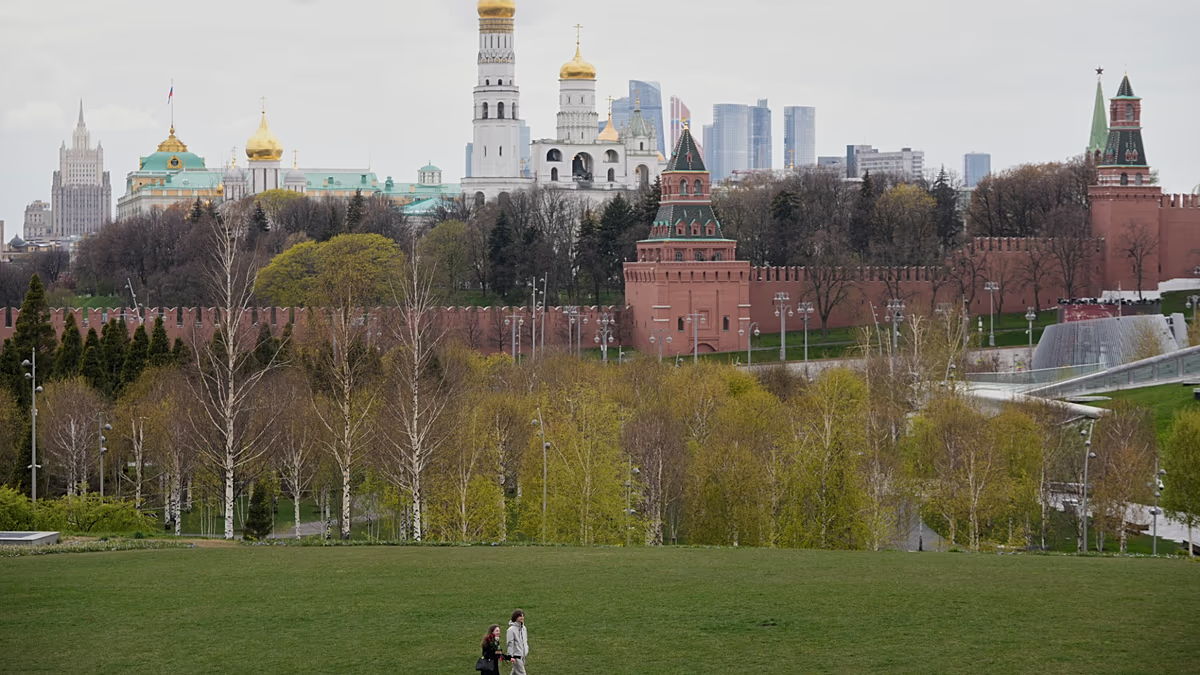


In a significant escalation of the long-range drone war between Ukraine and Russia, a Ukrainian drone successfully struck a key oil refinery facility on the outskirts of Moscow on June 16, 2026. Russian authorities, while confirming the damage to the site in the Kapotnya district, were quick to note that no casualties resulted from the attack. Moscow Mayor Sergeo Sobyanin announced the incident on a state-run platform, framing it within a broader narrative of Russian air defense success. He revealed that a staggering 60 drones targeting the capital had been intercepted that very Tuesday, a barrage described by the state news agency TASS as one of the largest of the year. The immediate local impact was tangible, with authorities closing the area around the refinery to all traffic, a sign of the disruption and potential danger caused by the strike.
President Volodymyr Zelensky swiftly and unequivocally claimed responsibility for the operation, positioning it not as a covert action but as a deliberate demonstration of Ukrainian military reach and resolve. In a social media post accompanied by footage purporting to show a drone’s flight over residential areas before striking an industrial target, Zelensky emphasized the strategic distance covered. “An oil refinery was hit at a distance of NA kilometres,” he stated, framing the strike as a just and proportional response to relentless Russian aggression. This public acknowledgment served a dual purpose: it bolstered domestic morale by showcasing capability, and it signaled to international partners that Ukraine could directly impact the Russian war machine far beyond the front lines.
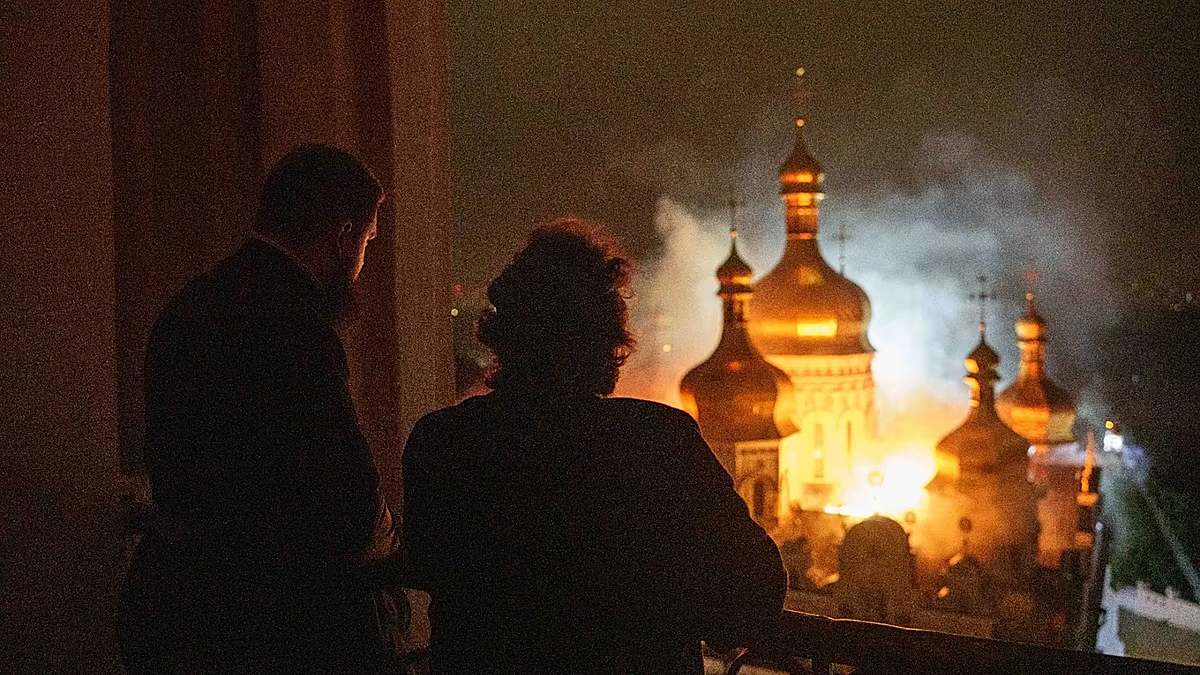
The context for this bold strike was a devastating Russian aerial assault just one day prior. Kyiv reported that Russia had launched a massive wave of over 600 drones and 70 missiles across Ukraine, an attack that killed at least 11 people and, with particular cultural resonance, damaged a historic Orthodox monastery complex in the capital. The Kyiv Pechersk Lavra, a UNESCO World Heritage site, saw part of the roof and dome of its Dormition Cathedral damaged. President Zelensky condemned this as “one of Russia’s most serious crimes against Christian culture to date.” Ukrainian security services reported finding debris from Iranian-designed “Geran-2” drones at the complex. Russia denied responsibility, instead alleging the damage was caused by a malfunctioning Ukrainian or Western air defense missile, a claim offered without supporting evidence.
Ukraine’s targeting of the Moscow refinery is part of a calculated and increasingly effective strategy that has unfolded over recent months. As Russia has maintained its near-daily bombardments of Ukrainian cities and infrastructure since the full-scale invasion began in 2022, Kyiv has sought ways to retaliate that extend beyond the battlefield. This has evolved into a concerted campaign focusing on Russia’s oil refining and export infrastructure. The logic is straightforward: to erode the fossil fuel revenues that fundamentally finance Moscow’s military operations. By striking these high-value economic assets deep inside Russia, Ukraine aims to impose a tangible cost on the Kremlin, complicate its logistics, and potentially diminish its long-term war-fighting capacity.
The human and symbolic dimensions of this exchange are profound. On one side, the Russian attack on the Pechersk Lavra represents an assault on a cornerstone of Eastern Orthodox Christian identity, a place of deep spiritual and historical significance for many Ukrainians. It is perceived as an attack on Ukrainian heritage itself. On the other side, the Ukrainian strike on a Moscow refinery, while aimed at a military-industrial target, brings the tangible sounds and consequences of conflict to the heart of the Russian capital, challenging the narrative of normalcy that the Kremlin seeks to project to its own populace. It is a stark reminder that the consequences of invasion cannot be neatly contained within the borders of the victim nation.
This cycle of escalation underscores the grim, protracted nature of the conflict. What began as a ground war has expanded into a relentless air duel, with drones becoming the weapon of choice for both sides to project power over vast distances. Ukraine’s demonstrated ability to strike strategic targets deep within Russia marks a new phase, one where the front line is increasingly blurred. While Russia pours resources into a massive, multi-layered air defense network around Moscow and other key cities, Ukraine continues to innovate and adapt its drone technology and tactics. This incident, like those before it, offers no clear path to an immediate end of the war, but it vividly illustrates the expanding geography of the conflict and the determination of both nations to continue fighting on their own terms.