



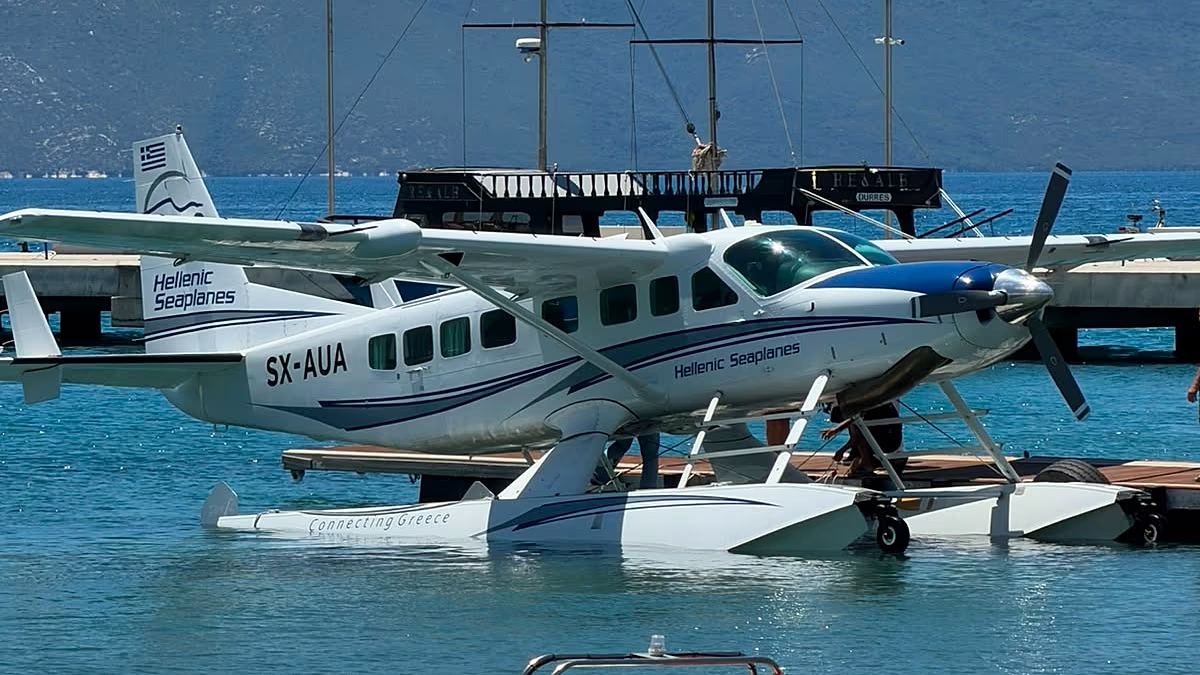
On a clear June day in 2026, a small seaplane soared over the sapphire waters of the Ionian Sea, tracing a path from the Greek city of Ioannina to the Albanian coastline of Vlorë. This was no ordinary flight. It marked the historic inaugural journey of the first-ever seaplane service connecting Greece and Albania, signaling the dawn of a transformative model of mobility in the Mediterranean. Operated by Hellenic Seaplanes, this flight represents more than a simple point-to-point trip; it is a tangible milestone in reimagining regional connectivity. By utilizing the sea as a natural runway, this initiative bypasses the need for costly traditional airport infrastructure, offering a direct and scenic link between two nations whose beautiful, often rugged terrains have historically made overland travel a challenge. It is the practical beginning of a vision to weave together coastal communities, islands, and tourist destinations through the sky.
This pioneering flight did not occur in isolation. It came in response to an official invitation from Albanian authorities, underscoring a mutual commitment to fostering cross-border cooperation and economic growth. The mission is a cornerstone of a broader framework aimed at collaboratively developing the necessary seaplane infrastructure and establishing new transport corridors. For Albania, a nation with a stunning Adriatic coastline and picturesque lakes like Ohrid, this partnership opens exciting possibilities for accessible tourism and regional integration. For Greece, a country long defined by its archipelagic geography, it represents the logical next step in mastering maritime aviation. The immediate practical outcome is the launch of services not just to Vlorë, but also to Pogradec on the shores of Lake Ohrid, directly linking travelers to the heart of Albania’s natural and cultural treasures.
The ambitions, however, stretch far beyond these initial routes. Having successfully established an extensive network of licensed water aerodromes across Greece, Hellenic Seaplanes is now embarking on a strategic international expansion. The company’s goal is to architect an entirely new transportation system that leverages the Mediterranean’s greatest asset: its vast, interconnected blue space. This vision positions Greece as an emerging hub of expertise and operations for a sprawling future network. The Greek-Albanian connection is merely the first thread in a much larger tapestry. The strategic plan envisions a web of routes that will eventually encompass the entire Adriatic and Ionian seas, extend into the Eastern Mediterranean, and reach across to North Africa. This network promises to redefine regional travel, turning a multi-leg, multi-modal journey into a single, seamless flight over water.
The potential impacts of this developing network are profound, particularly for tourism and local economies. Imagine a traveler being able to board a seaplane in Corfu and, within an hour, disembark in the historic streets of Dubrovnik, Croatia, or the bay of Kotor in Montenegro—all without returning to a major international airport. Remote islands, secluded coastal towns, and lakeside communities previously requiring lengthy ferry or road trips could become directly accessible. This democratization of access promises to disperse tourism benefits more evenly, alleviating pressure on overcrowded hubs and inviting visitors to discover lesser-known gems. For local businesses, from hotels and restaurants to tour operators, this direct aerial link represents a vital economic lifeline and a catalyst for sustainable development grounded in unique geographical offerings.
Furthermore, this model of connectivity champions a form of sustainable and adaptive mobility. Seaplanes, particularly newer generations designed for efficiency, can offer a greener alternative to the complex logistics of reaching certain destinations by combining car, ferry, and conventional air travel. By using existing water bodies as runways, the environmental footprint of new infrastructure is minimized, preserving coastal landscapes. The system is inherently flexible; routes can be adapted seasonally to match tourist flows or developed strategically to bolster trade and cultural exchange between regions. In a world increasingly conscious of both the climate and the value of resilient infrastructure, seaplane networks present an innovative solution that works in harmony with the marine environment rather than imposing upon it.
In conclusion, the maiden flight from Ioannina to Vlorë is a symbol of a brighter, more connected future for the Mediterranean region. It transcends being merely a novel transportation method, emerging instead as a catalyst for deeper regional cooperation, economic revitalization, and sustainable tourism. As Hellenic Seaplanes charts its course toward a wider network spanning seas and continents, it carries with it the promise of bringing people and places closer together. By turning the sea from a barrier into a highway, this initiative rekindles the spirit of exploration and exchange that has always defined the Mediterranean, ensuring its communities remain vibrant and accessible for generations to come. The journey has just begun, and the horizon is limitless.