



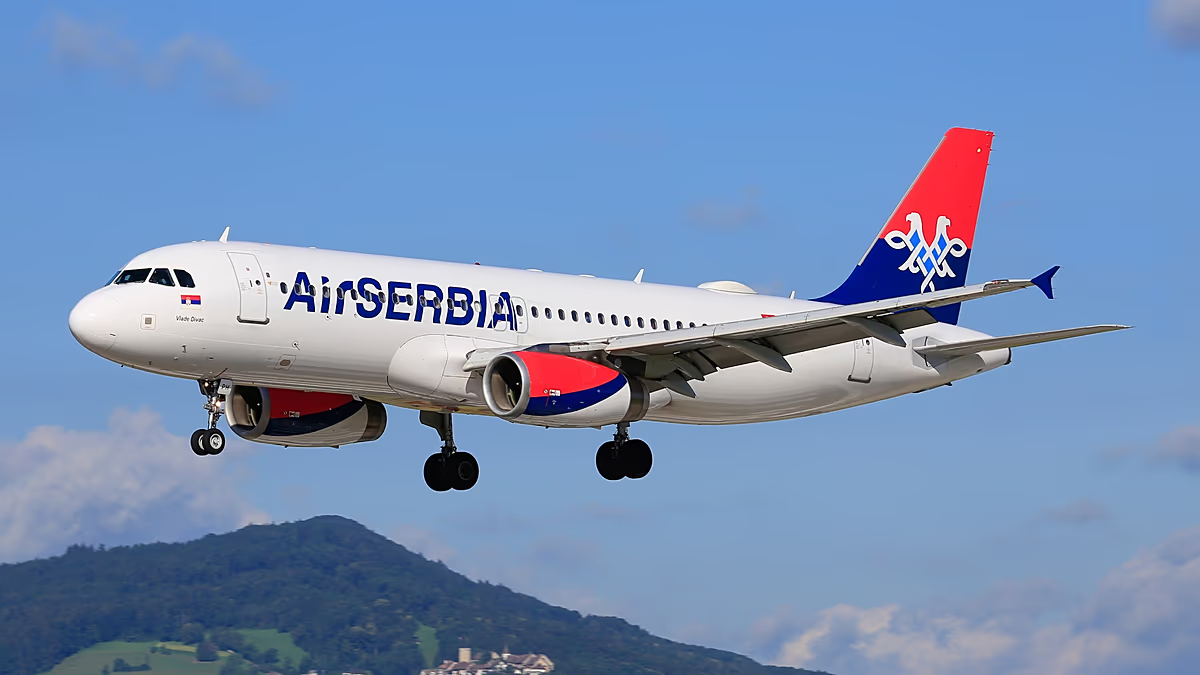
Travel often feels like an exercise in patience, moving through crowded terminals and down packed jet bridges. But there remains something quietly refreshing about discovering a route that feels undiscovered, a corridor that hasn’t yet become just another line on a dense map. This is the distinct atmosphere aboard Air Serbia’s direct service between Baku and Belgrade. Eschewing the over-familiar bustle of Europe’s major hubs, this flight offers a different kind of journey. Passengers boarding in Azerbaijan’s gleaming capital seem aware they are part of a quieter, newer link—a travel bridge slowly being built between the Caucasus and the Balkans. Since its launch, this connection has started to unlock a far simpler gateway between two regions whose political and economic ties have grown faster than their transportation links. As Jiří Marek, CEO of Air Serbia, notes, launching this route was a natural step toward connecting these strategically important, fast-growing markets, finally offering a direct path where once only cumbersome connections existed.
What immediately strikes you onboard is the fascinating mix of fellow travelers. This isn’t a monolithic planeload of tourists; it’s a microcosm of a growing relationship. Business delegates with laptops and agendas sit beside Serbian families eager to explore Azerbaijan’s contrasts, while others use Belgrade as a streamlined transfer point deeper into Europe. Selena Naumović, Manager of Cabin Crew Operations, observes this diversity firsthand, noting leisure explorers, business professionals strengthening bilateral ties, and connecting passengers all sharing the cabin. This blend gives the route a unique character—it feels less like an established tourist shuttle and more like a corridor still discovering its own identity, a living link for work, discovery, and connection.
The experience is shaped by Air Serbia itself, an airline that carves out a distinctive niche. It carries the dignified feel of a national carrier but trades corporate polish for a more relaxed, approachable warmth. On the Baku service, this translates to a calm and practical onboard mood, a noticeable respite from the hurried pace of modern air travel. The cabin crew embodies a distinctly Balkan style of hospitality: less scripted, more conversational, and genuinely attentive. As Naumović explains, their goal is to offer a comfortable journey infused with authentic Serbian welcome. Passenger Mesut Geçgel captured this balance perfectly, describing a “smooth” experience with a crew that was both professional and genuinely warm, culminating in a “calm, premium vibe” that feels increasingly rare.
The practical benefits of the route are compelling. At just over four hours, the flight is manageable, gracefully transporting you from the Caspian Sea coastline to the rivers and plains surrounding Belgrade without the draining fatigue of long hauls or chaotic layovers. For travelers weary of circuitous routings through massive hubs like Istanbul or Doha, the simplicity of this direct link is its own luxury. This efficiency underscores Belgrade’s emerging role as a savvy regional hub. As Marek points out, the Serbian capital is becoming a competitive gateway, offering Azerbaijani passengers shorter transfers and efficient access to Air Serbia’s broader European network. A recent codeshare with Azerbaijan Airlines has only solidified this connectivity, making the journey smoother still.
The connection enriches travel in both directions. For the Serbian visitor landing in Baku, Azerbaijan unfolds as a land of captivating contrasts, from the ancient, walled Icherisheher district to the soaring, futuristic Flame Towers—a blend of Silk Road heritage and hyper-modern ambition that feels wonderfully distinct from typical European getaways. Conversely, for the traveler ending their journey in Belgrade, Naumović recommends diving into the city’s vibrant energy: the historic Kalemegdan Fortress, the bustling Knez Mihailova street, and the bohemian charm of Skadarlija. The route, as Marek states, significantly enhances bilateral connectivity, turning what was once a logistical puzzle into an accessible doorway for tourism and cultural exchange.
Ultimately, the significance of the Baku-Belgrade flight extends beyond its schedule. It represents a subtle shift in how we traverse the continent, moving away from saturated super-hubs toward connections that pair emerging regional centers. It’s a route that feels both useful and curiously personal, offering not just efficiency but a touch of discovery in the journey itself. For now, boarding this flight retains a sense of novelty—a feeling of being in on a well-kept secret. But given the growing and diverse mix of passengers finding value in this link, that quiet novelty may soon blossom into a well-traveled tradition.