


Moving to a new country is an adventure filled with possibility, but the initial thrill of arrival often gives way to the complex reality of building a life. Securing a visa and boarding a plane can be straightforward for some, but true settlement—the feeling of being at home—is a slower, more nuanced process. Expats universally face hurdles: navigating labyrinthine bureaucracy, overcoming language barriers, and, perhaps most dauntingly, forging a new community of friends and familiar local spots. It’s the difference between merely living somewhere and truly belonging. Recognizing this challenge, William Russell, a specialist in expat and remote worker insurance, has conducted a study to identify the world’s most welcoming destinations. Their key insight is that a welcoming country is defined not by the ease of entry, but by the ease of building a sustainable, fulfilling life after you arrive.
William Russell’s analysis, as explained by director William Cooper, focuses on the practical foundations that allow newcomers to thrive. The study scores countries out of ten based on six critical factors: overall expat experience, the size of the existing migrant population, employment rates for foreign-born residents, public attitudes toward immigrants, general safety, and visa openness. By synthesizing data from sources like the InterNations Expat Insider survey, the OECD, and the World Bank, the research shifts the conversation from picturesque landscapes to practicalities like job access, healthcare, and financial stability. These elements, Cooper notes, are often the deciding factors between an expat returning home disappointed and successfully relocating for the long term.
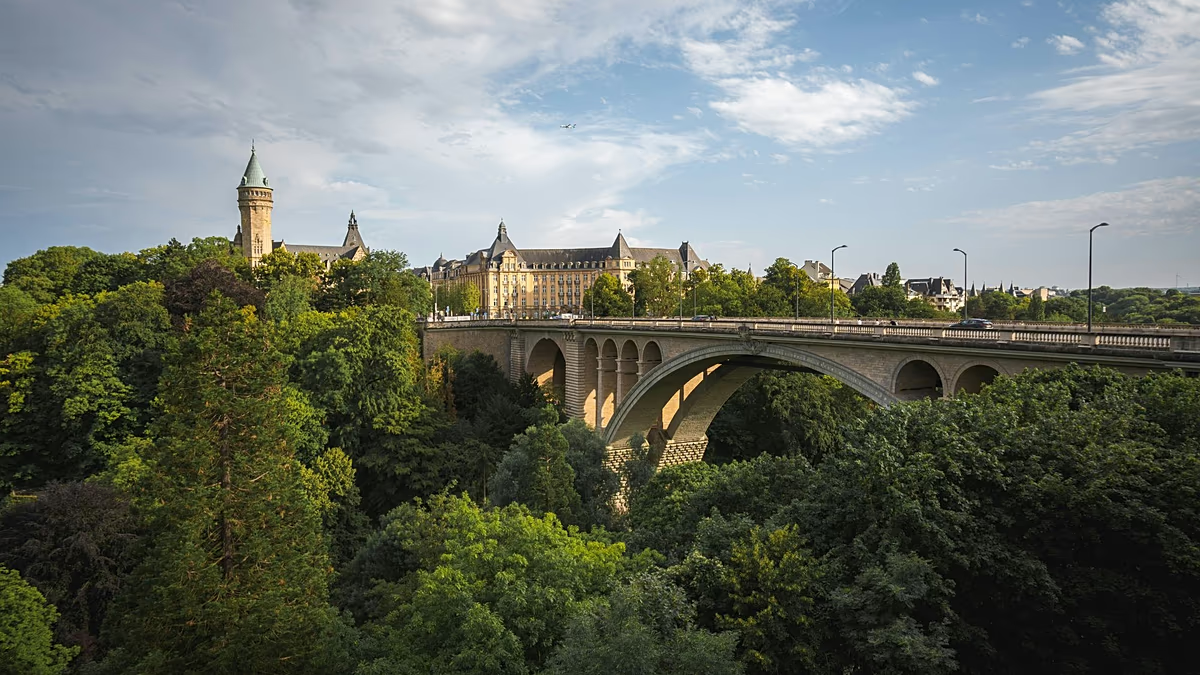
In the global rankings, European nations excel, with Iceland emerging as the world’s most welcoming country. Its impressive score of 8.94 is fueled by an exceptionally high foreign-born employment rate of 84.2%, reflecting robust job opportunities. Expats also report straightforward administrative processes and a profound level of social trust, making integration smoother. Luxembourg follows closely in second place, distinguished by its unique demographic; over half of its residents are international. This majority status means the entire system—from banking and housing to the workplace—is inherently designed to accommodate newcomers, offering a built-in network of multilingual colleagues who share the expat experience.
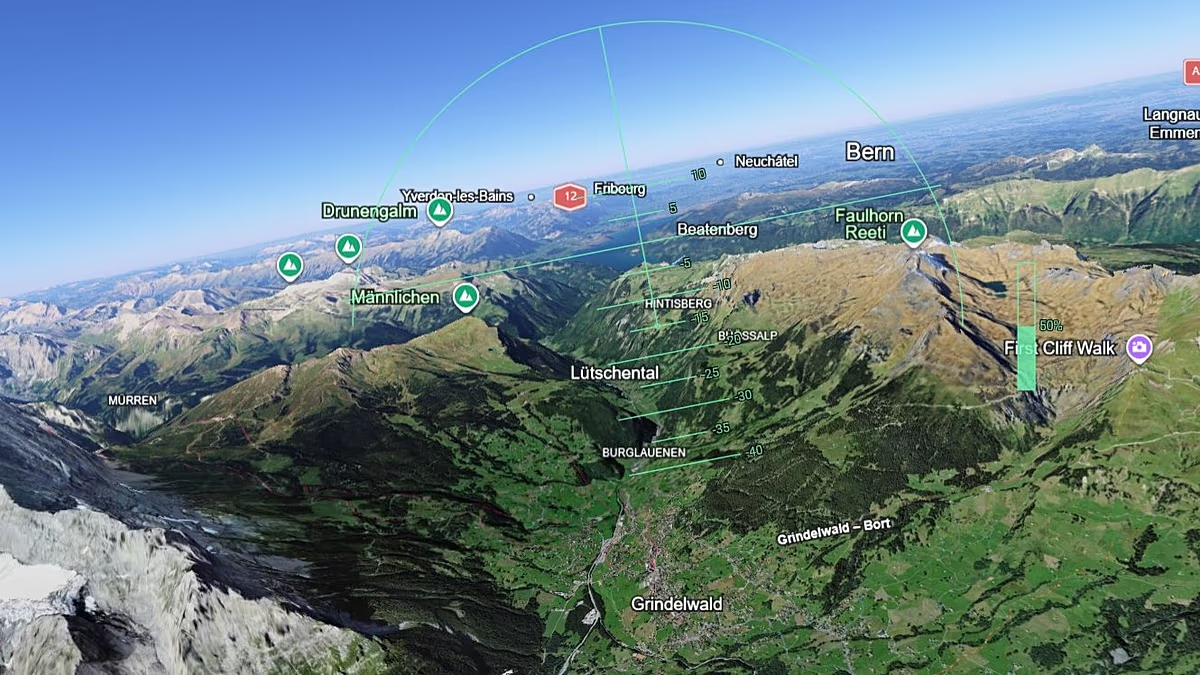
The European dominance continues throughout the top ten. Switzerland ranks fifth, praised for its high visa openness score and a strong 77.1% employment rate for foreign-born residents. Ireland secures sixth place, offering a familiar language and a famously friendly culture for many English-speaking arrivals. The list is rounded out by Czechia, Portugal, and Austria, each providing a blend of safety, growing expat communities, and increasingly streamlined processes for international residents. Notably, these countries highlight that a welcoming environment often correlates with strong social systems and economies that actively benefit from and therefore support their immigrant populations.
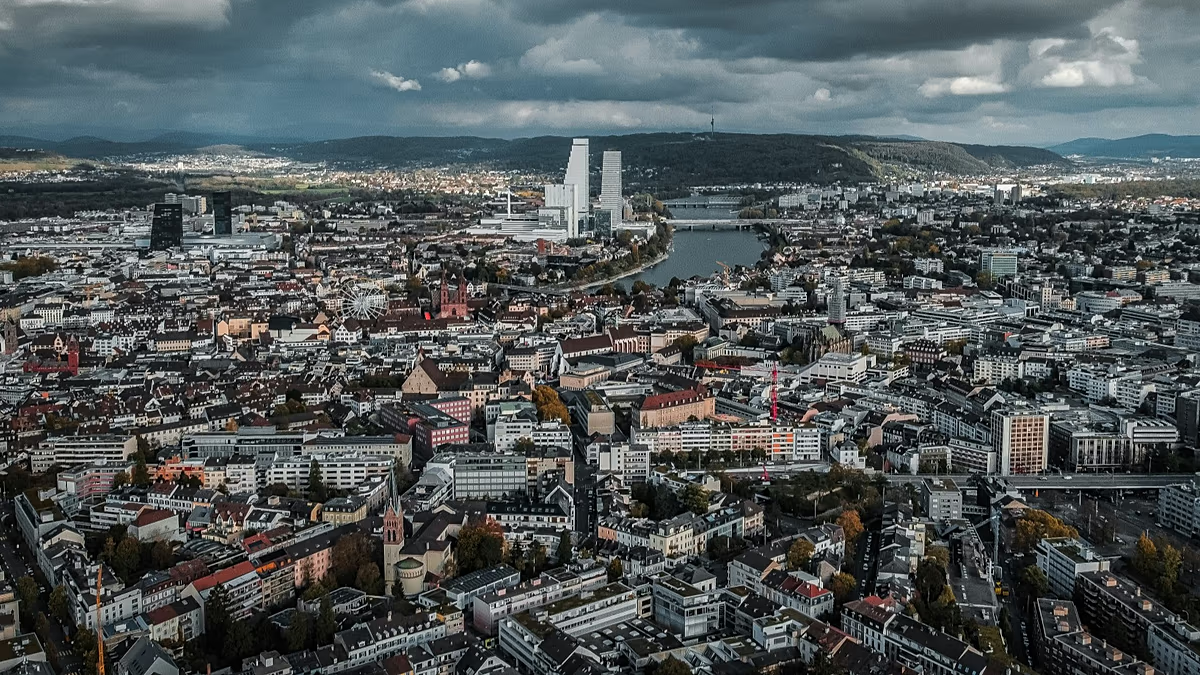
Zooming in on urban experiences, William Russell also ranked the world’s most welcoming cities, analyzing metrics like happiness, safety, and perceived public friendliness from the Happy City Index and Numbeo. Here, Zürich claims the top spot globally, combining a high safety score with a low rating for social friction, suggesting a cohesive and comfortable daily life. Other European cities like Copenhagen, Munich, Prague, and Warsaw also feature prominently in the top ten, offering expats a blend of cultural richness, efficient infrastructure, and manageable scales that foster connection. The study notes the conspicuous absence of mega-cities like London, Paris, and New York, theorizing that their immense scale and density can paradoxically lead to a sense of anonymity, making it harder for newcomers to build the deep, lasting connections that are vital for settling in.
Ultimately, this research offers a valuable, human-centered map for potential expats. It moves beyond clichés to highlight destinations where the institutional framework and social fabric actively support an outsider’s journey from newcomer to local. Whether it’s Iceland’s societal trust, Luxembourg’s international ecosystem, or Zürich’s orderly harmony, these places understand that true welcome is measured in the months after arrival. It is found in the ease of finding a job, the kindness of a neighbor, the simplicity of opening a bank account, and the gradual transformation of unfamiliar streets into one’s own neighborhood. For anyone dreaming of a life abroad, these insights underscore that the most successful moves are those where the destination doesn’t just invite you to visit, but empowers you to stay.