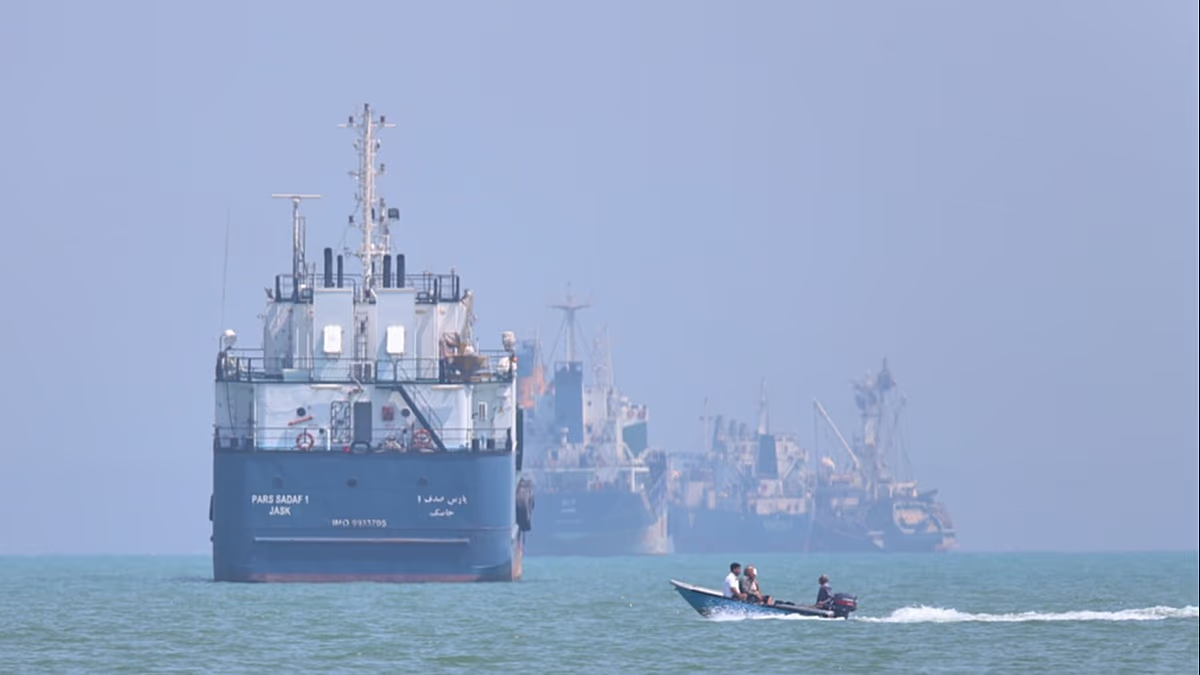




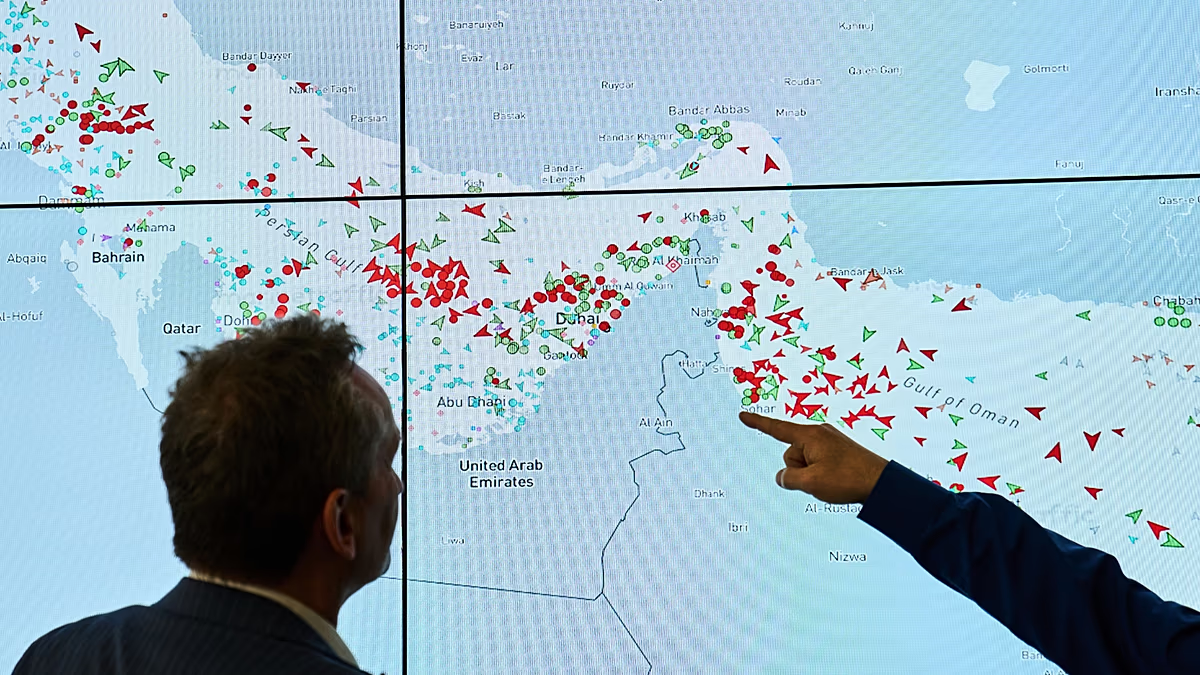
After months of war and a choked global oil artery, a fragile calm is settling over the Persian Gulf. Following a U.S.-Israel strike on Iran in February, a devastating cycle of retaliation had culminated in an Iranian blockade of the Strait of Hormuz, a waterway vital to one-fifth of the world’s oil and gas shipments. The economic shockwaves were immediate and severe. Now, a framework agreement, announced this past Sunday and set for formal signing in Switzerland on Friday, promises to end the hostilities. Both American and Iranian officials confirm that ships, including oil tankers, have tentatively begun moving through the strait again. U.S. President Donald Trump has optimistically declared that the route will be “completely open,” urging the world’s ships to “let the oil flow.” Yet, beneath this surface-level cooperation, a fundamental and potentially deal-breaking disagreement simmers over who will ultimately control this strategic corridor.
The core dispute centers on the future management of the Strait of Hormuz. While both nations agree it should be open, their visions of “open” starkly diverge. The United States appears to interpret the agreement as a return to normal, unimpeded international passage, with U.S. naval forces playing a key role in ensuring security. President Trump has even suggested the U.S. “will not need much help” in keeping it open. Iran, however, has a different interpretation. Iranian state media has outlined a plan for a joint legal framework with Oman—the nation that shares territorial waters over the strait—implying a shared, formalized regulatory authority. More provocatively, Tehran has previously asserted claims over stretches of the waterway that encroach on the territorial waters of Oman and the UAE, and has floated the idea of imposing fees on transit. Although it has since softened this to “maritime service fees,” the intent is clear: Iran seeks not just an open strait, but a managed one where it holds significant, legally recognized sway. Analysts warn that if Iran’s interpretation prevails, it would mark a major strategic victory, embedding its influence directly into the logistics of global energy markets.
This tension over the strait is emblematic of the broader ambiguities in the hastily arranged framework. Independent observers, like the Washington-based Institute for the Study of War, note the two sides have presented “diverging interpretations” of the same deal, making the true terms difficult to discern. The diplomatic dance continues even as preparations for the signing proceed. A senior U.S. official revealed that key figures, including President Trump and Iran’s parliamentary speaker, have already signed the text electronically, a move meant to signal commitment. Yet Iranian officials publicly temper their optimism with deep-seated distrust. Foreign Minister Abbas Araghchi bluntly referenced a “history of broken commitments” and agreements “torn up,” underscoring the fragility of the moment. While Iran’s military hails the deal as a victory that “humiliated” the U.S. and Israel, its diplomats proceed with caution, aware that the real test lies ahead.
The agreement’s other components are equally complex and laden with potential pitfalls. A major element involves the unlocking of billions of dollars in Iranian assets frozen abroad, which Tehran demands as compensation for wartime damages. Reports suggest a memorandum of understanding stipulates the release of these funds, though U.S. Vice President JD Vance is quick to assert that no American taxpayer money will be involved. Alongside finances, the perennial issue of Iran’s nuclear program returns to the forefront. The deal reportedly paves the way for renewed negotiations on this matter within a two-month window. Critical details, such as the duration of a potential suspension of uranium enrichment—with Trump mentioning figures between 15 to 20 years—remain under discussion. Vance has stated that International Atomic Energy Agency and U.S. inspectors will be granted access, even assisting in the destruction of Iran’s stockpile of highly enriched uranium, a claim that, if realized, would be a significant non-proliferation step.
Beyond the bilateral issues, the deal ambitiously tries to douse regional fires, most immediately in Lebanon. Iran successfully insisted that the framework address the conflict between Israel and Hezbollah, Iran’s powerful Lebanese ally, which escalated dramatically following the initial strikes. Tehran states that the U.S. must ensure Israel halts its fighting in Lebanon. However, Israeli Prime Minister Benjamin Netanyahu has defiantly declared that his country’s forces will remain in Lebanon, Syria, and Gaza “as long as necessary,” viewing the war as having spared Israel from a nuclear threat. This sets the stage for a direct clash between U.S. diplomatic assurances to Iran and the actions of its close ally. The fragility was underscored almost immediately when, despite the ceasefire announcement, a deadly Israeli strike was reported in south Lebanon. Hezbollah, an integral part of Iran’s “Axis of Resistance,” thanked Tehran for its diplomatic efforts but remains on a war footing.
In conclusion, the reopening of the Strait of Hormuz offers a desperately needed respite from war and economic turmoil, but the path forward is fraught with uncertainty. The emerging deal is less a definitive peace treaty and more a tense, ambiguous truce. Its success hinges on bridging the vast gap between the U.S. vision of a freely open seaway and Iran’s ambition for managed, influential control. It depends on successfully navigating the technical minefields of financial settlements and nuclear compromises. Most perilously, it requires translating a piece of paper into changed behavior on the ground, especially in Lebanon, where regional proxies and their state sponsors continue to test the limits of the new understanding. The world watches as ships slowly begin their passage through the narrow strait, hoping the fragile channels of diplomacy can prove deeper and more navigable than the turbulent waters they now seek to govern.