



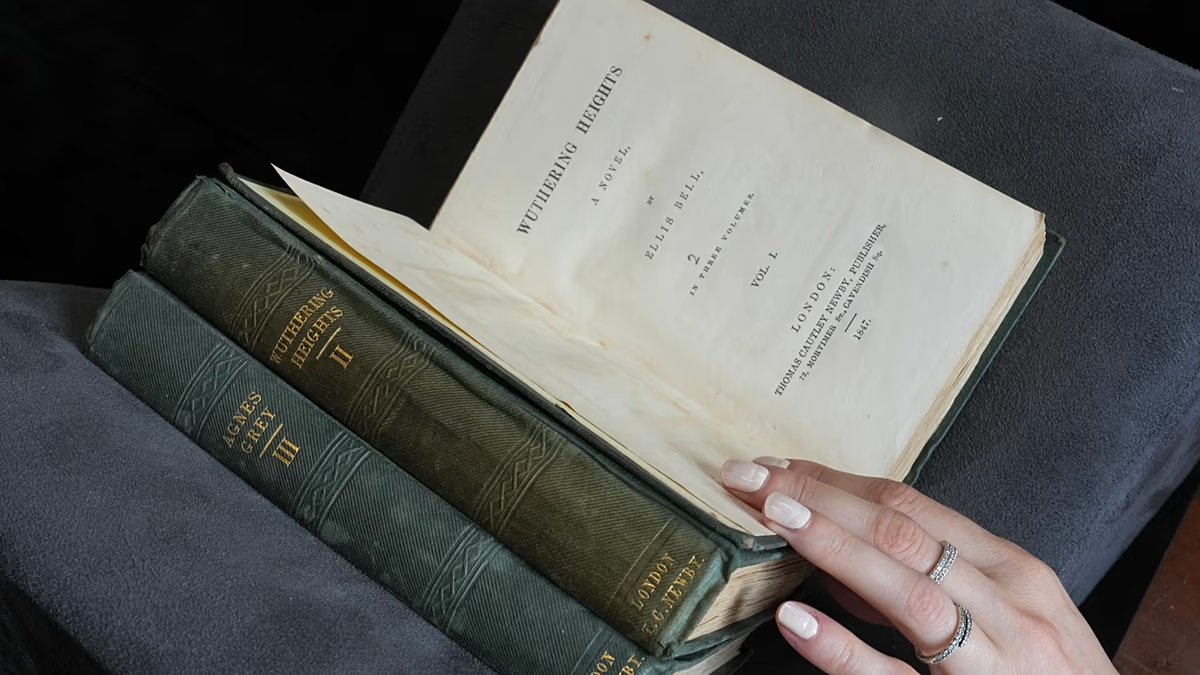
A rare literary treasure is poised to make history at Christie’s auction house in London. A first-edition copy of Emily Brontë’s seminal novel, Wuthering Heights, is set to go under the hammer on June 30th, marking the first time in over a century that a copy in its original publisher’s binding has been offered at auction. This particular volume, which has resided in a private library since its publication in 1847, represents an extraordinary survivor. Christie’s specialist Mark Wiltshire explains that of the roughly 250 copies printed, most surviving examples have been rebound over the decades for libraries or collectors. The pristine, original cloth binding of this copy makes it an exceptionally scarce artifact, a tangible piece of literary history preserved almost exactly as a Victorian reader would have first encountered it. It is being sold alongside a first edition of Anne Brontë’s Agnes Grey, and together, the sisters’ works are expected to fetch between £400,000 and £600,000.
The physical book itself bears the charming imperfections of its hasty journey to print. Rushed to publication in December 1847 following the sensational success of Charlotte Brontë’s Jane Eyre, the initial print run of Wuthering Heights is notorious for its typographical errors. As Wiltshire notes, these even extend to the occasional misspelling of the novel’s own title word, “heights.” These flaws are not detractions but rather endearing hallmarks of authenticity, whispering of the frenetic pace of the Victorian publishing world and the Brontës’ sudden, startling entry into it. They connect the modern holder directly to the book’s origins, making this copy a uniquely genuine relic from the very moment this fierce and unconventional story was unleashed upon the world.
Its reception was far from universally warm. Upon publication, the novel’s raw passion, moral ambiguity, and bleak portrayal of cruelty shocked many contemporary critics. One 1848 review condemned its “vulgar depravity and unnatural horrors,” a stark contrast to the more socially conventional narratives of the time. Yet, from this initial scandal, Wuthering Heights began its remarkable metamorphosis. As Wiltshire observes, the novel has long since “moved beyond literature to become a cultural touchstone.” Its themes of obsessive love, revenge, and the haunting power of landscape have proven endlessly fertile ground, inspiring countless adaptations in film, television, theatre, music, and art. The recent, controversial reimagining by filmmaker Emerald Fennell, starring Margot Robbie and Jacob Elordi, is merely the latest testament to the story’s enduring and provocative grip on the creative imagination.
That same adaptation, however, serves to highlight the challenges of capturing Brontë’s primal intensity. A review of Fennell’s film critiqued its failure to harness the novel’s profound emotional violence, arguing that it opted instead for a “surface-level flirtation with corset kink” that lacked genuine “subversiveness, sensuality and heart.” This criticism underscores the very qualities that make the original novel so perpetually compelling and difficult to translate: its unparalleled “emotional force, its atmosphere, and its psychological intensity.” The novel’s power lies not in aestheticized period decor but in its unflinching exploration of the human psyche’s darkest corners, a quality that continues to draw artists and readers back to its windswept moors.
This upcoming auction, therefore, is not merely a sale of a valuable old book. It is a celebration of a work that radically defied its era’s conventions to secure an immortal place in our collective consciousness. The journey of this specific volume—from a controversial new release in 1847, through a quiet century in a private collection, to its current status as a coveted centerpiece of a major auction—mirrors the novel’s own journey from critical scorn to canonical reverence. It is a physical symbol of literature’s power to transcend its time, to shock, to disturb, and ultimately, to endure.
When the gavel falls at Christie’s, it will conclude a chapter in the storied life of this rare object, but never the story of Wuthering Heights itself. Whether inspiring awe, controversy, or artistic reinterpretation, Emily Brontë’s masterpiece remains a cornerstone of Gothic literature and a permanent fixture in the cultural imagination. The exceptional copy on the block is a priceless vessel for that legacy, a direct and fragile link to the moment a solitary genius from the Yorkshire moors changed the landscape of English literature forever.