


In an age of digital immediacy, a quiet and profound experiment is unfolding at the Château de Fontainebleau. Since January of this year, the historic palace has been receiving a tender deluge of handwritten correspondence, each envelope addressed to a woman who has been dead for over two centuries: Marie-Antoinette. The initiative, titled “To your pens! Write to Marie-Antoinette,” has sparked a remarkable response, with over 4,000 letters arriving from around the globe. This is not merely a publicity stunt but a deeply human project conceived by historian Cécile Berly, who specializes in the 18th century. “History is never more fascinating than when it comes to life,” Berly observes, explaining that the intimate, physical act of letter-writing fosters a genuine sense of connection and closeness with the historical figure. Far from being a casual note, these missives are crafted with care, often beginning with the formal salutation “Your Majesty,” as if the writers are truly stepping across the threshold of time to speak directly to the queen.
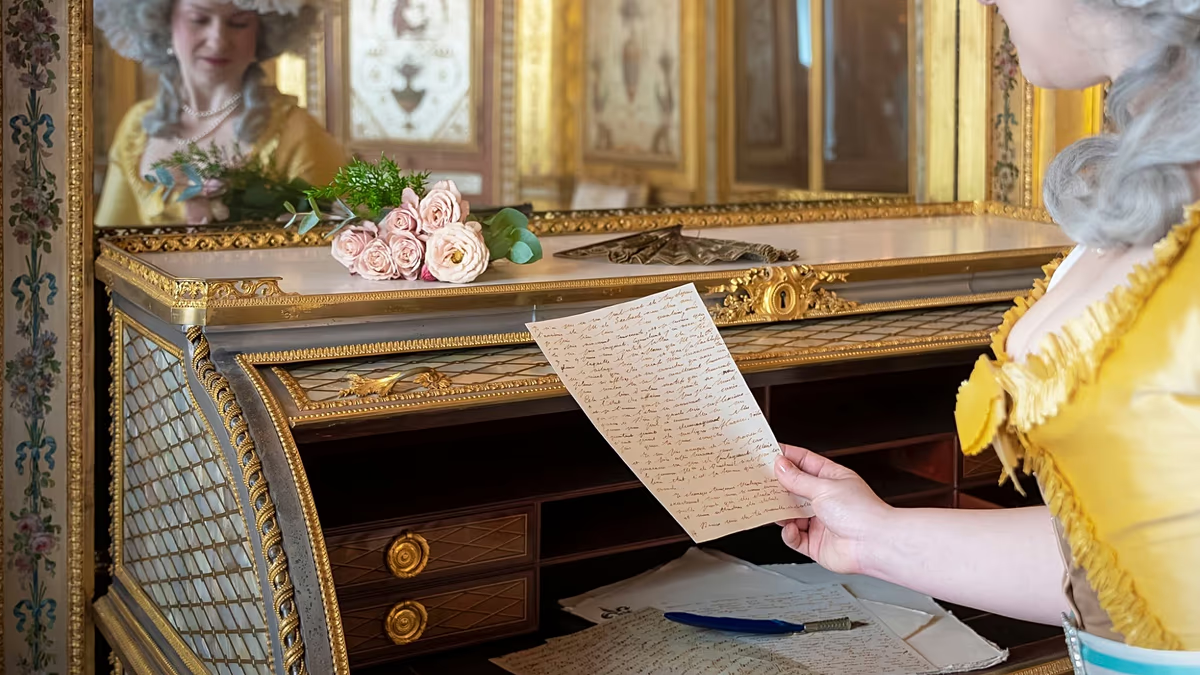
Fontainebleau itself is the perfect stage for this conversation with the past. The château, a sprawling masterpiece of art and architecture, was Marie-Antoinette’s cherished country escape. Between 1770 and 1786, she and King Louis XVI visited seventeen times, seeking respite from the rigid formality of Versailles. They came here to breathe, to enjoy the forest, and to experience a more relaxed court life. The letter-writing project is a centerpiece of a special theme year at the château, commemorating the 240th anniversary of the queen’s final visit. To encourage participation, the palace has even recreated a small, elegant boudoir—a type of private salon—outside its gift shop, inviting every visitor to sit, reflect, and put pen to paper. The initiative’s success has been a welcome surprise, as noted by communications director Sylvain Moulène, revealing a public eager to engage with history in a personal and emotional way.
But what does one write to a doomed queen? The organizers invite the public to share their feelings and whatever thoughts she inspires. The letters, therefore, become a mirror reflecting our modern fascination with this complex woman. For some, she may be the misunderstood teen bride, thrust into a foreign court; for others, the fashion icon and patron of the arts; and for many, the tragic mother who faced the guillotine with dignity. This act of writing is an exercise in empathy, an attempt to bridge the vast chasm between her tumultuous world and our own. “Why not dare to write a letter to the most famous queen in our history?” Berly urges. It is an invitation to move beyond the textbook and the documentary, to consider the person behind the powdered wig and the infamous, likely apocryphal, quote about cake. The simple question—“What would you tell her?”—unlocks a profound creative and historical curiosity.
Marie-Antoinette’s journey from queen to icon is a story in itself. Executed in 1793 during the French Revolution’s bloody zenith, her posthumous reputation has been a political and cultural pendulum. In the decades following her death, she was vilified as a symbol of decadence and recklessness, then later rehabilitated during the monarchy’s restoration, only to be criticized again by subsequent republics. It was in the 20th century that she transcended politics to become a global cultural figure, portrayed in nearly seventy films. Internationally, and particularly in the United States and Canada, portrayals have often been more sympathetic, focusing on her humanity and tragedy—a trend that helps explain the significant volume of letters now arriving from North America. Her story continues to captivate, with recent productions like the series “Marie-Antoinette” and the film “Le Déluge” proving her enduring grip on our imagination.
This project, however, offers something that films cannot: a direct, one-sided, yet deeply personal dialogue. The letters are not answered, but they are received, read, and cherished. They represent a collective need to reach out to history, to offer comfort, ask questions, or simply bear witness. The initiative has a closing date—July 4—marking a finite period for this unique postal communion. After that, the most beautiful and touching letters will be compiled into a published anthology, creating a lasting testament to this extraordinary collective gesture. It will be a book of modern voices speaking to an 18th-century soul, a record of empathy across centuries.
So, if you feel so moved, you too can take part. The instructions are beautifully simple, a call back to a slower, more reflective time: Grab your finest pen, choose some proper paper, and let your words flow. Address your thoughts to: “Marie-Antoinette, Château de Fontainebleau – 77300 Fontainebleau.” In doing so, you join thousands in a project that is less about the past alone and more about our perpetual need to connect, to understand, and to humanize the figures who seem lost to history. It is a reminder that while queens and kingdoms fall, the impulse to tell a story, to share a feeling, and to seek connection is truly everlasting.