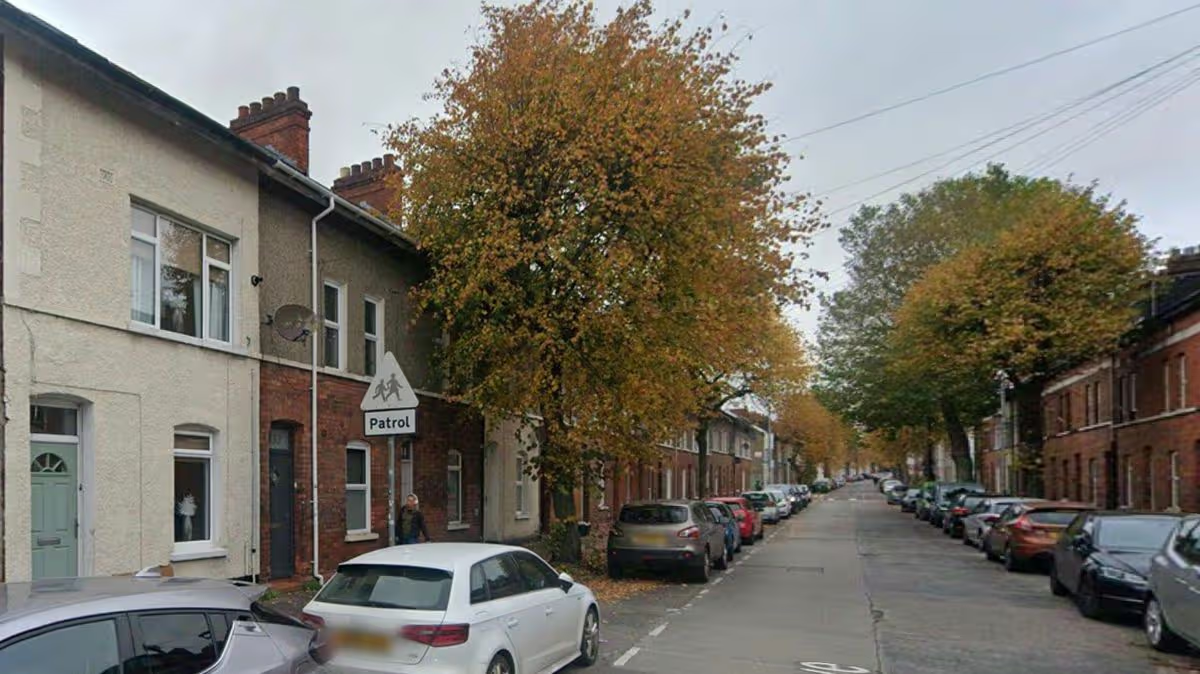



In the early, quiet hours of Sunday, June 14th, 2026, a home on Donegall Avenue in South Belfast was transformed from a place of safety into a scene of terror. Shortly before 1:10 a.m., as the occupants of the house attempted to leave, they were met not by the stillness of the night but by a gang of men who descended upon them with aggressive shouts. This was not a random act of violence but a targeted assault, one that the Police Service of Northern Ireland (PSNI) is now treating as a racially motivated hate crime. The confrontation escalated rapidly, with the group attacking the residents just outside their own doorstep. The violence resulted in injuries to two individuals and left a car damaged, a stark symbol of the invasion of their personal space and peace.
Inside the house, the horror unfolded for a terrified woman and several young children who were forced to huddle together, listening to the chaos erupting just beyond their walls. The psychological trauma inflicted upon a family in their own home, especially upon children who should feel most secure there, adds a deeply disturbing layer to this already violent event. Initial reports from the PSNI suggest that a number of weapons may have been used in the attack, indicating a level of premeditation and brutality that goes beyond a spontaneous clash. This detail underscores the grave danger the family faced, transforming a simple family home into a fortress under siege.
Following a swift response from attending officers, the PSNI has since made significant progress in the investigation. Law enforcement subsequently arrested two individuals: one man in his 40s and another in his 20s. They were taken into custody on suspicion of a number of offences related to the attack and were assisting police with their enquiries. The prompt action in making these arrests offers a measure of reassurance to the community and demonstrates the seriousness with which authorities are treating this incident. However, the work of the investigation is far from over, as police continue to piece together the full sequence of events and motivations behind this appalling crime.
Inspector Wilson, speaking on behalf of the PSNI, has made a direct appeal to the public for assistance. Authorities are particularly keen to hear from anyone who may have witnessed the incident or who might possess relevant CCTV or doorbell camera footage from the Donegall Avenue area around the time of the attack. Such evidence could be crucial in corroborating accounts and ensuring a robust case is built against those responsible. The community’s eyes and ears can play a vital role in delivering justice and reinforcing the message that such hatred has no place in Belfast or anywhere else.
This attack is a stark and painful reminder that racism and sectarian hatred remain persistent poisons within society, capable of erupting into violence that targets the most fundamental human need: the safety of one’s home and family. To treat a person’s ethnicity, nationality, or faith as a pretext for violence is to attack the very fabric of a diverse and cohesive community. It seeks to intimidate and isolate, using fear as a weapon. The impact of such crimes reverberates far beyond the immediate victims, sending waves of anxiety through entire communities who may see themselves reflected in the targeted family.
In the wake of this incident, the path forward must be one of collective resilience and unwavering support. The PSNI has provided clear channels for information, urging anyone with details to contact them at 101, quoting reference number 101 of 14/06/26. Reports can also be made anonymously through Crimestoppers at 0800 555 111. Beyond aiding the police, it falls upon all members of the community to actively reject the ideologies that fuel such hate, to support the victims in their recovery, and to reaffirm a shared commitment to a society where every family on every street—including Donegall Avenue—can live in security and peace, free from the shadow of bigoted violence.