


Ariana Grande’s launch of the “Brighter Days Ahead Foundation,” with its dedicated support for the LGBTQIA+ community, marks a significant moment as Pride celebrations unfold. This initiative, focused on advocacy within the United States, underscores a powerful, global trend of celebrity allyship. Such high-profile support is not confined to American shores; across Europe, a diverse array of artists and public figures leverage their platforms to champion equality, combat discrimination, and celebrate the rainbow community, providing crucial visibility and pushing for tangible legislative change.
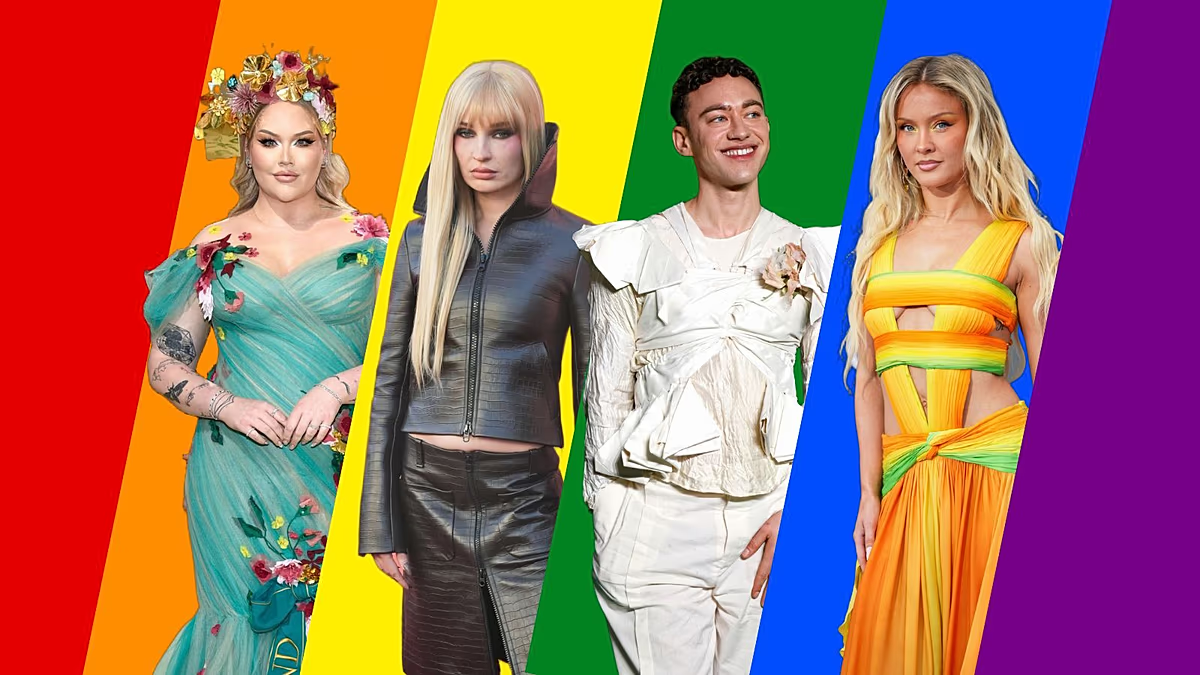
From the pop arenas of Sweden to the festival stages of Belgium, musicians lead with both their voices and actions. Zara Larsson, for instance, has faced professional repercussions for her unwavering advocacy, yet continues to proudly wave the rainbow flag, partner with health campaigns, and celebrate drag culture. Similarly, Belgian superstar Angèle transformed a painful, non-consensual outing into a force for good, using her music to explore queer love and mobilizing her fans to successfully petition the European Parliament for a ban on conversion therapy. In the United Kingdom, Olly Alexander stands as a seminal figure, blending chart-topping music with profound advocacy—most notably through documentaries exploring the mental health challenges within the community—and consistently using events like Eurovision as a megaphone for messages of love and acceptance.
This advocacy extends into nations where the fight for recognition is particularly urgent. In Ukraine, amidst the backdrop of war, singer Olya Polyakova highlights a painful contradiction: while LGBTQIA+ soldiers defend their country on the front lines, they are denied the right to marry at home. She uses her international platform to pressure for stalled protective legislation. Meanwhile, from her new home in Lithuania, Russian artist Monetochka continues to resist her homeland’s oppressive “extremist” designation of the LGBTQIA+ movement, subtly weaving support into her art as a form of quiet, potent rebellion against state-sponsored discrimination.
For some allies, their connection to the community is deeply personal and woven into the fabric of their artistry. Icelandic icon Björk has long acknowledged her bisexuality and draws inspiration from drag culture, celebrating its influence on her avant-garde persona. In France, the rapidly rising star Theodora openly credits the drag community for shaping her art and proudly employs LGBTQIA+ individuals, ensuring representation behind the scenes. These artists exemplify how genuine solidarity often blossoms from a place of shared creative spirit and mutual admiration.
Transparency and personal experience also forge powerful paths for advocacy. Dutch beauty influencer Nikkie de Jager, forced to publicly come out as transgender due to blackmail, transformed a personal violation into a public mission, using her massive platform to support lifesaving organizations and wearing the trans flag colors while hosting Eurovision. Similarly, German pop sensation Kim Petras, who publicly discussed her gender transition as a young teenager, now uses her music and awards show appearances to protest anti-LGBTQIA+ laws and educate on issues of gender identity.
The spectrum of allyship is beautifully broad, encompassing those who create inclusive spaces and those who challenge labels. Spanish global phenomenon Rosalía, while not explicitly defining her own sexuality, has cultivated a profound bond with her LGBTQIA+ fans. Through her tour rituals, she creates a confessional, supportive stage environment where queer voices are centered and heard, acting as a beloved confidante. These collective efforts, from Grande’s new foundation to the sustained activism of European stars, create a chorus of solidarity. They remind us that the fight for equality is a global one, amplified by every rainbow flag on stage, every petition shared, and every story told, driving progress not just during Pride Month, but throughout the entire year.