



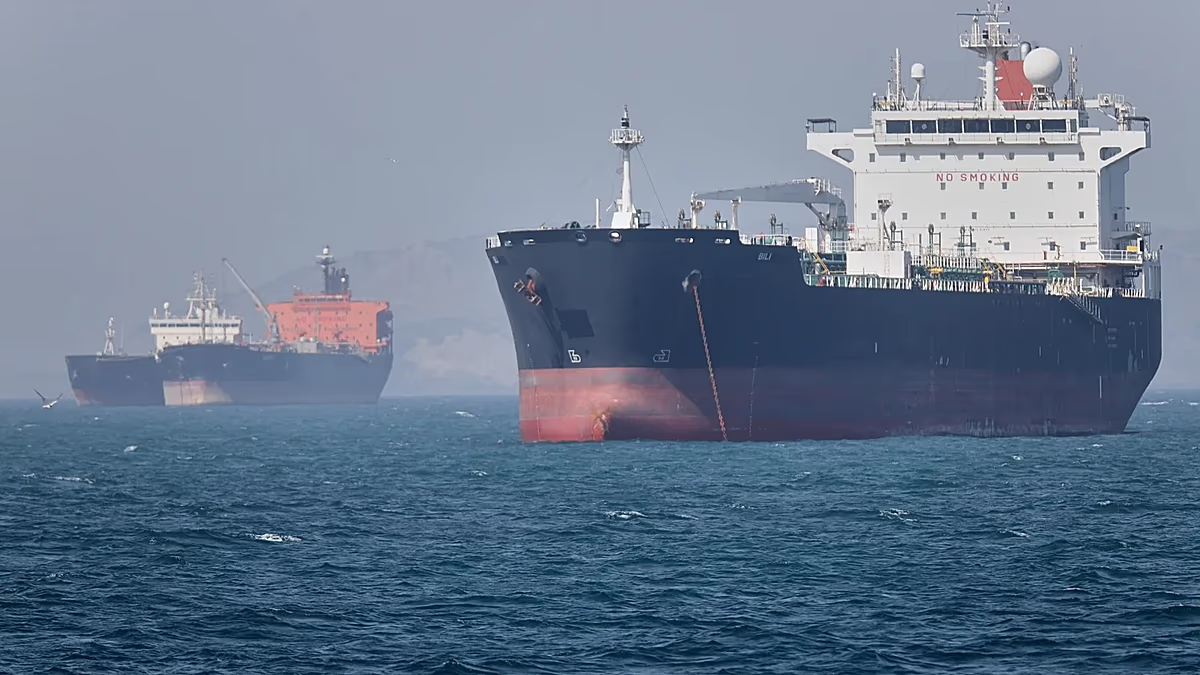
In a significant and unexpected geopolitical development, two Iranian supertankers successfully navigated through a longstanding U.S. naval blockade in the Strait of Hormuz this week. According to the maritime intelligence firm TankerTrackers, the vessels, named Diona and Hero2, carried a combined 3.8 million barrels of crude oil out into open waters. This marks the first such passage in two months, since the blockade was first imposed in mid-April. The event is not merely a breach of a military cordon but a powerful symbolic gesture, directly tied to a pending peace deal brokered between the United States and Iran. A third tanker, the Stream, was also reported to be approaching the blockade line, poised to follow its counterparts. This movement of vessels signals a tangible thaw in a period of intense confrontation, suggesting that diplomatic channels, facilitated by mediator Pakistan, have yielded a concrete preliminary result.
The backdrop to this moment is a protracted period of heightened tensions. The U.S. blockade, initiated on April 13th by order of President Donald Trump, aimed to sever Iran’s maritime oil exports, targeting all traffic to and from its ports on the Persian Gulf and Gulf of Oman. This aggressive tactic represented a peak in a long-running adversarial cycle, compounding regional instability. The breakthrough appears to have been orchestrated through diplomatic talks hosted by Pakistan. On Sunday, Pakistani Prime Minister Shehbaz Sharif announced that the two sides had reached a deal, declaring an immediate and permanent cessation of military operations “on all fronts.” This broad statement was specifically noted to include the conflict theater in Lebanon, hinting at a wider regional de-escalation. President Trump later confirmed the news on his Truth Social platform, framing the agreement as complete.
Crucially, President Trump directly linked the peace deal to the reopening of the critical Strait of Hormuz. In his social media statement, he declared, “I hereby fully authorize the toll free opening of the Strait of Hormuz, and, simultaneously herewith, authorize the immediate removal of the United States Naval blockade. Ships of the World, start your engines. Let the oil flow!” This theatrical pronouncement underscores a core American demand: any normalization with Iran is contingent upon the free flow of global commerce through the strategic waterway, which carries a substantial portion of the world’s seaborne oil. Furthermore, Trump has consistently stated that any deal must include ironclad assurances that Tehran will not pursue a nuclear weapon. The movement of the tankers is therefore a first, visible step in fulfilling a key term of the nascent agreement, offering a confidence-building measure from both sides.
However, the emerging deal is shrouded in a notable lack of detail and is already attracting scrutiny and skepticism. Official, public texts outlining the precise terms, timelines, and verification mechanisms have not been released. This opacity has prompted immediate calls for transparency from political opponents in the United States. Senate Democratic Leader Chuck Schumer demanded that President Trump publish the full agreement, brief Congress comprehensively, and inform the American public. “Americans need to know how and when this war will truly end. The longer this war goes, the worse things will get,” Schumer urged on social media. His comments reflect deep concerns about the durability and scope of the understanding, emphasizing that a lasting peace requires more than just a temporary halt in hostilities or the passage of a few ships.
Doubts about the deal’s comprehensive nature were further amplified by immediate events on the ground in the region. Even as the tankers sailed and diplomats prepared for a formal signing ceremony scheduled for Friday, June 19th in Switzerland, reports from Lebanon told a different story. The Lebanese National News Agency stated that Israel had conducted fresh strikes in southern Lebanon, a region where Iranian-backed forces are active. This contradiction between the promise of a permanent ceasefire “on all fronts” and the reality of ongoing military action casts a shadow over the proceedings. It highlights the immense challenge of unwinding a complex web of proxy conflicts and suggests that translating a high-level political agreement into a calm on every battlefield will be a formidable task, potentially undermining the entire accord before the ink is dry.
In human terms, this development represents a fragile hope grafted onto a landscape weary of conflict. For global markets, the unblocking of the Strait of Hormuz and the prospect of Iranian oil returning freely to international trade promises greater stability and lower prices. For the people of the region, from the Gulf to Lebanon, the promise of an end to violence offers a chance to rebuild shattered lives and economies. Yet, the path forward remains fraught. The success of this deal will ultimately depend not on the passage of tankers alone, but on the sustained political will to navigate the intricate details of nuclear non-proliferation, the cessation of proxy warfare, and the rebuilding of a minimal level of trust between decades-old adversaries. The world now watches to see if this opening maneuver leads to a lasting peace or becomes merely another fleeting pause in an enduring cycle of confrontation.