


On a Thursday morning in Uzbekistan, the ordinary rhythm of life is being entirely reimagined. As the first light of dawn breaks, instead of preparing for the workday, millions of citizens—from schoolchildren to elders—are gathering with a singular, historic focus. Their national football team is about to make its debut on the world’s grandest sporting stage: the 2026 FIFA World Cup. In a nation where passion for football runs deep, this moment transcends sport; it is a collective national event of unprecedented scale. From the bustling capital of Tashkent to the most remote towns, communities are uniting to watch their team face Colombia in its opening match at 7 am local time. This early hour has not dampened spirits but instead created a unique, shared experience, turning a weekday morning into a nationwide celebration of identity and pride.
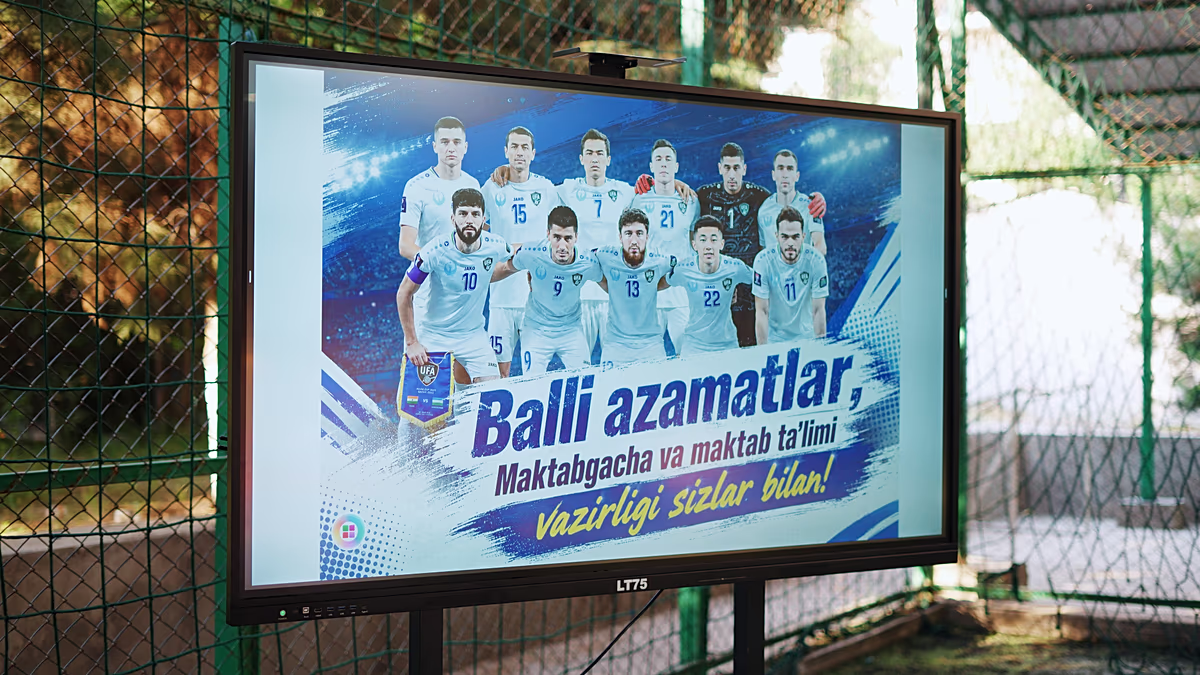
The physical landscape of the country has been transformed in anticipation. Public spaces are becoming communal living rooms. A network of 208 schools has opened its doors, inviting students, parents, and neighbors to watch together on large screens, blending education with national solidarity. In Tashkent, every one of its 12 districts boasts a fan zone, with the grand Bunyodkor Stadium itself converted into a massive viewing arena for 10,000 spectators. The aim, as explained by officials, is to foster a shared national experience. Bahrom Aminov of the Ministry of Education captured the sentiment perfectly, stating, “In the heart of every Uzbek, this is a matter of pride and honour.” The joy, he notes, comes from experiencing this historic moment surrounded by friends and community, sharing in the collective hope and emotion.
This wave of support is vividly colouring the everyday environment. The national team’s blue and white hues now adorn shop windows, cafés, and streets. Flags flutter, and the distinctive image of Bek, the official white wolf mascot of the squad, has become a ubiquitous symbol of national hope. The excitement is not a passive observance but an active, engaged celebration. Malik Karimov, a chief marketing officer and official partner of the football association, highlights how this spirit has permeated the business world. His company and many others are organizing staff viewings before the workday begins. “We couldn’t stand aside,” he explained, emphasizing their role in producing and distributing official merchandise so that “every kid and every person in the regions can support our national team.”
The significance of this moment extends far beyond the ninety minutes on the pitch. For a generation of young Uzbeks, seeing their heroes compete at a World Cup is transformative. Karimov believes the impact will be profound: “It’s a huge achievement… I think it will have a huge impact on kids and on the young population going into football.” This debut represents the culmination of years of dedication and a beacon for the future of the sport in the country. The team’s journey to this point has been guided by a figure of global football prestige: former Italy captain and World Cup winner Fabio Cannavaro, appointed head coach in 2025. His leadership adds a layer of international gravitas to Uzbekistan’s maiden voyage onto this stage.
The sense of pride resonates far beyond the national borders, echoing throughout Central Asia. As the first team from the region ever to qualify for a World Cup, Uzbekistan carries the hopes of its neighbours. Social media is alight with messages of solidarity from across the continent, a testament to the unifying power of this achievement. One supporter poignantly noted that the journey has “united the whole country, from seven years to 70.” For many, the sheer fact of qualification is the victory—a milestone that will be remembered for generations, regardless of the match results. The team faces a formidable challenge in Group K, competing against Colombia, Portugal, and DR Congo. While progression would be a dream scenario, the foundational wish is simpler and deeper: to compete with honour and heart.
Ultimately, this Thursday morning is about more than football; it is a powerful expression of national spirit and communal joy. In parks, schools, stadiums, offices, and living rooms, a nation pauses to witness history together. The early alarm clocks, the gathered crowds in the cool morning air, the sea of flags—all speak to a shared identity being celebrated on a global platform. As one fan succinctly put it, “Just qualifying is itself a great achievement.” Whether the final whistle brings triumph or lessons, Uzbekistan has already won its place in history. This collective breath held at dawn is a moment of pure, unfiltered national pride, a story of a country stepping onto the world stage, together.