


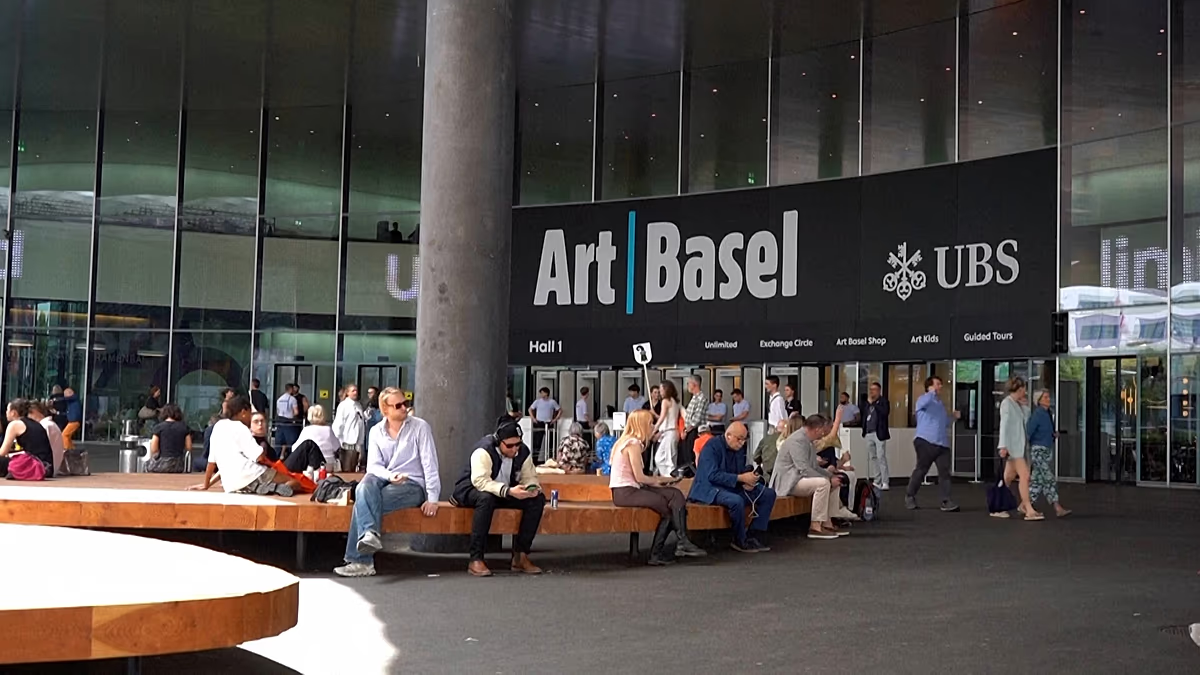
The global art world convened once more in Switzerland on June 16th, as the prestigious Art Basel fair opened its doors for VIP previews. This year’s edition was imbued with a palpable sense of anticipation, serving as a crucial barometer for the health of the international art market after a period of significant uncertainty. Thousands of collectors, dealers, curators, and artists streamed into Basel, their presence alone signaling a collective desire to reconnect and refocus. The buzz in the halls was not just about aesthetic appreciation but also about gauging economic sentiment; all eyes were on the interactions between buyers and galleries to see if a renewed confidence would translate into vigorous sales. As a cornerstone event on the cultural calendar, Art Basel’s influence extends far beyond its exhibition halls, setting trends and defining the commercial and critical tempo for the year ahead.
Throughout the expansive fair, the works of iconic masters acted as powerful anchors, drawing devoted crowds and sparking conversations. Pieces by towering figures like Henry Moore, Pablo Picasso, Andy Warhol, and David Hockney served as timeless reminders of art’s enduring appeal, their historical weight providing a stable counterpoint to more speculative contemporary offerings. The sustained attention these blue-chip artists received underscored a classic market principle: proven value and legacy retain their magnetic pull, especially in times of perceived recovery. Organizers pointed to the robust attendance and active engagement from an international roster of buyers as early indicators of a positive shift in mood. With approximately 4,000 artists represented, the fair demonstrated its unmatched role as a comprehensive showcase, juxtaposing established genius with emerging voices.
The cautiously optimistic atmosphere on the floor found statistical backing in the latest Art Basel and UBS Global Art Market Report. The data revealed a heartening 4% increase in worldwide art sales for 2025, pushing the market to nearly $60 billion and halting a two-year decline. However, Art Basel CEO Noah Horowitz provided a crucial, nuanced lens on this rebound, describing it as a “K-shaped recovery.” This economic term paints a picture of divergence: the high-end of the market, particularly works valued above $10 million, is experiencing robust growth and driving the overall numbers upward. Conversely, the mid-market segment continues its slower, more challenging period of adjustment and consolidation. This bifurcation highlights a market where trophy assets command premium energy, while other sectors navigate a more complex path forward.
Beyond the numbers, this year’s fair underscored a profound and heartfelt return to the irreplaceable human element of the art world. The report highlighted that art fairs now contribute 35% of dealer turnover, a figure that reaffirms their indispensable role not just as marketplaces, but as vital community hubs. The palpable energy of live conversation, the shared experience of viewing a monumental installation, and the subtle dance of negotiation simply cannot be replicated online. After years of digital intermediation, the industry is rediscovering the value of physical presence, where trust is built through handshakes and relationships are strengthened by shared wonder. This return to face-to-face interaction represents a reclamation of the art world’s social soul, a rekindling of the networks that fuel both commerce and culture.
The 2024 edition carried an added layer of emotional depth with the recent passing of the beloved British artist David Hockney. His vibrant works on display were viewed through a new lens of legacy and memorial, attracting both longtime admirers and those paying their respects. This sense of celebrating an artistic life resonated powerfully within the fair’s Unlimited sector, a dedicated space for monumental, often immersive, installations that defy conventional booth dimensions. Here, large-scale works by living artists created experiential dialogues with viewers, offering a counter-narrative to the more intimate gallery presentations. The sector served as a poignant reminder that the market, for all its commercial mechanics, is ultimately a stage for human expression and a testament to artistic vision across generations.
In conclusion, Art Basel 2024 presented a complex yet hopeful portrait of a global art market in transition. It confirmed a tentative recovery, albeit one characterized by a stark divide between the high and mid-markets. More importantly, it celebrated the resilient human connections at the heart of the art ecosystem. The fair was a living testament to the enduring power of seeing art in person, of the conversations that spark in front of a compelling piece, and of the collective mourning and celebration of artistic giants. As the art world left Basel, it carried forward not just sales receipts, but a reinforced commitment to the physical, social, and profoundly human experiences that give art its true value. The market’s journey of adjustment continues, but its foundational passion for creation and connection, so vividly on display in Switzerland, remains its greatest asset.