



Here is a humanized summary of the content, structured into six paragraphs.
Paragraph 1
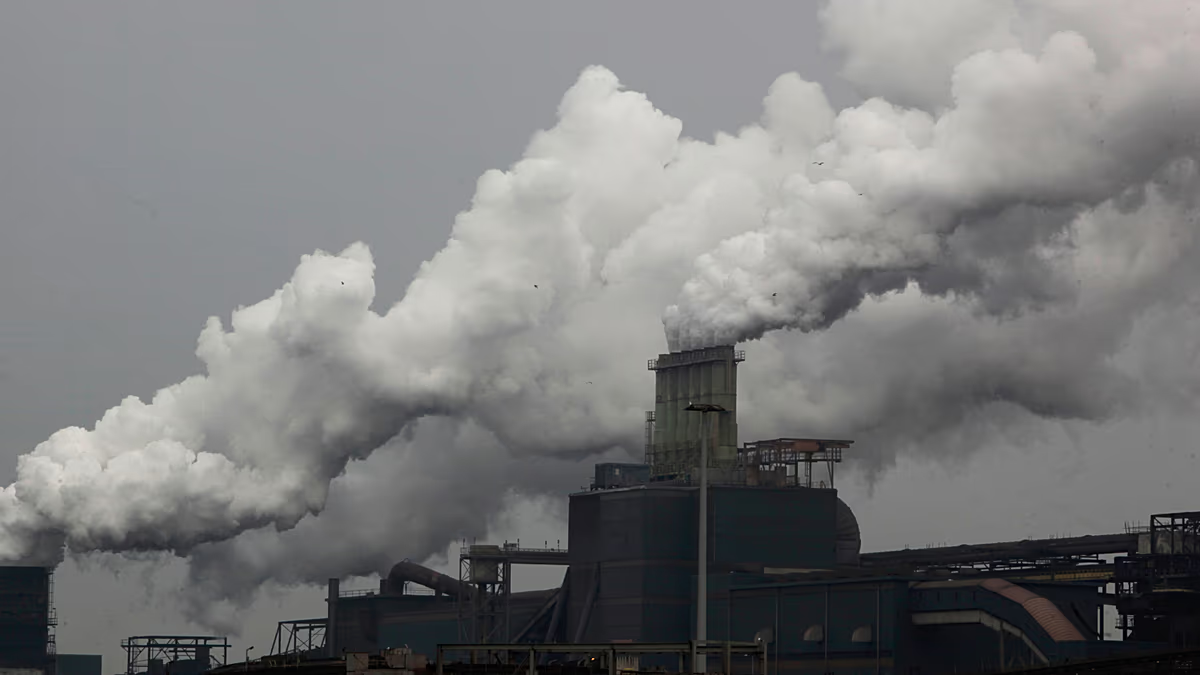
The European Union’s ambitious climate agenda is facing a significant pushback from its own industrial heartland, with Portugal emerging as a vocal critic of a recent Brussels policy shift. At the heart of the dispute is the EU’s Emissions Trading System (ETS), the bloc’s flagship carbon market. Portugal has urgently called on the European Commission to reconsider its decision to reduce the number of free carbon allowances granted to energy-intensive industries for the 2026-2030 period. Lisbon fears this well-intentioned move to tighten environmental rules may backfire spectacularly. In a confidential letter revealed by Euronews, Portuguese officials argue that slashing these allowances now would critically undermine companies’ already-strained capacity to finance the very green technologies needed for a sustainable future.
Paragraph 2
Portugal’s Energy Minister, Maria da Graça Carvalho, frames the Commission’s timing as not just unfortunate, but potentially damaging. She points out that European industry is currently navigating a perfect storm: record-high energy prices, fierce international competition, and the massive capital demands of transitioning to greener production methods. The ETS is designed to make polluters pay, but it also includes free allowances as a crucial safeguard. This mechanism aims to prevent “carbon leakage”—the relocation of production to countries with laxer climate laws, which would simply export emissions, not reduce them. Carvalho contends that cutting this protection now ignores the fragile economic reality on the ground, leaving companies exposed on multiple fronts simultaneously.
Paragraph 3
In response, Portugal is proposing a strategic pause. The government suggests a temporary freeze on free allowance volumes at their previous levels until a broader, scheduled review of the entire ETS is completed in mid-July. This freeze, they argue, should be carefully tailored to specific industrial sectors to ensure meaningful protection remains. The Portuguese letter delivers a stark assessment: “The ETS no longer reflects current global realities.” It posits that Europe is essentially acting alone in ramping up carbon costs, stacking them on top of pre-existing structural disadvantages like pricier energy and stricter regulations. This combination, Lisbon warns, is eroding industrial competitiveness “at an accelerating pace,” risking both economic and environmental goals.
Paragraph 4
Portugal’s concerns are crystallized in the plight of specific sectors like ceramics, glass, and cement. The ceramic industry, highlighted for its importance to Portugal’s regional economies and employment, exemplifies the dilemma. Many facilities are already relatively efficient, yet they remain deeply exposed to ETS costs. While the industry has invested in efficiency and adopted lower-carbon fuels like biomass, Portugal stresses that the next leap—to renewable gases or hydrogen—is not yet commercially viable for widespread use. The government and industry groups like CERAME-UNIE warn that soaring compliance costs would directly cannibalize the funds available for these essential future investments. CERAME-UNIE forecasts an “unjustified” cost surge of over €500 million in 2026 alone for ceramics, amidst a sector already reeling from a 30% drop in EU production.
Paragraph 5
The core of Portugal’s argument is a perceived growing chasm between Brussels’ regulatory calendar and the gritty reality of industrial transformation. Lisbon warns that higher ETS costs could achieve the opposite of their intent: shrinking the capital available for decarbonization and actually increasing the incentive for carbon leakage. Furthermore, they see the Commission’s move as creating unnecessary instability, revising rules just weeks before a comprehensive system review, which breeds uncertainty and hampers long-term planning. Portugal is not alone in this view. A powerful coalition of 33 heavy-industry groups from across the chemical, steel, and metals sectors has echoed the sentiment, urging EU leaders to halt what they term a “dangerous escalation in carbon costs,” arguing the ETS is becoming a threat to survival rather than a catalyst for green innovation.
Paragraph 6
Ultimately, Portugal’s stance is not a rejection of climate action, but a plea for pragmatism. The letter advocates for a “more gradual and realistic” transition, one that carefully synchronizes environmental ambition with economic and technological feasibility. This intervention underscores a fundamental tension within the EU’s green transition: the balance between accelerating emission cuts and preserving the industrial base tasked with delivering them. As several member states lobby Brussels to soften its stance, the debate reveals a critical juncture. The EU must now navigate how to maintain its role as a global climate leader without undermining the economic foundations of its member states, ensuring its industries are empowered to transform, not simply diminished.