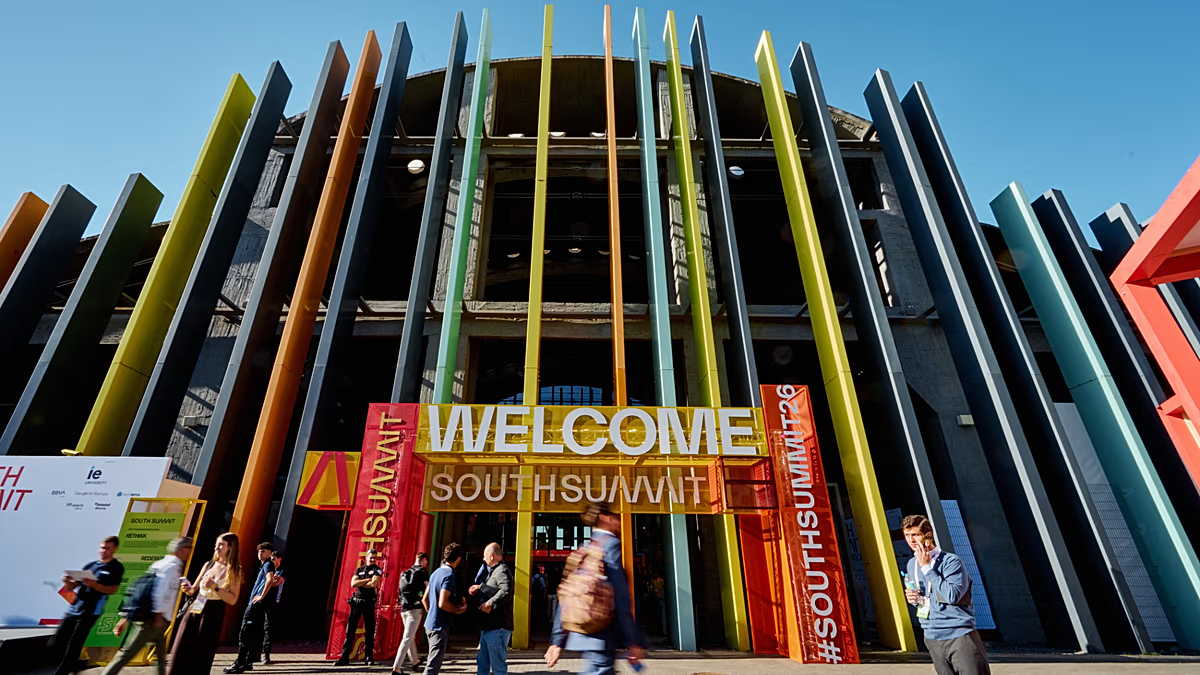



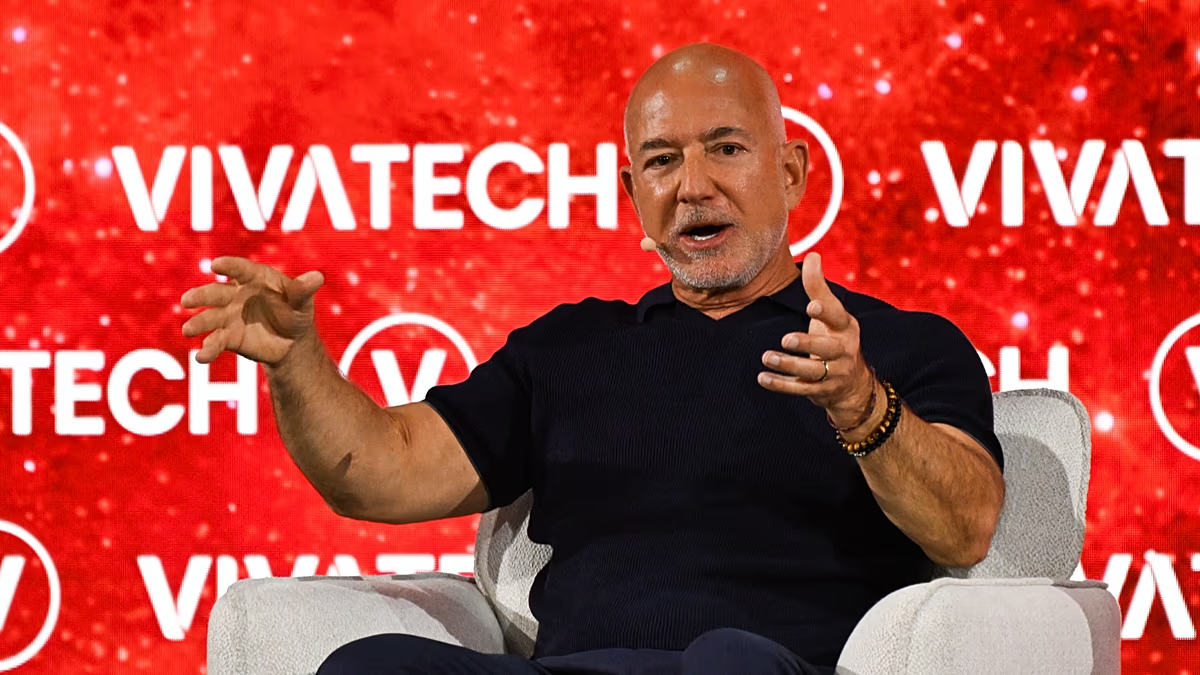
In a recent appearance at VivaTech in Paris, Jeff Bezos laid out a sweeping vision for humanity’s future in space, framed not as a distant dream of exploration but as an urgent, pragmatic solution to a pressing terrestrial dilemma. Alongside Blue Origin CEO Dave Limp, and moderated by former astronaut Mike Massimino, the Amazon founder argued that the only sustainable path forward for our civilization involves a fundamental shift: moving heavy industry off Earth. Bezos contends that we stand at a unique crossroads where economic growth and environmental stewardship appear locked in conflict. His proposed resolution is audacious yet simple. By relocating energy-intensive manufacturing and industrial processes to space, we could allow our “garden planet” to heal and return to a state resembling its pre-industrial condition. This, he asserts, is the only scenario where we can genuinely “have both”—preserving and restoring Earth’s natural systems while continuing to advance human prosperity and technological capability. For Bezos, this isn’t optional idealism; it’s a necessary next step for a species that has improved its quality of life at the planet’s expense.
Central to this grand strategy is a specific, sequential roadmap that begins not with Mars, but with the Moon. Bezos was unambiguous in his critique of those who wish to skip this lunar step, calling such an approach a mistake that would ultimately slow progress. He emphasized the moon’s profound logistical advantages: its proximity, a mere three-and-a-half-day journey allowing for constant access rather than brief windows every two years, and its shallow gravity, which makes it an ideal staging post. The energy economics are transformative, he noted, as lifting material from the lunar surface requires 28 times less energy per kilogram than launching it from Earth. This turns the moon from a mere destination into a critical supplier and fuel depot for deeper space ambitions. Bezos drew a sharp distinction between this vision and the Apollo program of the 1960s, which he characterized as a politically-driven sprint, unsustainable at nearly 4.5% of the federal budget. What Blue Origin envisions, he argued, is categorically different: a deliberate, permanent settlement built for long-term necessity, not short-term rivalry. “The idea that we’ve been to the moon before — it’s the permanence of it, of staying there,” he said. “Now is the right time. To really get into it and go to stay.”
The economic and practical logic of a permanent lunar presence, as Bezos elaborated, is compelling. The moon’s resources are key. Water ice, detectable from orbit, can be processed into liquid oxygen—a primary rocket propellant—and launched into cislunar space at a fraction of Earth-bound costs. Furthermore, the lunar surface, bombarded by meteorites for billions of years, is rich in virtually all the minerals necessary to construct infrastructure in space. This establishes the moon as a foundational industrial hub. The longer-term vision Bezos sketched is sweeping: envisioning massive space habitats, inspired by physicist Gerard O’Neill’s 1970s concepts, where thousands or even millions could live and work. In this future, space would host computational infrastructure, generate vast solar energy unimpeded by atmosphere, and house advanced manufacturing facilities, with their outputs beamed back to Earth. Mars and other destinations remain on the horizon, but in Bezos’s plan, they are destinations that follow only after a robust, resource-independent lunar economy is firmly established. “We will build colonies on Mars and so on,” he affirmed. “The moon is an important first step.”
Beyond the architecture of space settlement, Bezos also addressed a more immediate technological lever: artificial intelligence. He discussed his venture, Prometheus, co-founded last year, which he described as an engineering-specific AI tool designed not on general text but on specialized data for building physical objects. The goal is a dramatic compression of the innovation cycle, potentially turning a decade-long development program into one of five, two, or even a single year. This acceleration in invention, he suggested, is critical for solving the immense engineering challenges of building a space-based industrial ecosystem. For Bezos, Prometheus represents the kind of tool that can turn visionary timelines into practical realities, acting as a force multiplier for human ingenuity as we tackle the monumental task of becoming a multi-planetary species.
Closing his remarks, Bezos grounded his cosmic vision in a characteristically optimistic and entrepreneurial spirit. He argued that civilizational wealth has always been propelled by fundamental inventions—from the plough to the steam engine—and that we are currently living in the most “target-rich” environment for innovation in human history. The convergence of AI, space technology, and environmental necessity presents unparalleled opportunities. His final message was a call to action aimed squarely at the next generation: “Every young person right now should be so excited,” he urged. “It’s never been a better time to be an entrepreneur.” In Bezos’s view, the challenges we face are not cause for despair but are the very catalysts that will drive humanity to its next and most profound chapter, one that begins with a return to the moon, this time to build a lasting future.