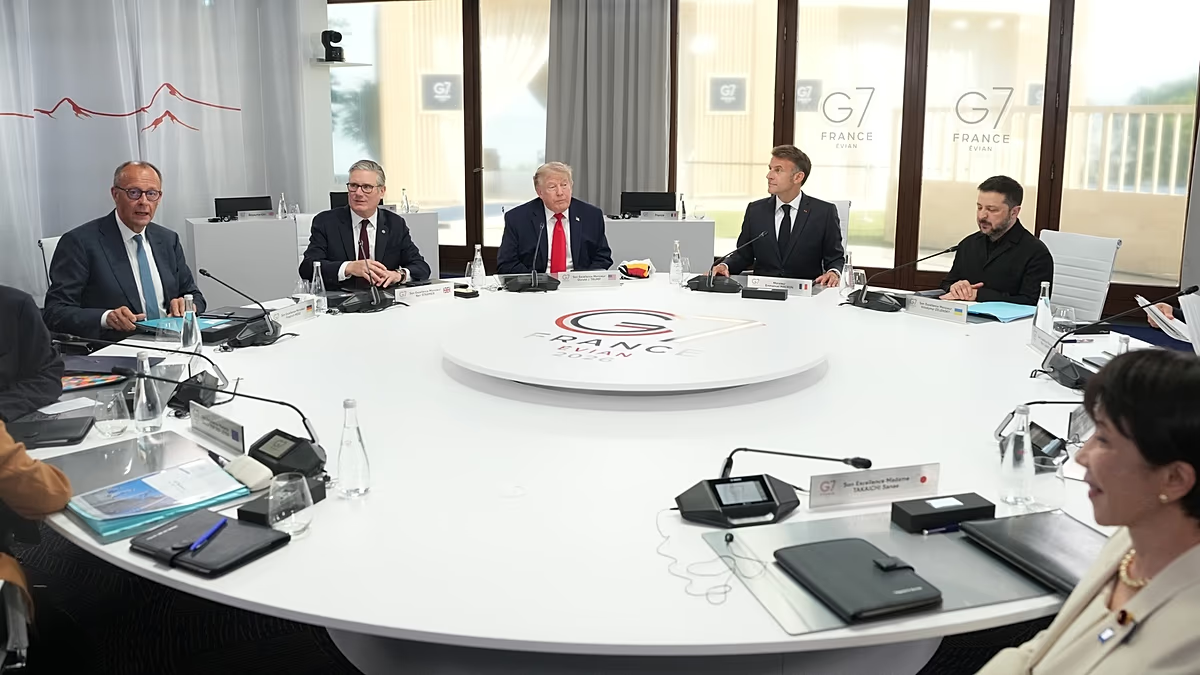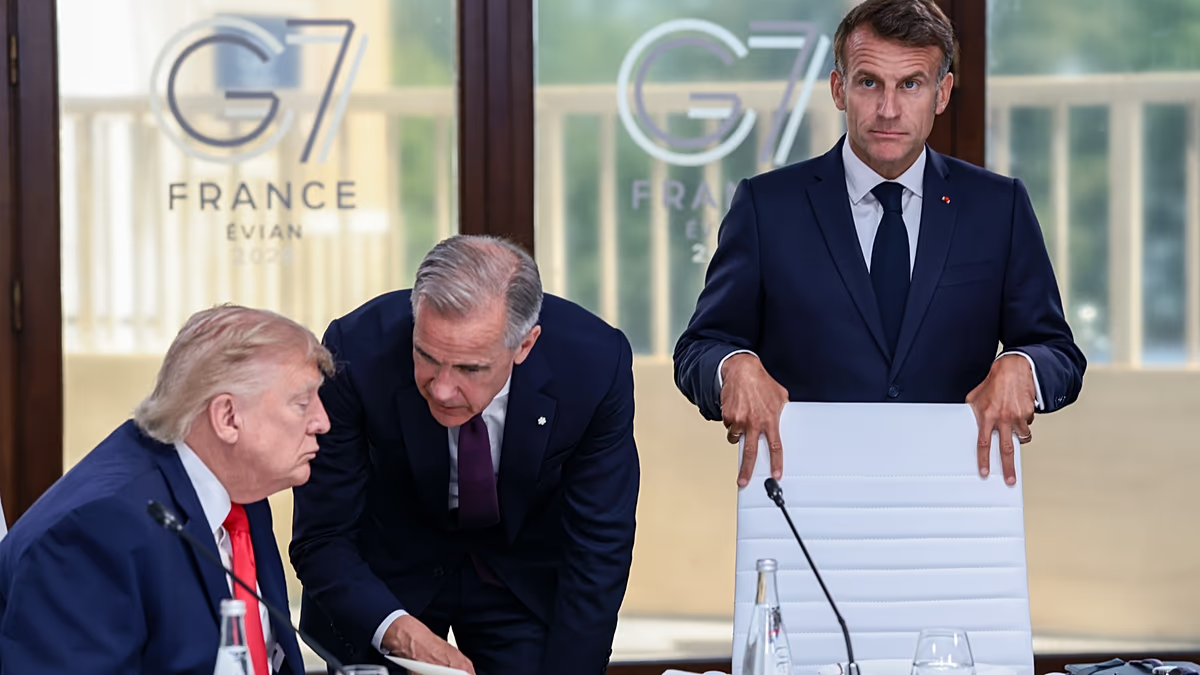



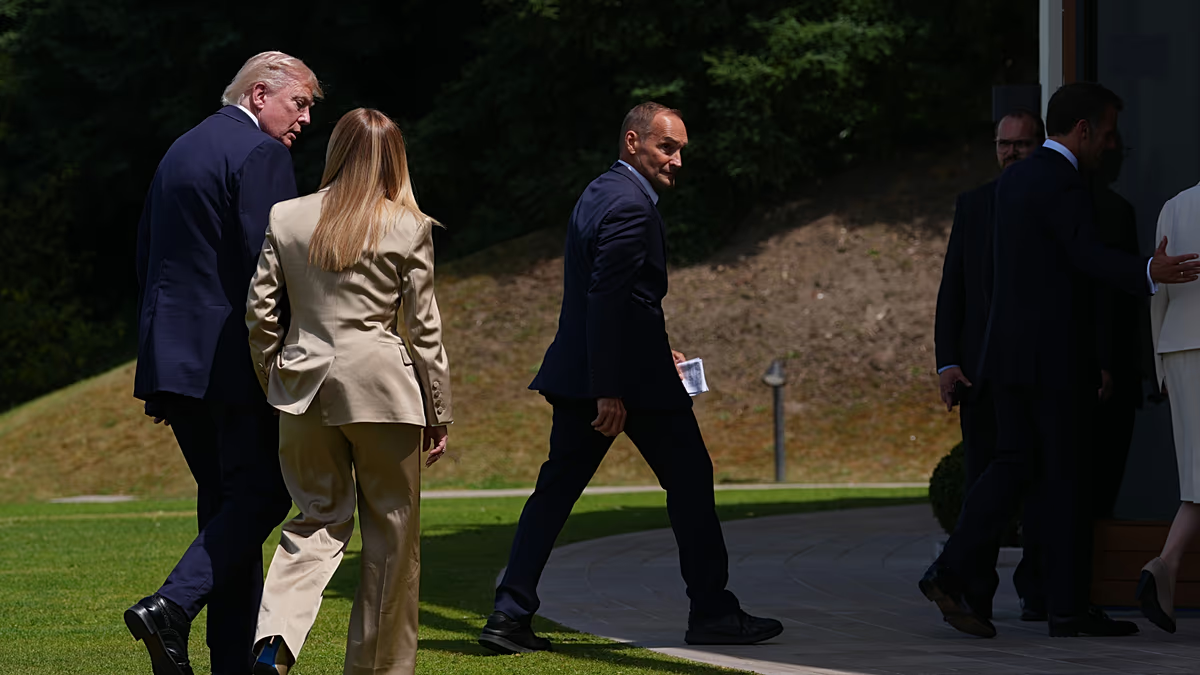
The recent G7 summit in Evian served as a crucial diplomatic stage for two of the world’s most prominent conservative leaders, US President Donald Trump and Italian Prime Minister Giorgia Meloni. On its surface, the gathering projected a scene of reconciliation. European Council President António Costa was overheard jovially declaring, “You’re friends again,” as Trump and Meloni convened with other leaders. Both were quick to affirm their bond, with Meloni stating, “We have always been friends,” despite Trump’s playful, albeit pointed, retort, “I was abandoned.” This carefully choreographed display of camaraderie, however, belied a relationship that had become unexpectedly strained over the preceding months, moving from a hallmark alliance to a source of public friction.
The roots of this tension were both personal and geopolitical. Once considered one of Trump’s closest European allies—evinced by her exclusive invitation to his 2025 inauguration—Meloni found herself directly in the line of fire in April. Trump told an Italian newspaper he was “shocked” by her and lamented a perceived lack of courage, a comment that struck at the core of Meloni’s political identity. She swiftly countered that true courage meant standing by one’s convictions even in disagreement. The public sparring escalated further when Meloni condemned as “unacceptable” Trump’s sharp criticism of Pope Leo XIV over the pontiff’s stance on the war in Iran. These exchanges marked a stark departure from their previous harmony and signaled a growing divergence in political needs and pressures.
A significant driver of this rift was the tangible economic and political fallout within Italy from the US-Israeli conflict with Iran. The war triggered a spike in global energy prices, a blow that resonated deeply in Italy, which relies heavily on imported energy. The resulting economic pain increased the domestic political cost of Meloni’s alignment with Trump. Furthermore, Israel’s continued military operations, perceived as having Washington’s tacit backing, grew increasingly unpopular among Italian voters. With national elections on the horizon, Meloni’s government felt compelled to distance itself, leading to a notable shift in Rome’s tone toward Israel and a more independent foreign policy posture.
This strategic recalibration culminated in a decisive and symbolic action: Italy’s refusal to allow US military aircraft bound for the Middle East to use the strategic Sigonella air base in Sicily. This move represented the peak of bilateral tensions, demonstrating that Meloni was willing to translate diplomatic discomfort into concrete policy that directly affected US operational capabilities. It was a clear message that Italian national interests, particularly in an election year, would supersede even a once-solid international partnership. This action underscored how the domestic repercussions of global conflicts can force allies into difficult choices, straining relationships built on ideological affinity.
Therefore, the Evian summit was more than a routine multilateral meeting; it was a necessary forum for Trump and Meloni to mend fences face-to-face. The brief, lighthearted exchange captured by observers was likely the product of talks aimed at resetting the relationship. The backdrop to this détente involved tangible compromises. Reports indicated Rome was preparing to buy increased volumes of US liquefied natural gas, a move that would address American economic interests while potentially easing Italy’s energy concerns. Additionally, Italy’s expected participation in the US-led multinational mission to secure the Strait of Hormuz signaled a return to security cooperation. In exchange, Italy sought stronger American support for Ukraine, aligning European and transatlantic security priorities.
Ultimately, the dynamic between Trump and Meloni illustrates the complex interplay between personal rapport, domestic politics, and global strategy. Their alliance, founded on a shared populist-conservative worldview, proved vulnerable to the pressures of war, economic instability, and electoral cycles. The G7 reconciliation, facilitated by mutual concessions on energy and security, shows that such partnerships can be pragmatic and resilient, even after public discord. However, the episode leaves a lasting lesson: in international politics, even between the friendliest of leaders, national interests remain the ultimate guiding force, capable of testing the strongest of political bonds. Their relationship has evolved from an uncomplicated alliance into a more nuanced and negotiated understanding, reflective of the demanding realities of leadership in a turbulent world.