


Here is a humanized and expanded summary of the provided content, structured into six paragraphs as requested.
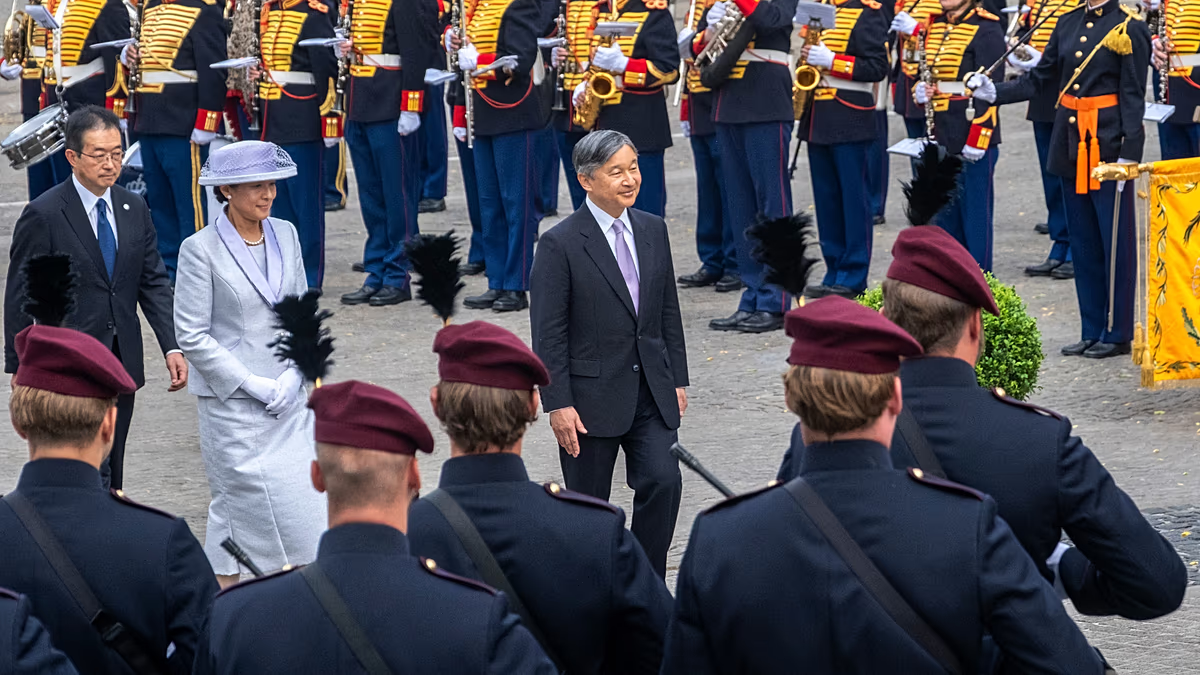
The Royal Palace in Amsterdam was a scene of elegant pageantry as King Willem-Alexander and Queen Máxima formally welcomed Their Imperial Majesties, Emperor Naruhito and Empress Masako of Japan. The ceremony was rich with symbolic gestures of mutual respect and friendship: the solemn notes of the Dutch and Japanese national anthems filled the air, and the couples stood together to review a ceremonial guard of honour. Outside the palace, the formalities were complemented by a more spontaneous display of warmth, as children waved the flags of both nations, their bright faces reflecting the celebratory mood of this significant state visit. The gathering also underscored the importance of the occasion for the Dutch government, with the presence of Amsterdam Mayor Femke Halsema and Dutch Prime Minister Rob Jetten highlighting the broad national significance of fostering this royal and imperial connection.
Following the palace reception, the imperial couple engaged in a moment of profound reflection, travelling to the National Monument in central Amsterdam. There, they laid a wreath in solemn tribute to victims of war and conflict worldwide. This poignant act served as a powerful reminder of shared history and a common commitment to peace—a universal value that transcends borders. While unstated, such a gesture resonates deeply within the context of the complex historical chapters between many nations, including the Netherlands and Japan, framing the present-day relationship within a forward-looking context of reconciliation and collective memory.
This high-level visit is far from a mere formality; it is a vibrant chapter in a diplomatic story that spans more than four centuries. The ties between Japan and the Netherlands are remarkably enduring, dating back to the early 1600s. During Japan’s period of isolation, Dutch traders were among the very few Europeans permitted to maintain a commercial outpost on the artificial island of Dejima in Nagasaki Bay. This unique historical access fostered a lasting exchange of goods, ideas, and knowledge, making the Netherlands a critical window to the West for Japan and establishing a foundation of familiarity and curiosity that has persisted through the ages.
Today, the relationship has evolved into a multifaceted partnership encompassing robust diplomatic, economic, and cultural cooperation. The official programme for the imperial visit is carefully crafted to reinforce these modern connections. It undoubtedly includes high-level meetings focusing on trade, innovation, and technological collaboration, areas where both nations excel. Simultaneously, cultural exchanges—perhaps involving museum exhibitions, musical performances, or academic symposiums—will celebrate the artistic and intellectual bonds that enrich the bilateral relationship. Each event on the itinerary is a thread woven into the broader tapestry of a strategic alliance built on deep historical roots.
The imagery of the visit itself tells a story of continuity and renewal. The juxtaposition of the formal, tradition-steeped ceremony at the Royal Palace with the joyful, flag-waving children outside illustrates how statecraft bridges the past and the future. It demonstrates that international relationships are not solely the domain of officials and diplomats but are nurtured by public goodwill and shared cultural appreciation. The presence of the imperial and royal couples together, engaging in both celebratory and contemplative acts, provides a powerful human dimension to the geopolitical partnership, reminding citizens in both countries of the personable and respectful nature of their nations’ bond.
In essence, the state visit of Emperor Naruhito and Empress Masako to the Netherlands is a living symbol of a friendship that has weathered centuries of global change. From the confined trading post of Dejima to the grand halls of the Royal Palace in Amsterdam, the journey of Dutch-Japanese relations is one of remarkable resilience and mutual growth. This visit, with its blend of ceremonial honour, solemn remembrance, and forward-looking dialogue, actively renews that legacy. It reinforces a partnership where historical understanding informs contemporary collaboration, ensuring that the next chapter in this 400-year story will be written with continued respect, shared prosperity, and a joint commitment to a peaceful future.