


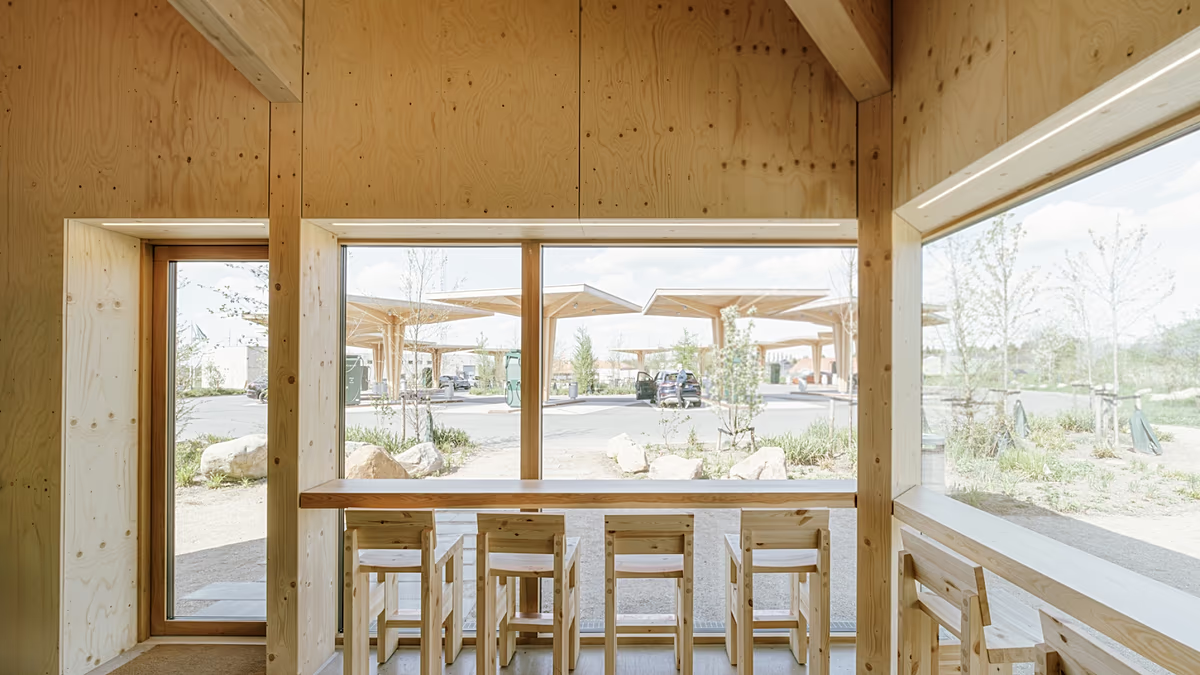
In the competitive landscape of electric vehicle infrastructure, one Danish company has embarked on a radical organizational experiment. Clever, Denmark’s leading operator of EV charging stations, has completely dismantled the traditional corporate hierarchy. There are no bosses, no middle managers, and since 2025, not even job titles that imply authority. From its Copenhagen headquarters, the firm operates entirely through self-managed teams where every employee participates in decision-making and shares responsibility for execution. This bold move, conceived by co-founder Casper Kirketerp-Møller, pushes the Nordic region’s famed egalitarian workplace culture to its logical extreme. Driven by a deep curiosity about human collaboration and a belief that traditional corporate structures stifle potential, Kirketerp-Møller initiated a transformation in 2019 that culminated in the elimination of his own CEO role, setting the stage for a truly boss-free environment.
The philosophy behind this radical flattening is a blend of idealism and pragmatic foresight. Kirketerp-Møller’s central goal was to unlock the full potential of each employee, a mission he considers critical in an age of automation and artificial intelligence. He argues that as AI handles tasks focused on efficiency, the uniquely human skills—creativity, empathy, collaboration—will become the core drivers of innovation and success. Furthermore, he identified a practical flaw in layered organizations: the sluggishness inherent in bureaucratic chains of command. Every decision requiring multiple approvals cripples agility. This view is supported by experts like Professor Helge Hvid, who notes that such bureaucracy paralyzes action and that flatter models strongly resonate with a younger generation of workers seeking autonomy, meaning, and a genuine say in their work.
However, removing all bosses does not mean abandoning all structure. Clever’s approximately 500 employees are organized into over 50 small teams, each with eight to twelve members focused on specific objectives. Within these teams, roles for tasks like recruitment or HR are clearly defined, providing essential guardrails. Kirketerp-Møller is candid about the dangers of removing structure too quickly, acknowledging it would lead to chaos. This delicate balance is a key challenge in organizational theory. As researcher Anne-Sophie Dubey points out, while the aim is to combat stifling bureaucracy, a certain degree of clear, written rules is paradoxically necessary to ensure everyone understands how to operate effectively within the new system. The structure, therefore, shifts from a vertical hierarchy of people to a horizontal framework of processes and agreements.
For employees like Lykke Jeppesen, who has facilitated collaborative decision-making at Clever for over four years, the benefits of this model are profoundly personal. She highlights the elimination of internal rivalry as a key advantage. In an environment without competing for promotions or managerial favor, the energy of the team is directed entirely toward shared success. Jeppesen describes the system as fulfilling fundamental human needs for autonomy, freedom, and a sense of belonging. This sentiment appears widespread within the company. An internal audit in 2024 revealed that 92% of Clever’s employees reported being happy to go to work each morning—a staggering metric that suggests the model fosters not just efficiency, but also remarkable levels of job satisfaction and psychological well-being.
The ultimate test of any radical organizational experiment is its sustainability beyond the tenure of its visionary founder. Earlier this month, Casper Kirketerp-Møller left Clever for good. Yet, the company’s owner, the Danish energy distributor Andel, has committed to preserving the boss-free structure. This pledge is significant; it indicates that the model is now viewed not as a fleeting experiment, but as a mature and integral part of Clever’s operational identity. Its survival post-founder suggests it has proven its resilience and business value, moving from a philosophical concept to a sustainable practice. The Clever experiment thus stands as a compelling case study, demonstrating that a large, operational company can thrive without traditional managerial roles.
Clever’s journey offers a provocative glimpse into a potential future of work. It challenges the deeply ingrained assumption that complex organizations require a pyramid of authority to function. By distributing leadership and embedding accountability within teams, Clever aims to harness collective intelligence and accelerate innovation. In a world where agility and human-centric skills are paramount, this Danish company’s “no-boss” model presents a fascinating alternative. It proves that with careful design—balancing radical freedom with necessary guardrails—a workplace can be both highly productive and deeply human, fostering collaboration over competition, and purpose over power. As such, it serves as a beacon for rethinking not just how we manage work, but how we connect and create value together.