

A Night of Fear and Desecration
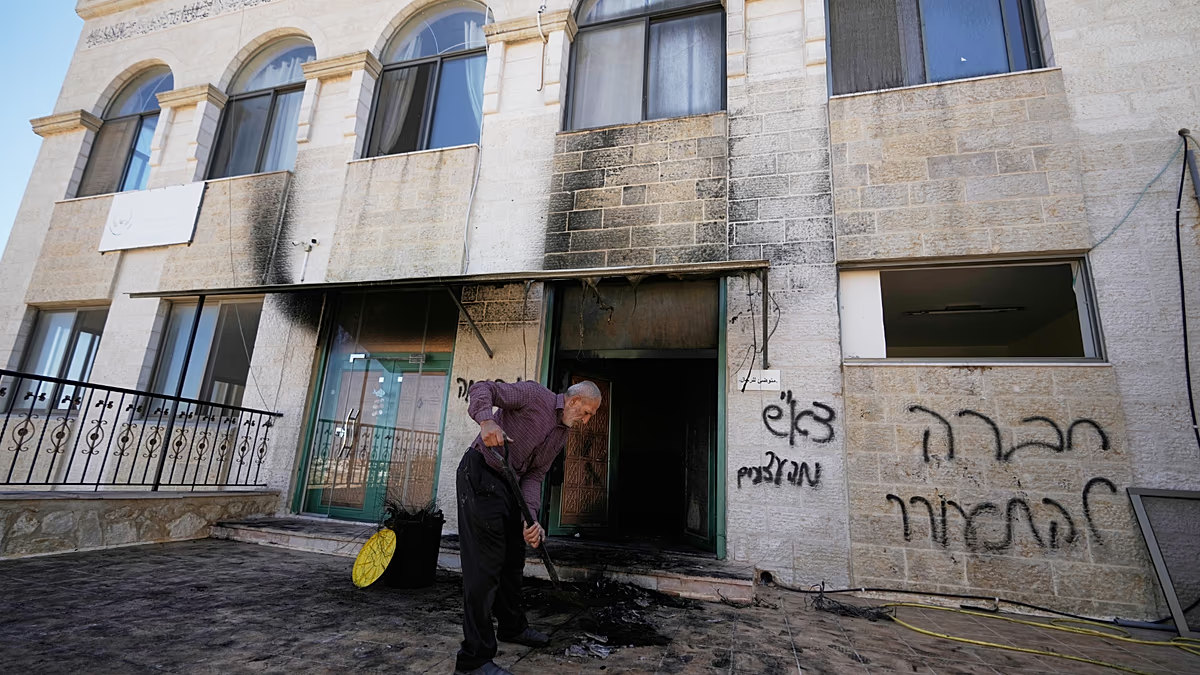
In the quiet, pre-dawn darkness of Jiljilya, a village north of Ramallah, sleep was shattered by the sound of explosions shortly after 2 a.m. Residents, jolted awake, emerged to a chilling sight: smoke billowing from their local mosque. What they discovered as they approached was an act of profound violation. According to local imam Mohammad Khasib, intruders had entered the sacred space, specifically targeting the ablution area where worshippers perform ritual cleansing before prayer. There, they stacked and ignited 15 to 20 tires, unleashing an intense, toxic fire. The flames roared through the section, causing extensive structural damage and leaving a scene of spiritual devastation in their wake. This was not a random act of vandalism, but a targeted assault, marked by hateful intent spray-painted on the exterior walls in Hebrew: the word “revenge” and references to detainees. The location added a layer of grave political implication, as the mosque sits in Area A of the occupied West Bank—territory officially under the administrative and security control of the Palestinian Authority and legally off-limits to Israeli civilians.
A Recurring Nightmare of Violence
Tragically, the attack in Jiljilya was not an isolated event that night. It was one of two separate assaults reported on mosques in villages north of Ramallah within the same ominous hours. This pattern is part of a terrifying and escalating trend documented by Palestinian officials. Since the start of 2026, they report, dozens of mosques and churches across the occupied West Bank have been vandalized, damaged, or desecrated. This wave of attacks against places of worship coincides with, and is fueled by, a wider surge in violence attributed to Israeli settler activity. The incidents form a relentless campaign of intimidation that seeks to erode the fabric of daily life and spiritual solace for Palestinian communities, embedding fear into the very spaces meant for peace and community.
The Scars of Hatred Left Behind
Inside the Jiljilya mosque, the physical scars of the attack were visceral and heartbreaking. The walls and doors of the ablution area were uniformly blackened by thick, oily soot from the burning tires. The intense heat generated was so severe that it cracked and shattered the floor tiles, a testament to the ferocity of the blaze. The air likely still hung heavy with the acrid stench of smoke and melted rubber, a foul odor deeply out of place in a house of worship. The Hebrew graffiti on the outside walls served as a cruel, public manifesto, explicitly linking the desecration to a cycle of retaliation and the fraught issue of detainees. This transformed the act from simple arson into a hate crime, a message of dominance and religious hatred aimed at the entire community.
A Community’s Resilient Response
With the coming of morning light on Wednesday, the shocked community of Jiljilya did not retreat in despair. Instead, residents collectively returned to the scarred mosque to begin the painful process of reclamation. They worked to clear the debris, scrub the soot from the walls, and clean the damaged areas, a labor of both necessity and quiet defiance. Their actions spoke of a determination to restore dignity and sanctity to their spiritual home. However, their efforts unfolded against a backdrop of official silence. At the time of reporting, neither the Israeli police nor military authorities had issued any public statement regarding the investigation of this serious crime in an area where their forces hold overarching security control.
Calls for Justice and Protection
The attack prompted immediate and forceful condemnation from Palestinian leaders. They pointed to this event as a glaring example of the inadequate protection afforded to Palestinian religious sites under the ongoing occupation. Their calls were for two fundamental things: concrete, effective measures to prevent such attacks from recurring, and full accountability to bring the perpetrators to justice. They argue that the pervasive climate of impunity surrounding such settler-led violence enables its continuation and escalation. Every unanswered attack is seen as tacit permission for the next, deepening grievances and fueling the cycle of retaliation referenced in the graffiti itself.
The Broader Picture of Tension
This incident in Jiljilya is a microcosm of the heightened and tragic tensions engulfing the region. The desecration of a mosque—a place meant for unity, reflection, and peace—serves as a powerful symbol of the broader conflict. It exacerbates deep-seated fears, fuels mutual hostility, and strikes at the heart of community identity. As residents clean the physical damage, the psychological and spiritual wounds inflicted will take far longer to heal. The ongoing silence from official channels, combined with the accelerating pace of similar attacks, raises urgent questions about the rule of law and the real commitment to protecting vulnerable communities, leaving Palestinians in a state of profound vulnerability and alert. The path forward requires not only rebuilding stone and tile but also addressing the entrenched climate of impunity and hatred that made such a night possible.