




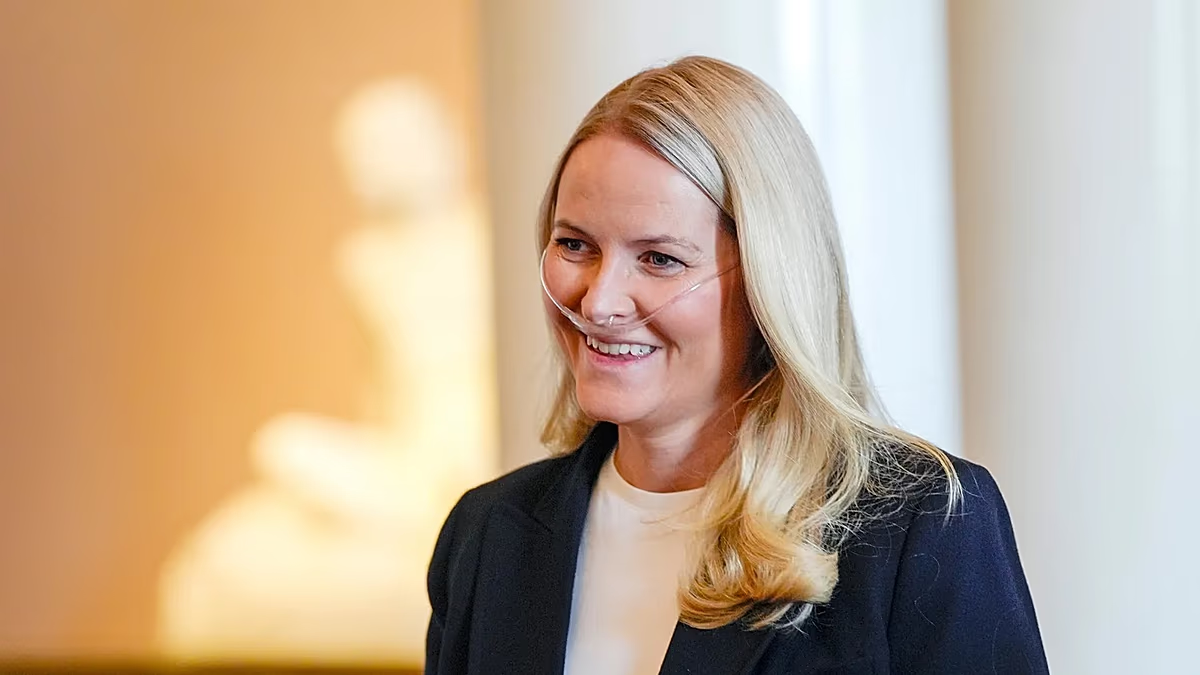
On a quiet Wednesday in Oslo, the Norwegian Royal Household shared news that brought a profound sense of relief to a nation. Crown Princess Mette-Marit, aged 52, has successfully undergone a lung transplant at Oslo University Hospital Rikshospitalet. The announcement marks a significant milestone in a long and arduous health journey that began back in 2018. In that year, the Crown Princess was diagnosed with a rare form of pulmonary fibrosis, a condition that progressively scars lung tissue, making the simple, fundamental act of breathing increasingly difficult. At the time, with characteristic grace and candor, she acknowledged the diagnosis, stating, “I have had occasional health challenges for a number of years, and now we know more about their underlying causes.” She noted that this condition would, at times, impact her ability to carry out her royal duties, a reality she has managed with quiet dignity in the years since.
The successful procedure represents not just a medical triumph but a beacon of hope for the future. Professor Arnt Fiane, a leading cardiothoracic surgeon at the University of Oslo, expressed his delight at how well the transplant had proceeded. He outlined the cautious path ahead, explaining that the Crown Princess will remain in the hospital for several weeks. This period is critical, a delicate phase where her medical team will meticulously monitor her progress, adjust medications as needed, and vigilantly manage any potential complications to support her body’s acceptance of the new organ. This careful, methodical aftercare is as vital to her long-term recovery as the surgery itself, underscoring that the journey toward restored health is a marathon, not a sprint.
Amidst this intensely private medical ordeal, the public response has been one of overwhelming support. In its official statement, the palace conveyed the deep appreciation felt by the Crown Princess and her husband, Crown Prince Haakon: “The Crown Prince and the Crown Princess express their sincere gratitude for the many warm and kind messages they have received. This means a great deal to them at this challenging time.” These words offer a glimpse into the human reality behind the palace walls—the relief, the vulnerability, and the genuine comfort drawn from public kindness. It is a reminder that royalty, despite their official roles, navigate personal trials with the same need for compassion and encouragement as anyone else.
This profound moment of hope and recovery, however, unfolds against a backdrop of recent personal tragedy for the Crown Princess’s family. Just days before the transplant announcement, her eldest son, Marius Borg Høiby, was sentenced to four years in prison following a serious criminal trial. While not a formal member of the royal household, Høiby is undeniably the Crown Princess’s son, and his conviction on two counts of rape, along with charges of domestic abuse and other offences, casts a long and painful shadow. He was acquitted of two other rape charges, but the gravity of the convictions stands. This juxtaposition of events—a mother’s fight for life and a son’s devastating choices—creates a complex tapestry of private anguish juxtaposed with public duty.
The convergence of these two starkly different events places the Crown Princess in an unimaginably difficult position, balancing the immense physical and emotional toll of her own life-saving procedure with the profound distress of a mother’s heartache. It is a testament to her resilience that she faces her recovery while undoubtedly carrying this private burden. The public narrative rightly focuses on her medical courage, but the private reality is layered with a profound and separate sorrow, highlighting the often unseen human complexities that exist within royal families.
As Crown Princess Mette-Marit rests and begins her recovery in the hospital, surrounded by expert care and her immediate family, the nation watches with respectful hope. Her path forward will require immense strength, patience, and continued medical support. This period marks not an end, but a new beginning—a chance at a healthier, more active life freed from the constraints of her debilitating condition. The heartfelt public support she has received will undoubtedly serve as a source of strength. Her story is ultimately one of human fortitude, a deeply personal battle for health and normalcy that resonates far beyond palace gates, reminding us all of the fragility and resilience inherent in every life.