

Paragraph 1: A Delicate Moment of Possibility
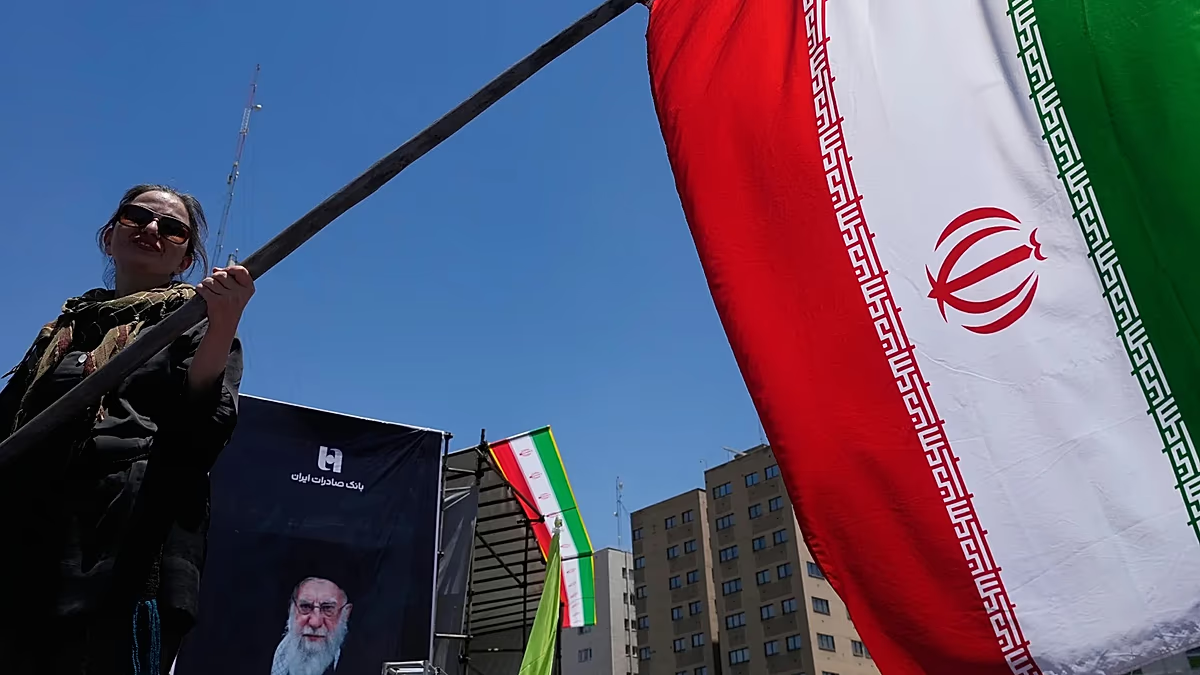
In mid-2026, the geopolitical world held its breath. A document, detailed and specific, began circulating widely. It purported to be the draft text of a landmark framework agreement between the United States and the Islamic Republic of Iran, scheduled for signature in Switzerland. Initially published in Arabic-language media and gaining intense scrutiny, its contents offered a stunning vision of reconciliation between decades-long adversaries. While neither Washington nor Tehran had officially confirmed its authenticity, the very existence of such a detailed leak pointed to high-stakes negotiations reaching a critical, public phase. The draft outlined a bold 14-point plan, discussed among G7 leaders in France, centered on Iran formally renouncing the pursuit of nuclear weapons in exchange for a colossal American pledge of $300 billion towards Iran’s reconstruction. Officials cautioned this was likely not the final text, but its emergence marked a pivotal moment where a future of conflict or a fragile peace hung in the balance.
Paragraph 2: The Core Bargain: Security for Sovereignty
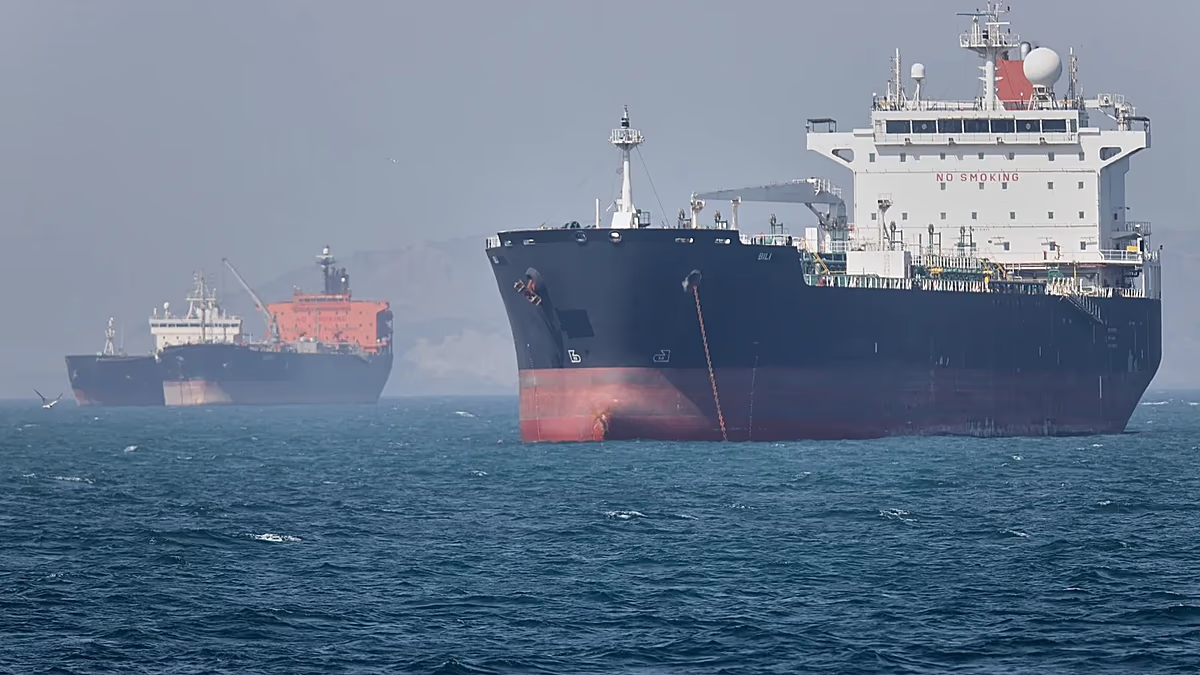
At its heart, the draft framework proposed a fundamental trade-off. For Iran, the prize was the restoration of its economic lifeblood and national sovereignty. The document committed the United States to an immediate lifting of its naval blockade, a full withdrawal of surrounding forces, and the critical resumption of unhindered shipping traffic in the Persian Gulf within 30 days. Most significantly, the U.S. pledged to create a comprehensive, jointly-agreed plan to finance Iran’s rehabilitation to the staggering tune of at least $300 billion. In return, Iran’s core commitment was a clear and unambiguous reiteration that it “will never produce nuclear weapons.” Furthermore, both nations vowed to respect each other’s sovereignty, cease all hostile actions “on all fronts,” and refrain from interference in internal affairs—a direct address to the shadow wars and proxy conflicts that had defined their relationship for years.
Paragraph 3: The Machinery of De-escalation and Trust-Building
The draft did not pretend that deep-seated distrust could vanish overnight. Instead, it laid out a careful, phased process designed to build confidence. The signing would only be a “Memorandum of Understanding,” a crucial intermediate step before a “Final Agreement” to be negotiated within 60 days. This period served as a probationary phase. Iran would “maintain the status quo on its nuclear program,” essentially freezing any advancement, while the U.S. promised not to introduce new sanctions or bolster its military presence in the region. The immediate practical gestures were vital: the U.S. Treasury would issue waivers for Iran to export its oil and access essential banking services, and Iran would work to clear mines and technical obstacles to restore pre-war shipping volumes. This structured, reciprocal de-escalation aimed to prove both sides were negotiating in good faith.
Paragraph 4: Unlocking a Frozen Economy
Perhaps the most tangible relief for Iran lay in the detailed financial provisions. The draft addressed the crippling impact of sanctions with surgical precision. It committed the U.S. to ending all sanctions—UN, IAEA, and unilateral American measures—according to an agreed schedule. More urgently, it mandated the full release of Iran’s frozen or restricted funds and assets held abroad. These billions, locked away in foreign accounts, would be made “fully available for use” at the discretion of Iran’s Central Bank. This wasn’t just about future promises; it was about providing immediate liquidity to a strangled economy. The combination of oil export waivers, regained access to the global financial system, and the unlocking of frozen assets constituted the first breath of economic oxygen for Iran, intended to build domestic support for the larger deal.
Paragraph 5: Navigating Political Peril and Uncertainty
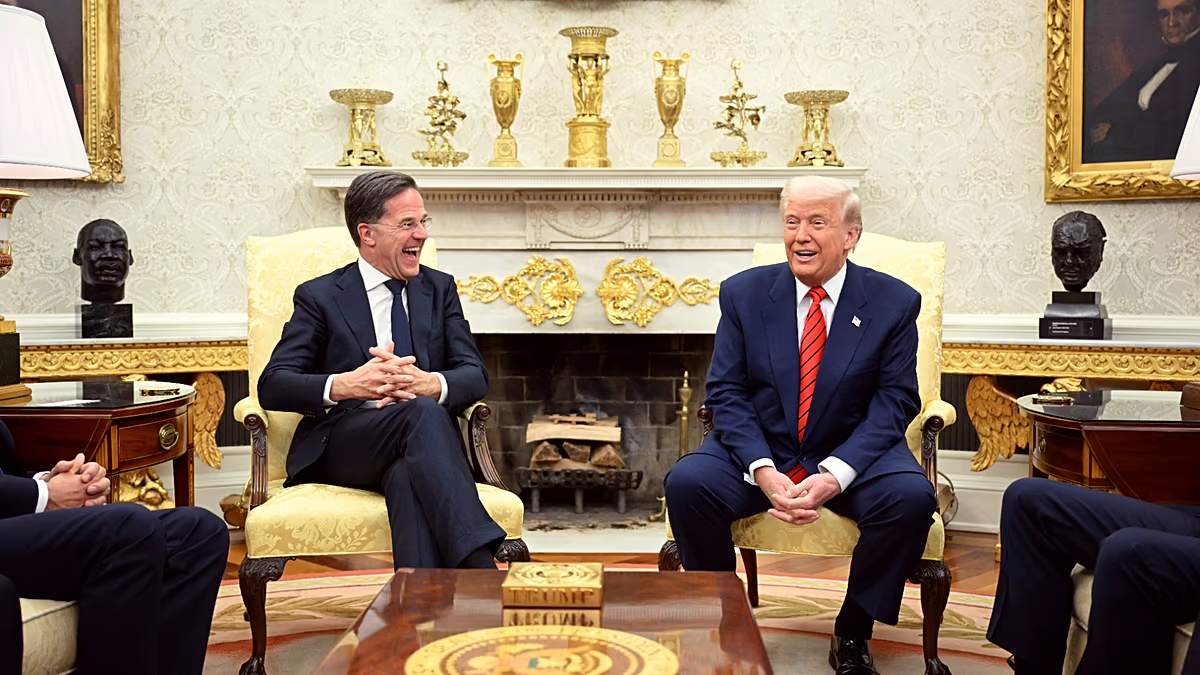
The atmosphere surrounding the leak revealed the immense political perils on both sides. U.S. President Donald Trump, characteristically, expressed irritation at the premature disclosure, insisting the final deal would be “very strong” while simultaneously warning of a return to bombing if Iran failed to comply. This duality captured the domestic tightrope any American administration would walk: selling a deal involving massive financial commitments to a longtime enemy. In Iran, selling a permanent nuclear limitation and security cooperation with the “Great Satan” to hardline factions would be equally treacherous. The draft’s final provisions, calling for a UN Security Council resolution to cement the ultimate agreement and the creation of a joint implementation mechanism, underscored the understanding that only robust, internationalized verification and oversight could make such a perilous peace durable.
Paragraph 6: A Visionary Blueprint, Awaiting Reality
In summary, the circulated document presented nothing less than a visionary blueprint to dismantle a central, volatile conflict of the 21st century. It proposed a grand bargain where Iran exchanged the ultimate strategic weapon—a nuclear deterrent—for the ultimate economic and political rewards: reintegration into the global community, sovereign respect, and the funds to rebuild its society. It moved beyond simplistic containment to a complex architecture of sequenced, verified reciprocal actions. Yet, it remained, as of that moment in June 2026, a powerful but unconfirmed draft—a detailed script for peace awaiting the courageous actors to perform it. Its very publication tested the waters of public and international opinion, making the dream of ending this enduring hostility suddenly feel tangible, while highlighting the vast gulf of distrust that still had to be bridged to turn its promising paragraphs into a lasting reality.