

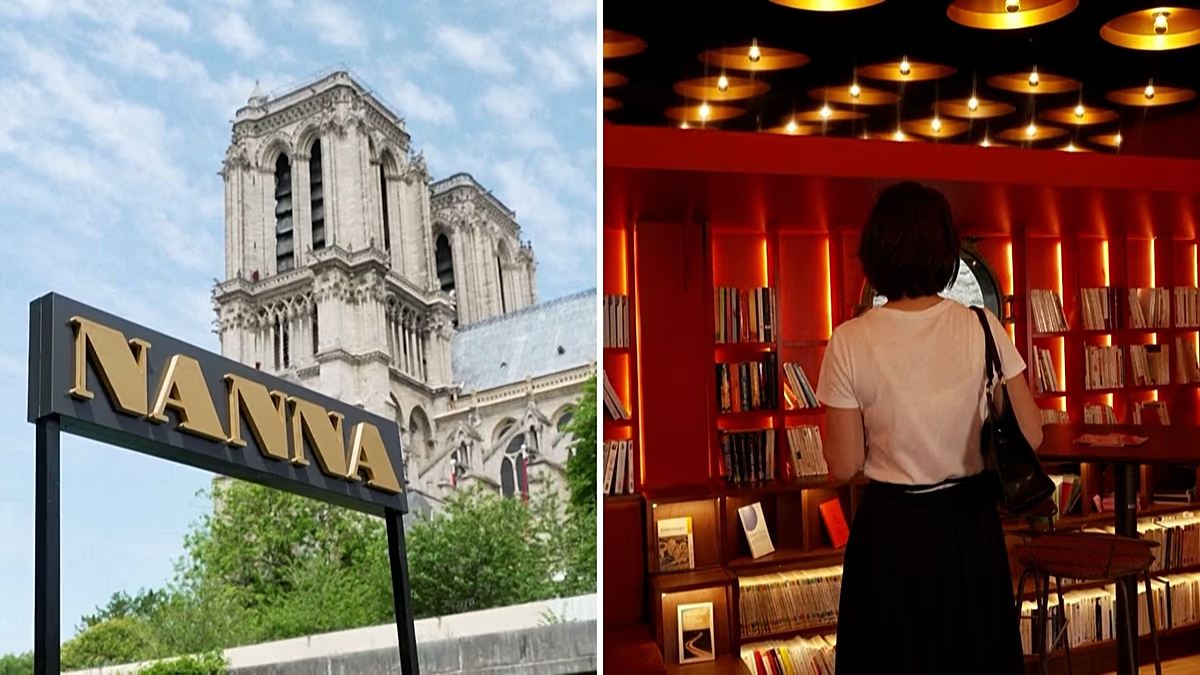
In the ever-evolving cultural heart of Paris, a novel and deeply poetic venture has made its home. The historic Quai de Montebello, with the majestic, reborn Notre-Dame Cathedral standing sentinel, now hosts a unique literary sanctuary: a floating bookshop named Nanna. This charming barge, which opened its hatches this month, is set to remain anchored at this iconic spot for a full decade, offering a tranquil counterpoint to the city’s bustling streets. Its founders have affectionately dubbed it “the biggest book box in Paris,” a title that speaks to its scale and its spirit of open, communal sharing. In a city defined by its river, this vessel feels intuitively right, a gentle addition to a waterscape that has inspired centuries of artists and writers.
The concept inside is elegantly simple and operates on profound trust. Visitors boarding Nanna will find a self-service collection of over 5,000 books, carefully curated and organized by category. The selection pays special homage to women authors while also celebrating French classics, world literature, poetry, and drama. The most remarkable rule is one of radical generosity: anyone can borrow any book with absolutely no obligation to return it. As literary curator Hugo Buton explains, people come simply to take a book, and that is the complete transaction. The system is circular and community-driven; visitors are equally encouraged to drop off their own books, allowing the collection to live, breathe, and evolve organically through public participation.
The inspiration behind this aquatic haven is deeply rooted in the soul of Paris itself. Co-founder Nicolas Laugero Lasserre eloquently notes that the Seine has always been a boundless source of inspiration. Placing a literary barge directly upon its waters was, therefore, a natural and poetic act. Nanna is not merely a repository for books; it is designed to be a living, social space that embraces the full spectrum of cultural life. As evening falls, the barge undergoes a subtle transformation. The quiet haven for readers becomes a vibrant social venue, hosting DJ sets, literary speed-dating events, author talks, and a welcoming bar. “Here, you can enjoy a drink, browse the books, and indulge your passion for literature,” Lasserre adds, highlighting the project’s core mission to fuse social engagement with literary discovery.
This fusion of community and culture resonates powerfully with early visitors. Visual artist Aurore Chevalier, who attended the opening week, expressed a sentiment felt by many: “It gives me hope, in the sense that it can encourage more people to engage with books and literature.” In an age of digital distraction, Nanna offers a tangible, sensory experience—the feel of paper, the smell of ink, the gentle rock of the river—and a physical space dedicated to the slow, joyful act of browsing. It creates a new kind of public square, one where connection happens through shared stories and the spontaneous gift of a book passed from one stranger to another.
The arrival of this hopeful project is particularly poignant given the challenging currents facing France’s traditional bookselling landscape. Nanna’s opening coincides with a sobering milestone reported by the Centre national du Livre: 2025 marked the first year in recent memory where more bookshops closed than opened across the country, with 85 closures against 83 new openings. This statistic underscores the pressures faced by brick-and-mortar cultural hubs. In this context, Nanna emerges not as a rival to these cherished institutions, but as a complementary, innovative model. It represents a different approach to sharing literature—one that is mobile, experiential, and built on a principle of free exchange rather than commercial transaction.
Ultimately, the Nanna is more than a bookshop; it is a statement of faith. It is a belief in the enduring power of physical books and in the community’s ability to steward its own cultural resources. By choosing a site in the symbolic shadow of Notre-Dame, a monument itself rising from repair and renewal, the barge aligns itself with themes of resilience and enduring heritage. For the next ten years, it will serve as a floating testament to Paris’s literary soul, a place where the timeless flow of the Seine mirrors the endless flow of stories. It is a gentle invitation to both Parisians and visitors alike: to come aboard, to explore, to connect, and to carry a piece of this literary haven forward with them, wherever their own journeys may lead.