

The Tashkent International Investment Forum: Uzbekistan Opens Its Doors to the World
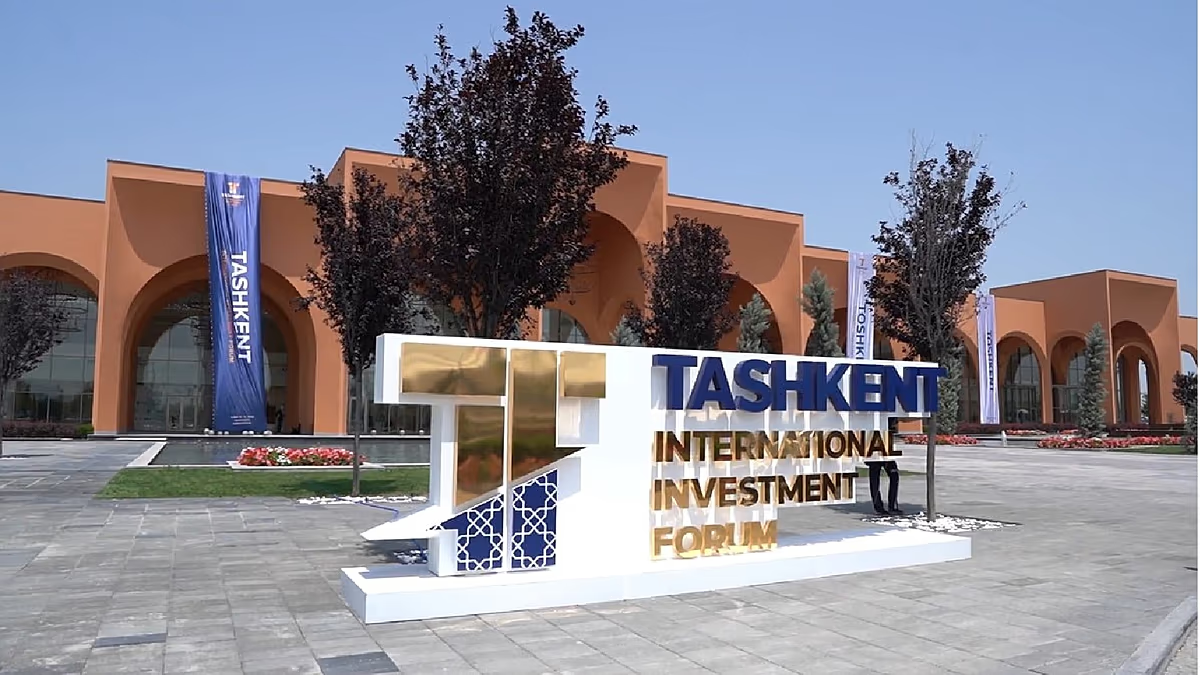
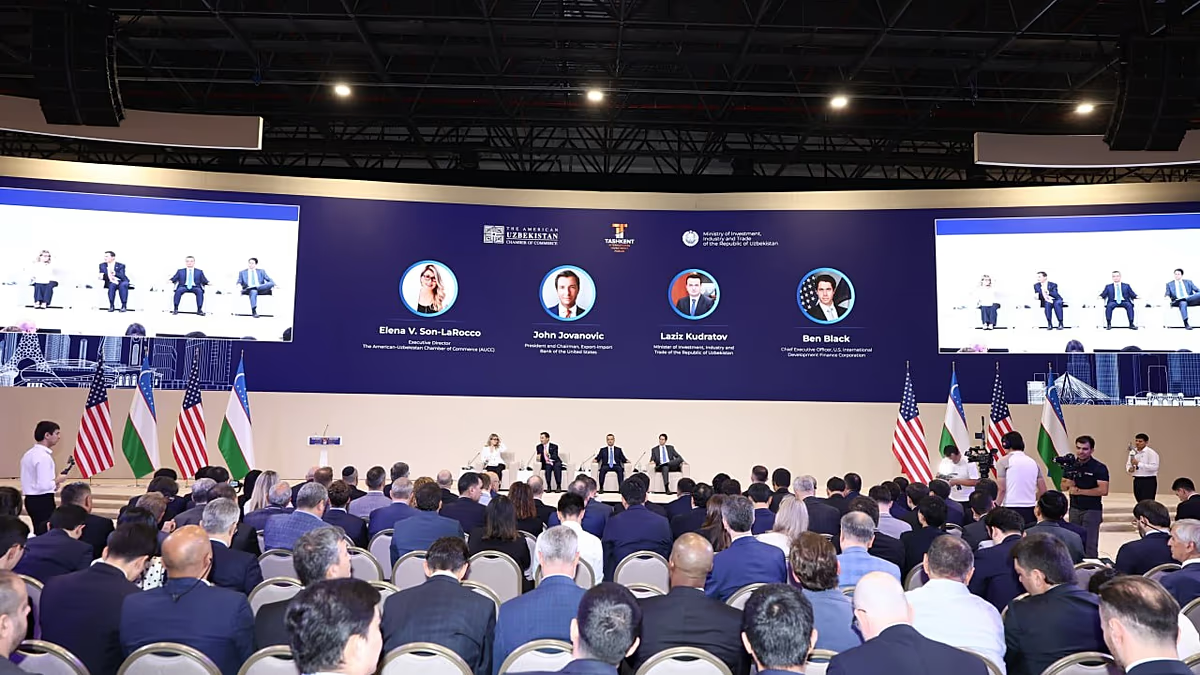
The historic city of Tashkent transformed into a global crossroads this week as it hosted the fifth Tashkent International Investment Forum (TIIF). The event drew a prestigious gathering of foreign leaders, ambassadors, executives from major multinational corporations, and representatives of international financial institutions. For a week, the capital buzzed with a shared purpose: to discuss, negotiate, and shape the future of investment not only in Uzbekistan but across the wider region. This convergence marked a significant moment of economic diplomacy, signaling Uzbekistan’s assertive and open approach to engaging with the international business community. The forum’s agenda was ambitious, weaving together high-level policy discussions with concrete business meetings, all set against a backdrop of parallel state visits that underscored the event’s geopolitical significance.
The opening day set a dynamic tone, with discussions spanning a vast and modern economic landscape. Conversations moved seamlessly from traditional pillars like infrastructure development and industrial cooperation to frontier technologies such as artificial intelligence and the digital ecosystem. Alongside the packed forum schedule, President Shavkat Mirziyoyev engaged in a series of pivotal bilateral meetings. A historic first summit with Albania’s President Bajram Begaj exemplified Uzbekistan’s strategy of building new bridges. The leaders explored cooperation in trade, green energy, and tourism, with a particularly forward-looking focus on using Albania’s Port of Durrës as a logistics gateway for Uzbek exports to Southern Europe. This meeting, resulting in an agreement to form an intergovernmental commission, highlighted a strategic move to diversify trade routes and deepen economic ties beyond traditional partners.
A powerful signal of confidence came from the strong American business presence. The dedicated American-Uzbek Business Forum revealed that 193 U.S. companies were participating, a fact hailed by Investment Minister Laziz Kudratov as evidence that American business sees Uzbekistan as a long-term partner, not just a market. This presence was cemented by President Mirziyoyev’s direct roundtable with executives from giants like Boeing, Visa, JP Morgan, and Meta. The discussions were substantive, targeting sectors critical to the future: critical minerals, energy, AI, and digitalization. Follow-up meetings with major U.S. financial institutions like the U.S. Export-Import Bank explored funding for transformative projects in infrastructure modernization and technology, concluding with tangible cooperation agreements. This concentrated engagement demonstrated a maturation of the bilateral economic relationship, moving towards complex, high-value partnerships.
Beyond the closed-door meetings, the forum’s public sessions provided a window into the themes currently defining global investment. Panels delved into the mechanics of attracting patient, long-term private capital, emphasizing that investor confidence hinges on robust corporate governance, transparency, and predictable regulation. The language of modern finance was front and center, with debates on the role of blended finance, political risk insurance, and the ever-growing influence of Environmental, Social, and Governance (ESG) principles. Speakers argued convincingly that access to capital is no longer solely a function of growth potential, but equally of accountability and responsible practice. The program also mirrored broader societal shifts, exploring the expansion of Islamic finance, the economic empowerment of women entrepreneurs—noting a credit gap despite high participation—and the global competition among cities for talent and investment.
A recurring and ambitious theme was Uzbekistan’s vision for a technologically sovereign future. Digital Technologies Minister Sherzod Shermatov articulated a compelling strategy: to leverage the nation’s growing renewable energy capacity to power a new generation of digital infrastructure and data centers. “With AI, you need compute. For compute, you need energy,” he stated, outlining a plan to essentially export energy in the form of processed data and AI services. This vision of becoming a regional digital hub was echoed in discussions on capital markets. Financial leaders like Franklin Templeton’s Marius Dan noted growing international investor interest in Uzbekistan’s reforms, while Asian Development Bank’s Kanokpan Lao-Araya underscored a fundamental truth: that ultimate investment decisions rest on trust, built through political stability and legal certainty. The day served as a vibrant platform for aligning ambitions with practical realities.
As the opening day concluded, it was clear the forum had successfully catalyzed high-level dialogue and set a framework for opportunity. The focus now shifts to action and implementation. The coming days will determine how these discussions translate into signed agreements and launched projects. The plenary session with President Mirziyoyev is expected to crystallize the government’s economic priorities, providing a clearer roadmap for potential partners. The true measure of the forum’s success will be found in the sustained momentum it generates, the partnerships it solidifies, and the tangible investments that follow, further integrating Uzbekistan into the global economy as a confident and innovative participant.