



The global energy landscape witnessed a significant and welcome shift this week, as oil prices continued their steep decline. On Wednesday, the international benchmark, Brent crude, traded firmly below $80 per barrel—a threshold not seen since early March. This downward trend is fueled by growing market optimism following an interim peace agreement between the United States and Iran. The accord is expected to lead to the reopening of the Strait of Hormuz, a critical maritime chokepoint for global energy shipments, by the end of the week. The mere possibility of this strategic route reopening has begun to ease the profound fears of prolonged supply disruptions that have gripped markets for months.
The closure of the Strait of Hormuz, a consequence of the Iran war that began on February 28, triggered the largest oil supply disruption in history, according to the International Energy Agency. At its peak, the crisis sent Brent prices soaring near $120 per barrel, sending shockwaves through the global economy and exacerbating inflation worldwide. The channel’s de facto blockade strangled the flow of a substantial portion of the world’s seaborne oil and liquefied natural gas (LNG) exports from the Gulf. Therefore, the announcement from U.S. President Donald Trump that the strait would be fully operational and toll-free by Friday represents a pivotal breakthrough. The tangible market reaction was immediate: alongside Brent’s drop to $78.37, U.S. benchmark WTI fell to $75.45, and European natural gas prices also softened, trading below €42 per megawatt-hour.
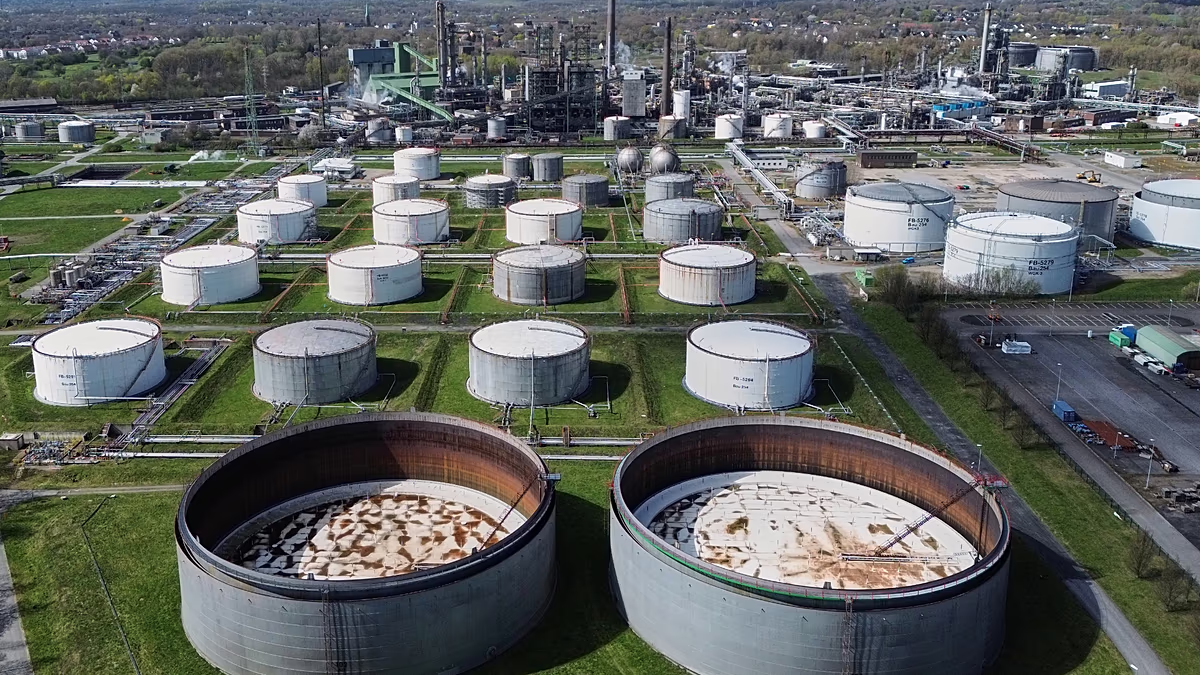
This dramatic price collapse—a fall of more than 33% for Brent over the past month—signals a profound shift in market psychology from panic to cautious hope. However, analysts and officials are quick to temper expectations with a heavy dose of realism. The path from an interim agreement to full, stable normalization is fraught with hurdles. Significant negotiating challenges remain, particularly surrounding Iran’s nuclear program. Furthermore, the physical recovery of regional energy production will not be instantaneous; it could take months for operations to return to full speed. Attention is also focused on key infrastructure, such as Qatar’s massive Ras Laffan LNG complex, with reports of significant damage there posing additional questions about the pace of gas supply restoration.
For Europe, the calculus is particularly complex. While the continent sources only a small fraction of its oil and gas directly via the Strait of Hormuz, it remains acutely vulnerable to fluctuations in global benchmark prices. With over 80% of its oil imported, Europe’s energy costs are inextricably linked to the price of Brent crude, which was massively inflated by the crisis. EU Energy Commissioner Dan Jørgensen cautioned in early April that a peace deal would not mean an immediate return to normalcy. He emphasized that the structural and logistical scars of the conflict will linger in the “foreseeable future,” delaying any rapid relief for European consumers and industries.
The reasons for this delayed benefit are multifaceted. Even with the strait physically reopened, two critical cost components must recede for delivered oil prices to fall significantly across the bloc: war-risk insurance premiums and tanker freight rates. These costs skyrocketed during the closure and remain stubbornly high. Initial reports suggest freight rates have stabilized, but there is little evidence yet of a sharp decline. More critically, insurance companies are adopting a wait-and-see approach, requiring demonstrable evidence that the Strait can operate safely and sustainably before they recalibrate the high-risk premiums that have become a standard part of shipping costs through the region.
In conclusion, the recent plunge in oil prices is a promising initial indicator of geopolitical de-escalation and a potential turning point for the global economy. The anticipated reopening of the Strait of Hormuz is undeniably positive news, offering a path away from the extreme energy insecurity and inflationary pressure of recent months. Yet, the transition from conflict to stable peace is a process, not an event. Markets are breathing a sigh of relief, but the energy industry, shipping sector, and ultimately European households face a gradual journey back to stability. The coming weeks will be crucial in observing whether the tangible realities on the water—safe passage, lower insurance costs, and restored freight rates—can catch up to the optimism now reflected on trading screens.