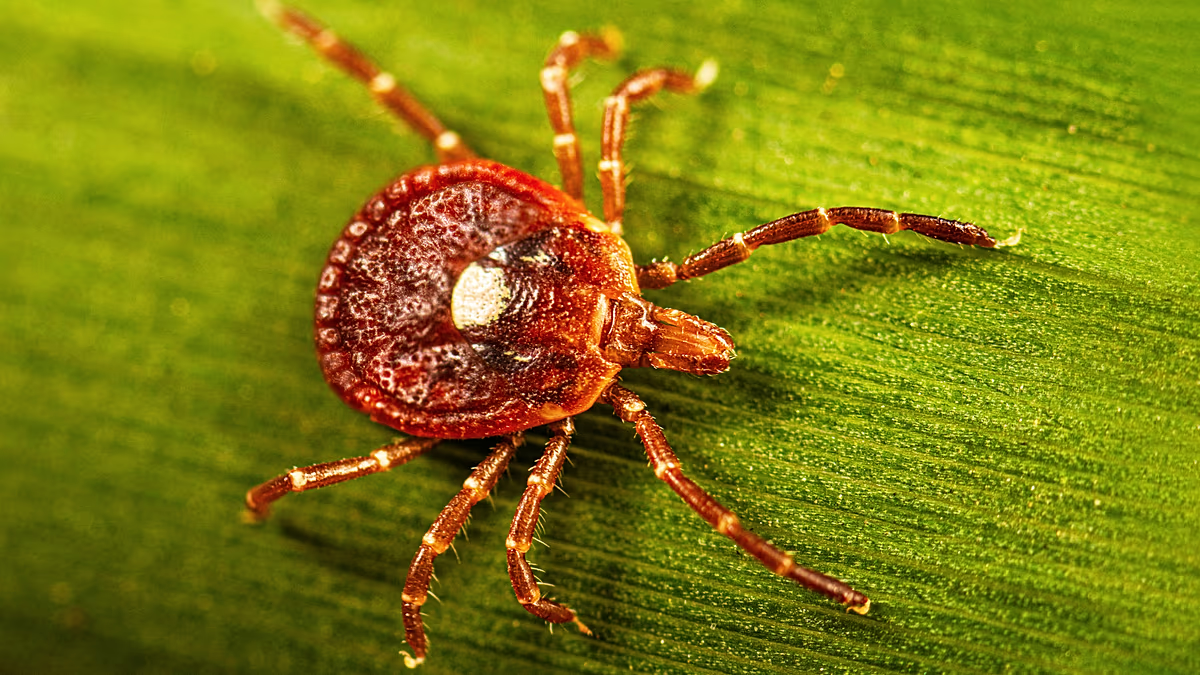




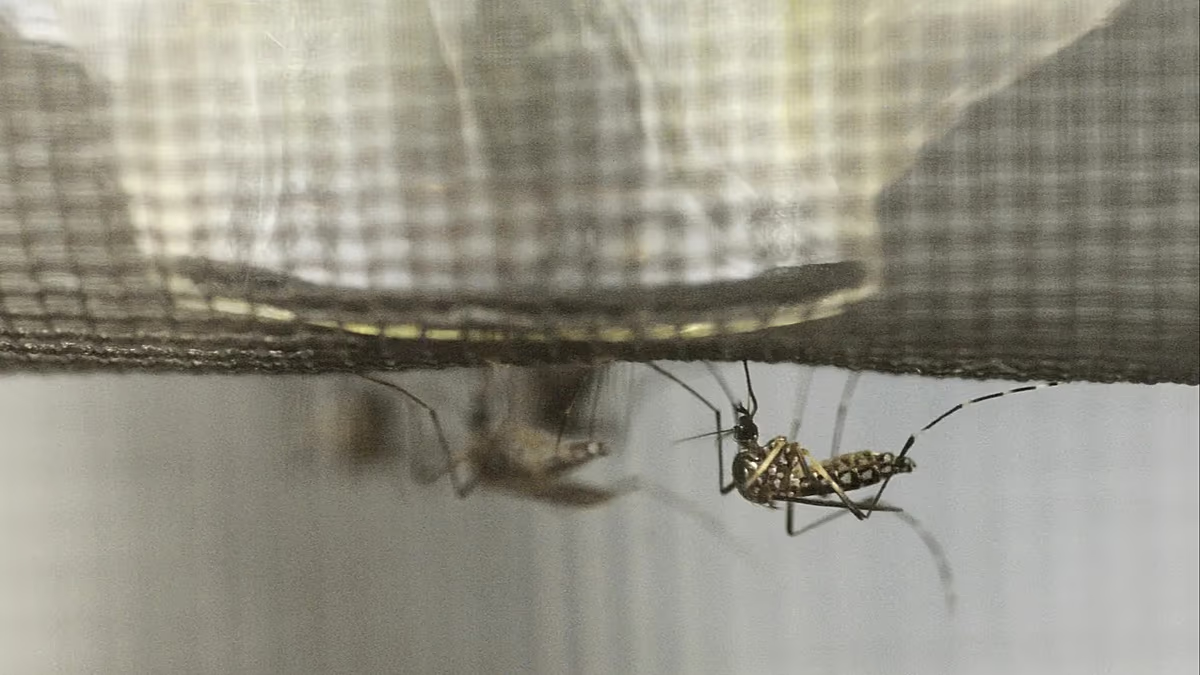
In the picturesque southern French city of Montpellier, a quiet revolution is underway in the fight against a pervasive foe. The enemy is small but formidable: the tiger mosquito, an invasive species known for its aggressive daytime biting and its ability to transmit serious diseases like dengue, Zika, and chikungunya. As this insect has expanded its territory across Europe, fueled by climate change and global travel, it has transformed from a mere nuisance into a significant public health concern. Traditional responses, reliant on chemical insecticides, often prove ineffective, harmful to other species, and can lead to insecticide resistance. In this challenging landscape, a French company named Terratis is pioneering a bold and counterintuitive strategy: to combat mosquitoes, they are breeding millions more.
Within Terratis’s specialized facility, a meticulous and fascinating process unfolds on an industrial scale. Every week, approximately 1.5 million tiger mosquitoes are reared. The core of the operation hinges on a sophisticated natural mechanism known as the Sterile Insect Technique (SIT). The company focuses exclusively on male mosquitoes, which, crucially, do not bite or feed on blood. These males are carefully separated and then exposed to precise doses of X-ray radiation. This process renders them sterile while keeping them healthy and competitive. The result is an army of innocuous insects, primed for a unique mission. When released into neighbourhoods plagued by mosquitoes, these sterile males seek out and mate with wild females. However, because the sperm is non-viable, no offspring are produced from these unions. Over successive releases, this method can lead to a gradual, yet steady, decline in the local mosquito population.
This approach represents a paradigm shift in pest control. Unlike genetic modification, Terratis’s method is a physical process, and the company emphasizes that its technique is non-GMO, entirely chemical-free, and exceptionally targeted. It leaves no pesticide residue in the environment and does not harm bees, butterflies, or other beneficial insects. The scalability of the operation is remarkable. Technicians oversee vast containers of larvae and adult mosquitoes, preparing them for their release like minute, six-legged emissaries of public health. In districts like Montbosc in Montpellier, workers regularly visit designated points to release thousands of these sterile males, integrating this innovative solution directly into the fabric of the community. It is a form of biological warfare that leverages the insect’s own reproductive instincts against itself.
The ambition driving Terratis is as vast as the problem it seeks to address. The current weekly production of 1.5 million mosquitoes is just the beginning. The company has laid out plans for a dramatic expansion, aiming to scale up to an astounding 40 million sterile males produced per week within the next two years. This vision positions France at the forefront of a global movement. While the Sterile Insect Technique has been studied for decades and used against other pests like fruit flies, its application against disease-carrying mosquitoes on a commercial urban scale is groundbreaking. Dozens of research projects are exploring similar methods worldwide, but the work in Montpellier signifies a crucial leap from controlled laboratory trials to real-world, operational deployment.
For residents living under the constant threat of mosquito-borne illness and the irritation of relentless bites, this initiative offers a beacon of hope. Supporters of the technology see it as a sustainable, long-term tool that could fundamentally alter our relationship with these insects. It moves the battle from reactive spraying—which often comes too late—to proactive, preventive population suppression. The goal is not total eradication, which is often ecologically impractical, but rather the reduction of mosquito numbers to a level where disease transmission is interrupted and quality of life is significantly improved. It represents a harmonious blend of entomology, technology, and ecology.
As the tiger mosquito continues its northward spread across Europe, the eyes of public health officials and communities far beyond France’s borders are watching Montpellier closely. The success of Terratis’s pilot programmes could pave the way for wider adoption, offering a powerful new weapon in the global arsenal against vector-borne diseases. This story is more than a technical report on pest control; it is a testament to human ingenuity in the face of a natural challenge. By harnessing advanced science to work with nature’s rules rather than violently against them, we may have found a smarter, kinder, and more effective way to reclaim our summers and safeguard our health.