


In a significant move for European security, Germany and Poland are poised to sign a new defence agreement this Wednesday. This pact marks a deliberate step to move beyond a historically complicated relationship, forging a more pragmatic and operational alliance. The driving forces behind this rapprochement are the tectonic shifts in the European security landscape following Russia’s full-scale invasion of Ukraine in 2022 and the concurrent political change in Poland, which saw a liberal government come to power in 2023. Furthermore, growing uncertainties regarding the future of US military engagement in Europe have added urgency to the need for stronger continental defence cooperation. This agreement signifies a recognition that the security of Europe’s eastern flank can no longer be an afterthought and requires deepened, practical collaboration between its two largest eastern powers.
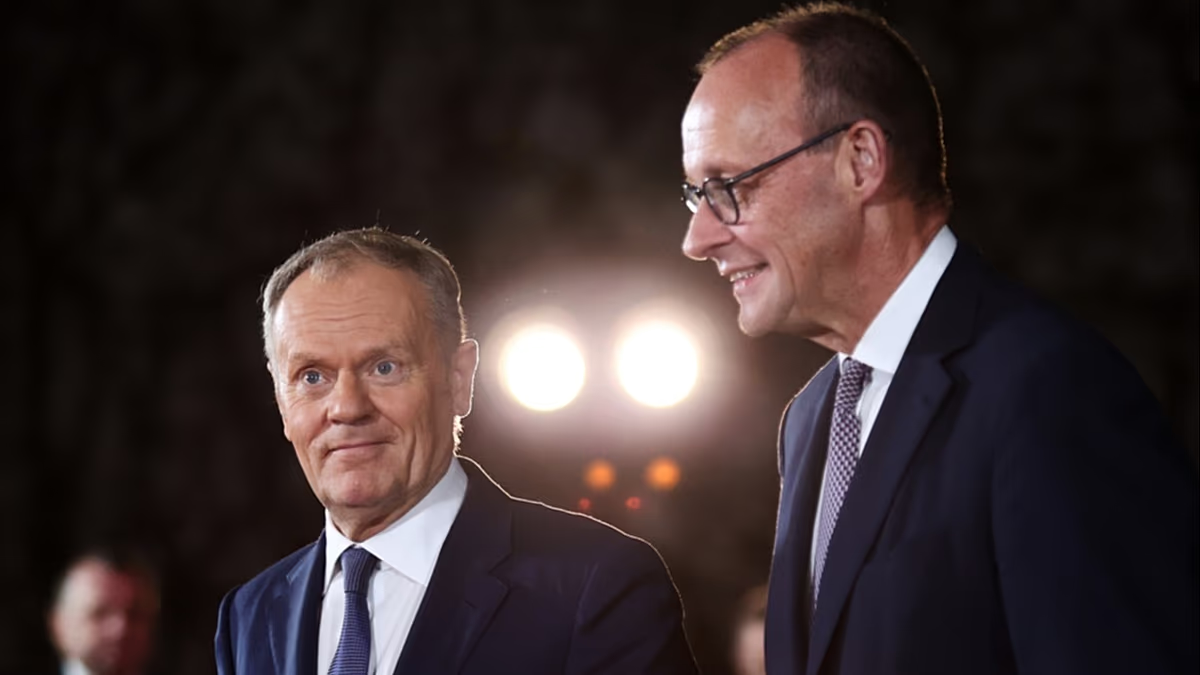
The strategic calculus for both nations is clear and compelling. For Poland, the agreement is a cornerstone of its long-standing goal to ensure that major European allies assume greater responsibility for the defence of NATO’s eastern frontiers, especially as the United States contemplates a partial drawdown of its forces in Europe. Poland’s own rapid military modernisation, its crucial role as a logistics hub for Ukraine, and its growing economic weight make it an indispensable partner. For Germany, under Chancellor Friedrich Merz, the partnership is central to its ambitious project of revitalising the long-neglected Bundeswehr, with the goal of building the strongest conventional army within NATO in Europe. A strong, capable Poland is not merely a neighbour but, as Merz stated in Berlin last December, “an equal partner” and a fundamental German interest. This agreement lays the groundwork for that interdependent strength.
The practical focus of the pact is notably on the vulnerable Baltic Sea region, an area of paramount concern. NATO defence plans already irreversibly tie Germany and Poland together, assigning Germany a lead role in the defence of the Baltic states—Estonia, Latvia, and Lithuania—a task that is impossible without seamless cooperation with Poland. As security analyst Justyna Gotkowska notes, “without cooperation with Poland, that will not happen.” The Baltic nations are widely viewed as the most likely target for any potential future Russian aggression against NATO territory. Consequently, the German-Polish agreement is set to include detailed plans for protecting this region, alongside enhanced cooperation on military mobility, cross-border infrastructure, cybersecurity, and emerging technologies. This operational focus aims to translate political goodwill into tangible military readiness.
It is important to understand what this agreement is, and what it is not. The text is expected to reaffirm the mutual security obligations to which both nations are already committed as members of NATO and the European Union. However, unlike the formal bilateral treaties each country has signed with France and the United Kingdom in recent years, the Polish-German accord is an inter-ministerial one. This means it is deliberately focused on the practical, logistical, and technical aspects of military cooperation, sidestepping grand political declarations of mutual defence. This more technocratic approach is partly born of political necessity. Polish Foreign Minister Radosław Sikorski has pointed out that President Karol Nawrocki, whose power base lies in the national-conservative opposition, would never consent to a more binding treaty, quipping that “hell would break loose here” if one were signed.
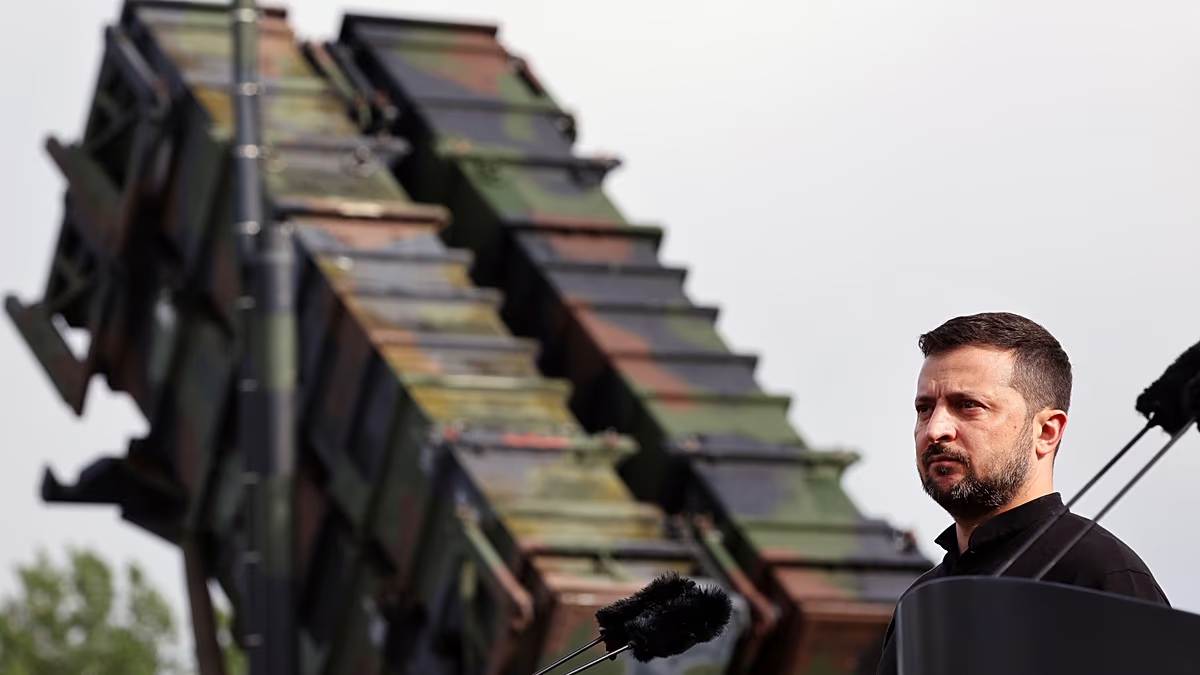
This technical nature of the agreement also reflects lingering, unspoken tensions beneath the surface of the partnership. Despite Poland’s rising strategic importance, there remains a sense in Warsaw that it is sometimes excluded from the innermost circles of European decision-making. This sentiment was sharpened recently when Germany, France, and the UK jointly hosted Ukrainian President Volodymyr Zelenskyy in London to discuss potential frameworks for future peace negotiations. Polish Prime Minister Donald Tusk pointedly complained to Chancellor Merz that Poland, as a front-line state bearing immense risk and responsibility, must be part of any consequential discussions about Ukraine’s and the region’s future. His warning that “any arrangements made without our participation will not be respected or binding for us” underscores that while military cooperation is advancing, full political alignment remains a work in progress.
Nevertheless, the impending defence agreement between Germany and Poland represents a watershed moment. It is a pragmatic, forward-looking consolidation of a vital European security axis at a time of profound peril. By choosing to collaborate deeply on the concrete mechanics of defence—from Baltic security to military logistics—both nations are building a more resilient and self-reliant European pillar within NATO. This partnership, forged in the fires of the ongoing war in Ukraine and geopolitical uncertainty, moves beyond symbolic gestures to establish the hard infrastructure of collective security. While historical shadows and political differences may occasionally surface, the imperative of present dangers has created an alliance of necessity and shared interest that will fundamentally shape the defence architecture of Europe for years to come.